
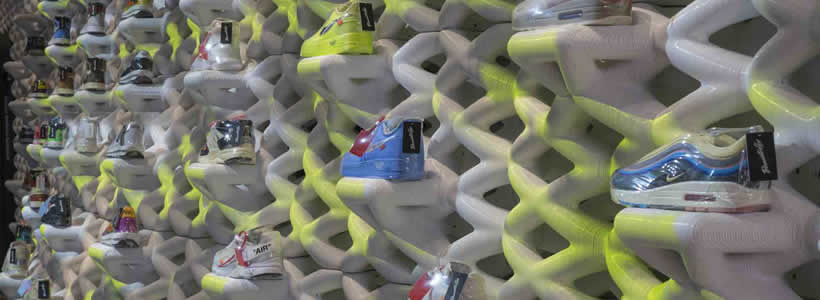
Designed in collaboration with award-winning architecture practice External Reference, the space is wrapped in a 3D-printed lattice structure and features immersive floor-to-ceiling interactive projections.
The Presentedby store at Level Shoes offers a useful case study in experiential retail design. Through immersive technology, flexible store planning, interactive projections and sustainable materials, the project demonstrates how contemporary sneaker retailers can transform a point of sale into a destination capable of increasing engagement and reinforcing brand identity.
The store is conceived as an experiential environment rather than a conventional retail space. Combining advanced 3D printing technologies, immersive audiovisual installations and interactive digital content, the project explores how physical and digital dimensions can work together to create a more engaging customer experience. For retailers, it provides an example of how technology can transform a store from a simple sales environment into a destination capable of strengthening brand engagement and increasing visitor dwell time.
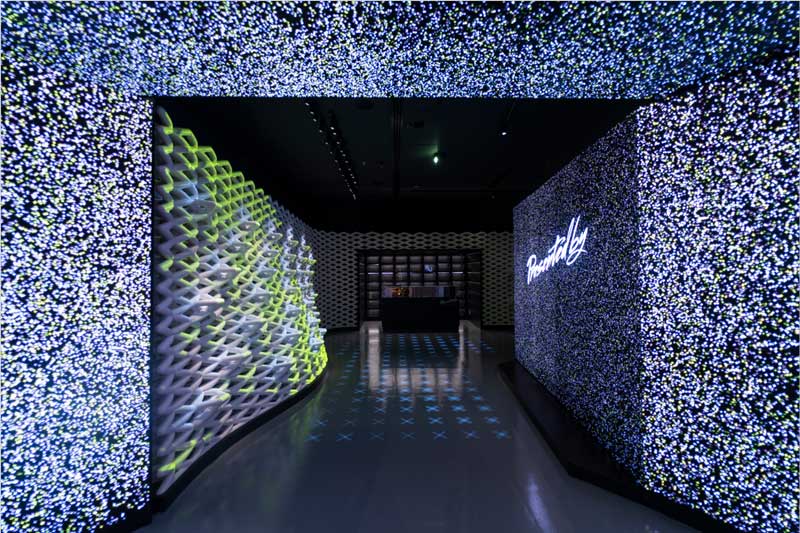
The Presentedby shop is located at the ground floor of Level Shoes, world’s largest luxury shoe store spanning over 96,000 square feet within The Dubai Mall.
Before entering the store, visitors are welcomed by a double funnel-shaped entrance lined with digital screens. Large-scale projections immediately introduce the immersive concept, while interactive floor visuals respond to foot traffic, creating a playful and constantly changing environment.
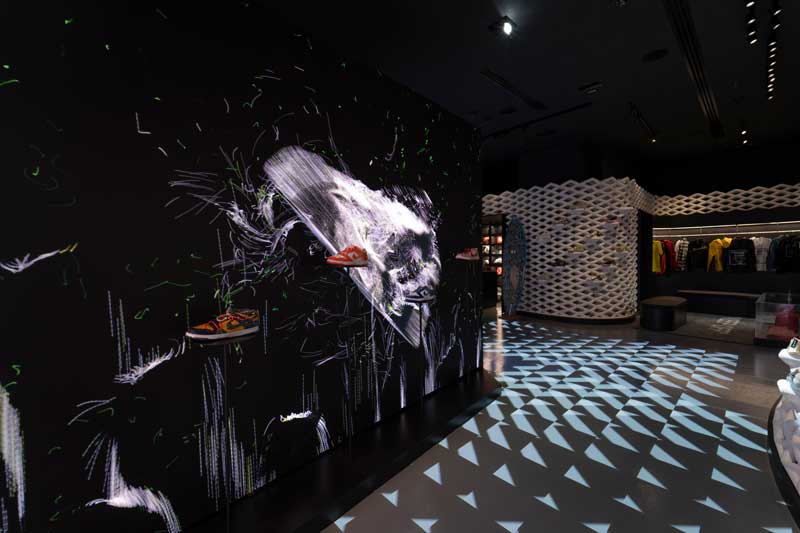
The 3D printed lattice walls, with their sinuous shapes, are inspired by the technologies and 3D parameters used by all fashion brands to produce sneakers nowadays. A recurring feature of the Presentedby stores is to display the sneakers diagonally, thus having a complete view of the collections from multiple points of view. These wall also features impressive projections that can be programmed to be on and off when needed.
How experiential retail layout enhances customer engagement
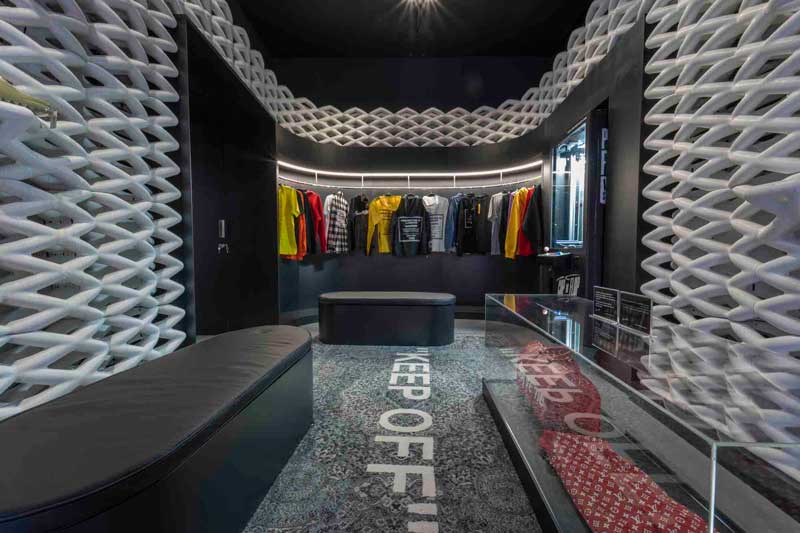
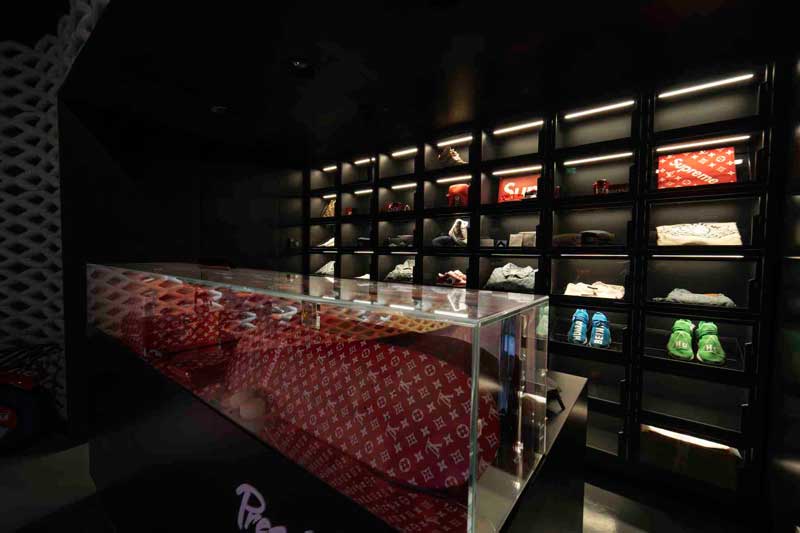
The shop, coinceved as one space, has three different areas: the cashdesk area, with the counter and illuminated lockers behind; the semi-circular apparel area, with the streetwear, accessories, fitting rooms and a claw machine; the experience room. At the center of the space the ultimate experience capsule displays, in the first part, a collection of the most exclusive trainers, a sort of mini sneakers museum. The second part of the experience room performs a spectacular holographic and projections show giving the room an idea of infinite space.
The store reflects many of the characteristics commonly associated with Dubai: innovation, advanced technology, ambitious architecture and a forward-looking approach to retail design.
For retail designers, the layout illustrates the importance of combining product display, entertainment and storytelling within a single environment. By encouraging exploration and interaction, the store extends dwell time and transforms shopping into a memorable experience.
Talking about sneakers, this future cannot not be better addressed by the latest 3D technologies applied to design and manufacturing. De facto, both mainstream and emergent sneakers’ brands are experimenting with 3D printing by producing midsole, textile or customising components.
As claimed by Presentedby “we will be offering the best range in highly coveted and limited-edition sneakers and streetwear which include renowned and celebrated brands like Yeezy, Supreme and Nike, as well as some of the most iconic collaborations of the decade like Jordan x Dior, Supreme x Louis Vuitton, Nike x Off-White, and Stussy x Dior”.
How sustainable materials improve retail design performance
External Reference used cutting-edge computational tools, to design a space wrapped in a lattice structure that integrates the sneakers exhibition. This lattice is 3D printed using an advanced polymer integrating wearepure, a 100% natural mineral compound, with the property to mineralize primary greenhouse gases (CO2 and NOx) and reduce volatile organic compounds (VOCs).
The use of this material permits the new space to reduce the contaminated air behaving like a small forest. The Dubai store absorbs 38kg’s of CO2 per year. This approach reflects a growing trend in retail design, where materials are expected to contribute not only to aesthetics but also to environmental performance. Sustainable surfaces and low-impact manufacturing processes are increasingly becoming part of the customer experience and brand narrative.
Photos courtesy Presentedby