
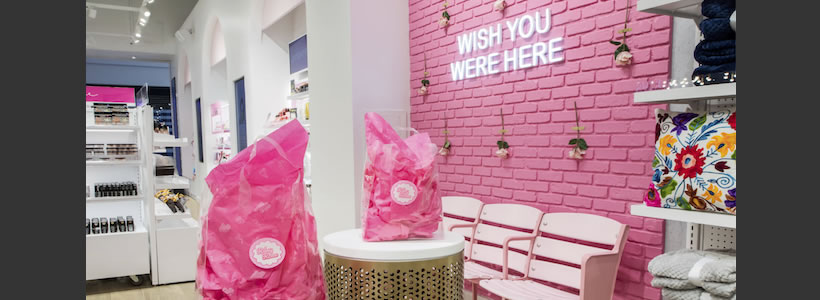
FutureBrand UXUS has developed the retail design concept for Riley Rose, the beauty and lifestyle store format created for Forever 21 in the United States. The project combines product displays, testing areas and social spaces within a layout that encourages customers to move between different activities. Rather than organising the store around conventional product categories alone, the designers introduce a zoning strategy that divides the interior into distinct areas for browsing, experimentation and relaxation.
The concept brings cosmetics, beauty products, accessories and home-related items together within the same retail environment. Its spatial organisation allows visitors to explore different merchandise categories while moving between dedicated testing stations, interactive installations and informal social spaces.
Retail zoning: organising the store around customer activities
A central element of the project is its layered zoning strategy. FutureBrand UXUS divided the large retail interiors into smaller, identifiable areas, each supporting a different stage of the customer visit.
The layout accommodates browsing, product trials and places where visitors can spend time without immediately making a purchase. This organisation creates a sequence of activities within the store, encouraging customers to explore different product groups rather than follow a single, strictly defined shopping route.
The zoning approach also helps establish distinctions between the various retail functions. Areas dedicated to experimentation sit alongside product displays and spaces intended for more informal interaction, allowing the interior to accommodate different patterns of use.
Beauty displays, product testing and interactive spaces
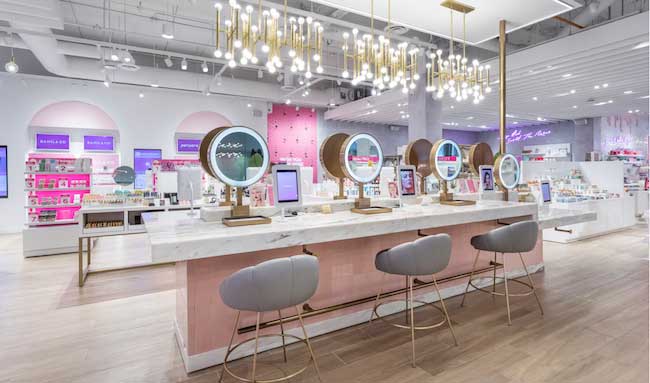
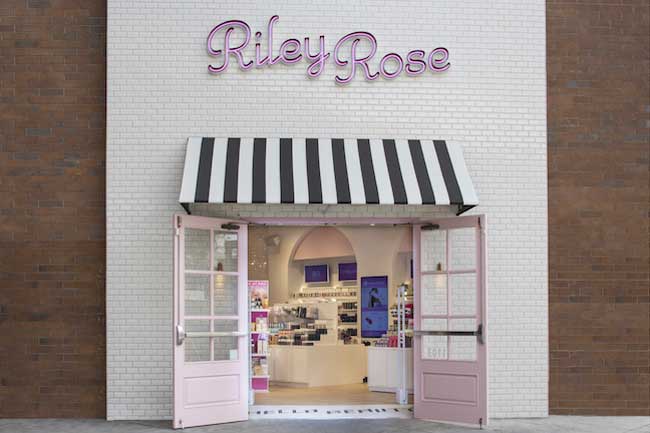
The customer journey begins at a playful storefront and continues through a series of retail settings. These include a temporary selfie installation, a beauty island and a vanity area where visitors can explore bath and fragrance products.
Product testing is an important part of the format. Instead of relying exclusively on packaged merchandise displayed on shelves, the concept provides opportunities for customers to try products and engage directly with the collections.
Pop-up installations introduce additional flexibility into the retail environment. Together with the designated testing areas, they support a store format in which discovery and interaction form part of the spatial organisation.
The concept also incorporates opportunities for visitors to create and share content on social media, extending the brand’s digital communication activities into the physical store.
Materials and finishes: marble, rose gold and industrial contrasts
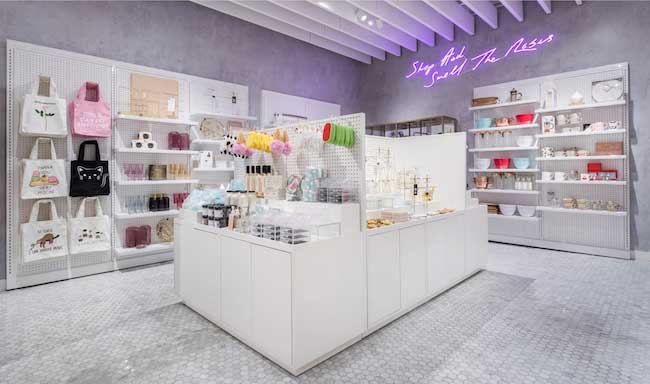
FutureBrand UXUS developed a material palette combining decorative surfaces with more industrial finishes.
Soft marble surfaces, rose gold metal elements and pink tiles establish the lighter visual character of the interior. These finishes are contrasted with grey concrete and perforated steel details, introducing different textures and surface treatments throughout the space.
The contrast between the materials gives the various areas a distinctive appearance without relying on a single finish across the entire store. The palette also reflects the brand’s original positioning towards a young, design-conscious beauty customer.
Within the overall retail concept, material selection works alongside the zoning strategy to distinguish display environments and reinforce the playful character of the space.
A beauty retail concept based on exploration
Riley Rose was conceived as a beauty and lifestyle destination in which shopping is combined with product experimentation and informal social activities.
The project illustrates an approach to beauty store design that extends beyond conventional merchandising. FutureBrand UXUS organised the interior around a sequence of functions, using display islands, testing stations, pop-up areas and material contrasts to accommodate different ways of interacting with products.
The layout and fixtures support both merchandise presentation and customer participation, combining retail display with opportunities to test products and explore different areas of the store.