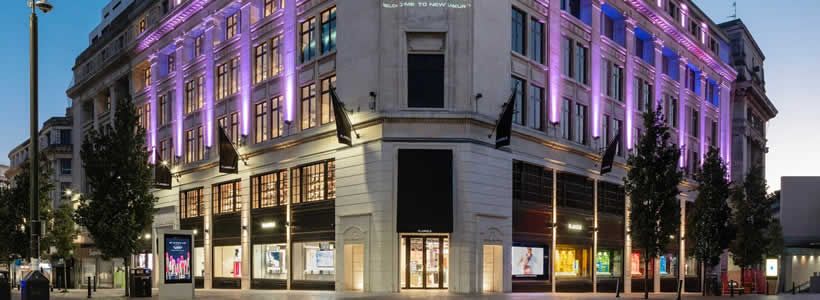
Flannels has opened a new seven-story flagship store in Liverpool, expanding its “new luxury” retail concept through a hybrid format that combines fashion, beauty, wellness, food and experiential spaces within a single destination.
Located in the city center, the new flagship spans 11,150 sqm and represents the brand’s largest investment to date. The project introduces a mixed-use retail environment that integrates luxury fashion retail with restaurants, beauty services, hospitality and fitness experiences.
Luxury retail and experiential spaces across seven floors
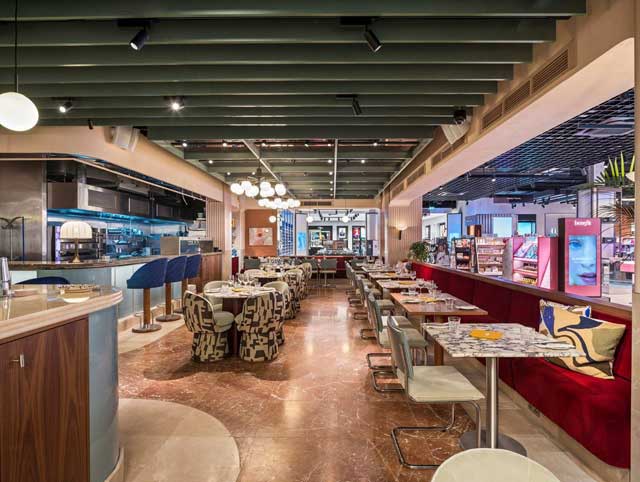
The Liverpool flagship combines retail functions with hospitality and lifestyle-oriented services. The building includes a large beauty hall, three restaurants, a bar, the world’s first in-store Barry’s Bootcamp and a made-to-measure aesthetic treatment destination developed with Dr. Esho.
A rooftop terrace overlooking Liverpool is also part of the project, while additional dining concepts are scheduled to open later, including a rooftop brasserie, an all-day dining space and a pan-Asian restaurant.
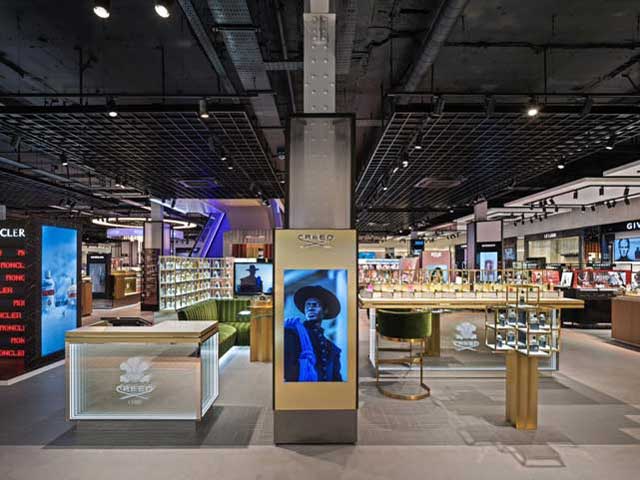
Fashion brands and digitally-driven retail services
The fashion offering includes luxury and contemporary brands such as Balenciaga, Jacquemus, Off-White™, Burberry and LOEWE, alongside labels including Mugler, LaQuan Smith and Good American.
The footwear selection includes collaborations such as Rick Owens x Converse and Pharrell Williams x adidas. The store also introduces a digitally-focused made-to-measure service that allows customers to personalize tailoring through digital retail tools.
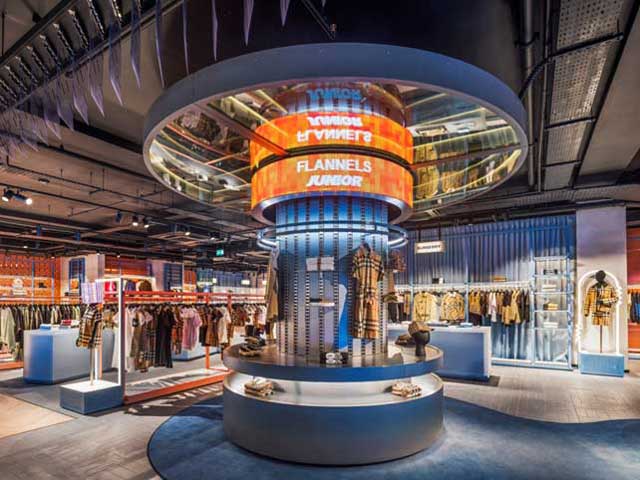
Interior concept between luxury retail and hospitality
According to Michael Murray, Chief Executive of Flannels, the Liverpool flagship represents a milestone in the company’s strategy focused on experience-oriented retail environments and youth culture.
The interior concept combines luxury retail with hospitality-driven functions, reinforcing the evolution of department store formats into multifunctional lifestyle destinations.
Jack Bridges, Flannels’ Creative Consultant and partner at Argent, explained that the project was conceived as a “playground for luxury,” with particular attention given to the beauty hall and to the contrast between restored late-Georgian architectural elements and contemporary visual merchandising displays.