
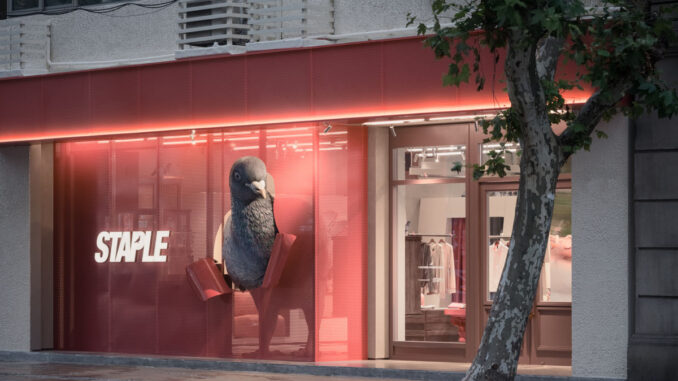
The STAPLE Shanghai flagship store, designed by DESIGN AT PRESENT, demonstrates how a fashion retail environment can evolve beyond product display to become a powerful brand communication tool. Located on Huaihai Middle Road, one of Shanghai’s most prominent shopping destinations, the project combines architecture, materiality and storytelling to create an experience deeply connected to the identity of the New York-born streetwear label.
For retailers, architects and designers, the store offers valuable insights into contemporary fashion retail design. The façade becomes an urban landmark, the layout guides customer movement, flexible display systems support merchandising strategies and lighting contributes to a fully immersive experience.
An Iconic Façade Strengthens Brand Recognition
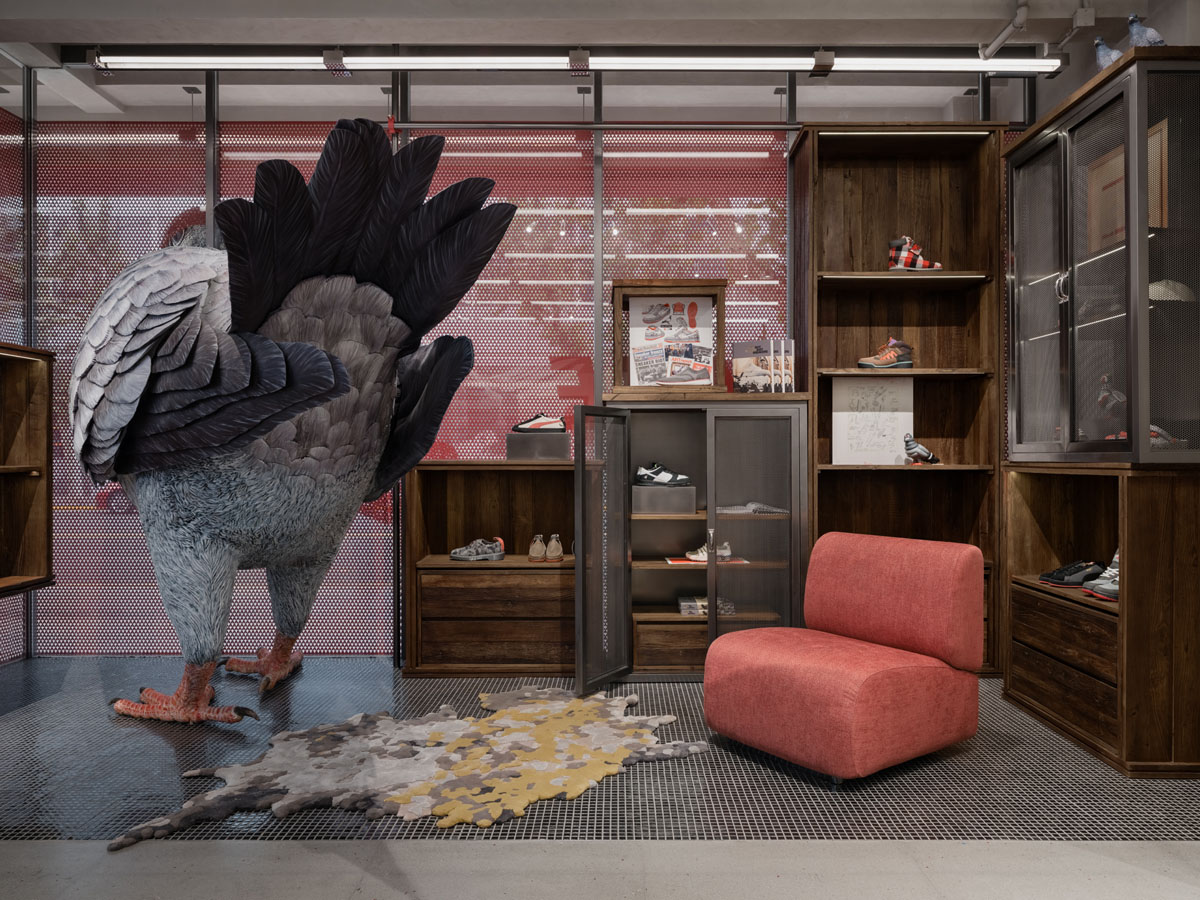
One of the most distinctive elements of the project is the red perforated metal façade from which the brand’s iconic pigeon emerges at monumental scale. The porous envelope filters natural light while establishing a dynamic relationship between the interior and the surrounding streetscape, transforming the storefront into a striking urban installation.
In contemporary retail, a memorable façade plays a strategic role. It increases visibility, reinforces brand recall and helps a store stand out within a competitive commercial environment. The STAPLE project demonstrates how a strong visual symbol can become a powerful attraction device while remaining fully aligned with the brand’s identity.
The Store Layout Combines Retail and Storytelling
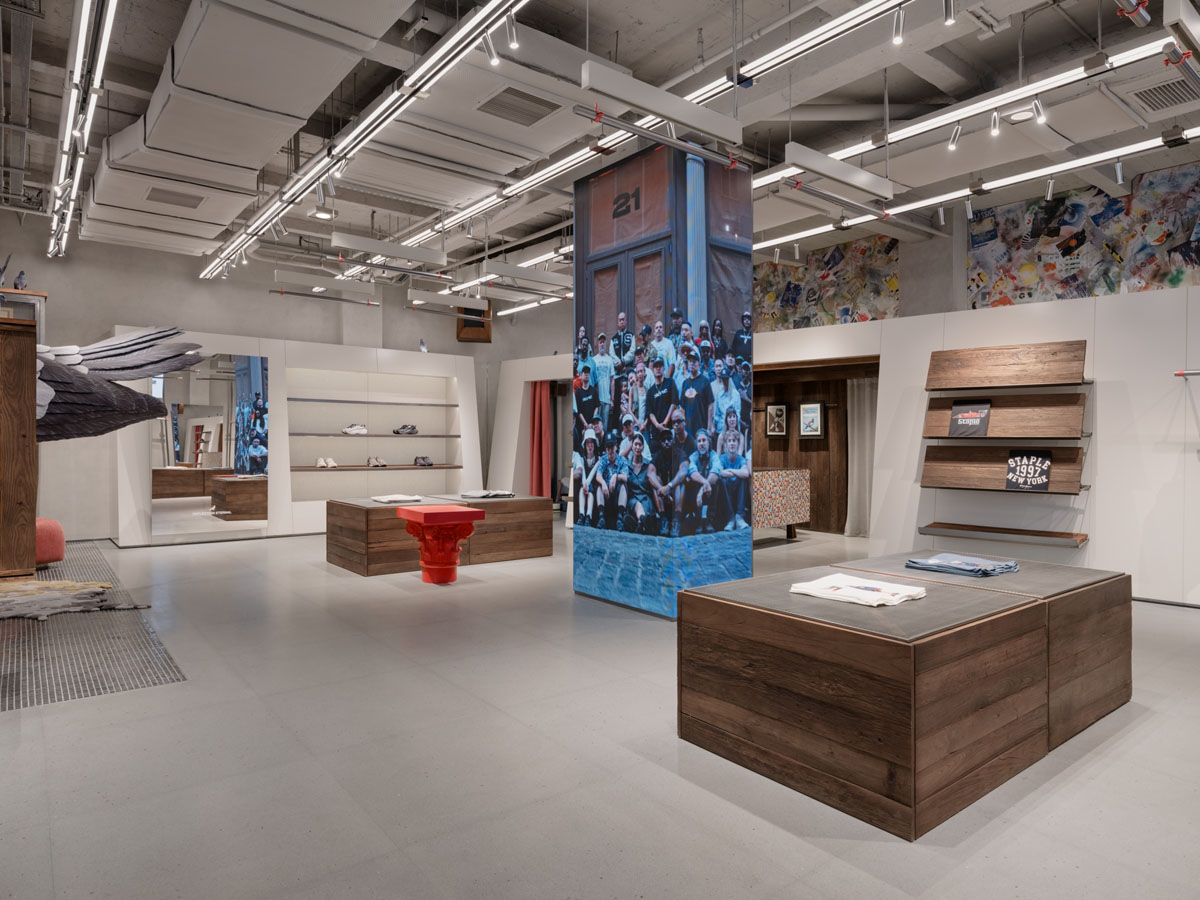
Inside, the space unfolds through a fluid sequence of environments that alternate between retail functions and narrative installations. Rather than simply organising merchandise, the layout is used to communicate the brand’s story and create a more engaging customer journey.
Throughout the store, materials and structures inspired by New York’s urban infrastructure help shape the experience. Reclaimed timber, metal mesh and references to construction scaffolding create an intentionally raw atmosphere where street culture and commercial architecture intersect.
Flexible Fixtures Adapt to Changing Collections
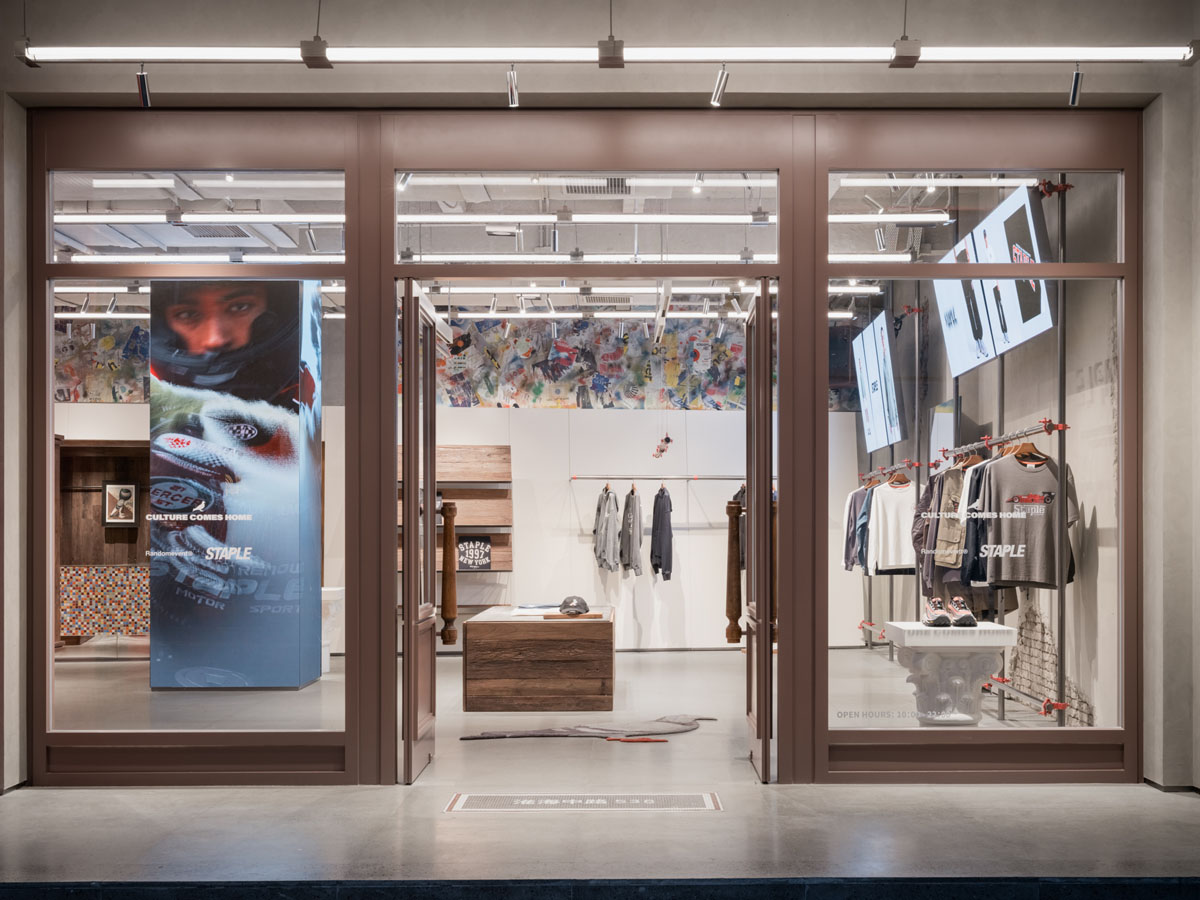
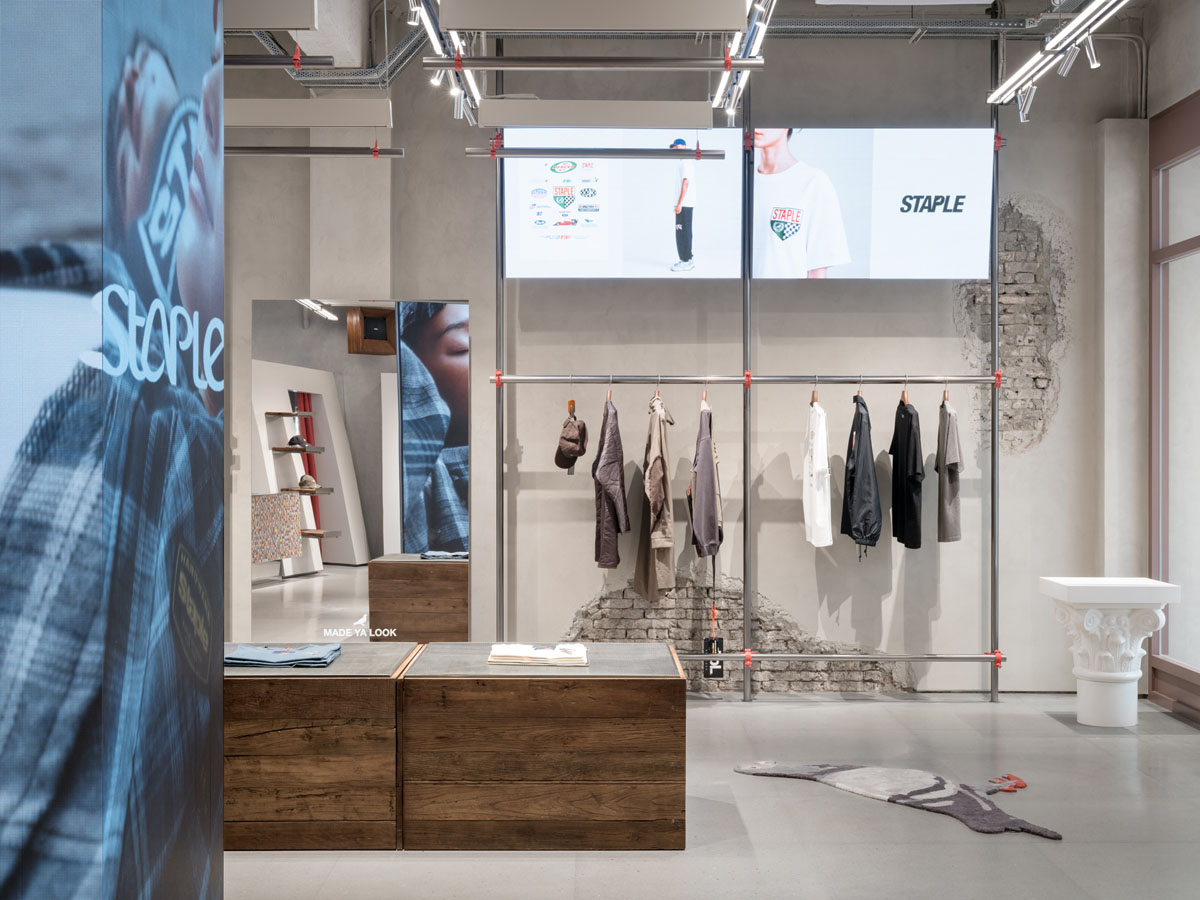
The main sales floor incorporates adjustable shelving, modular systems, vertical rails and movable display elements that allow the space to evolve over time. This approach is particularly effective in fashion retail, where seasonal collections, capsule launches and promotional activities require frequent merchandising updates.
The project highlights how flexibility has become a key principle in contemporary store design. Adaptable fixtures help maximise investment while ensuring the retail environment remains relevant and responsive to changing commercial needs.
Urban Materials Reinforce Brand Identity
Raw finishes, reclaimed timber, perforated metal surfaces and terrazzo flooring with red accents contribute to a material palette that reflects the values of streetwear culture. The selected materials do more than provide visual character; they communicate positioning, authenticity and brand personality.
The STAPLE store demonstrates how materials can become a branding tool in their own right. When aligned with a brand’s narrative, finishes and textures help strengthen emotional engagement and reinforce product perception.

Lighting Enhances the Customer Experience
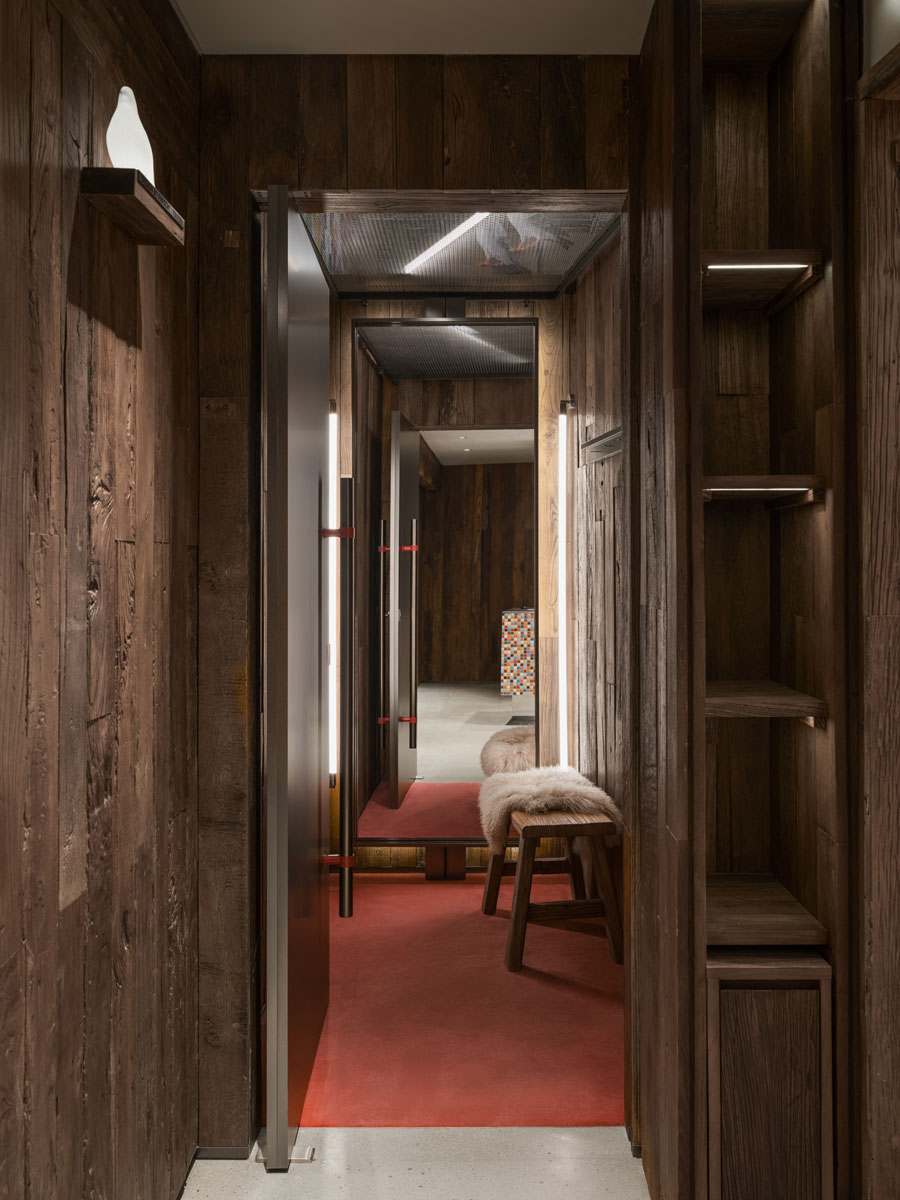
The fitting rooms are among the most engaging spaces within the project. Technical lighting, exposed mesh ceilings, dedicated installations and video content connecting New York and Shanghai transform a purely functional area into an immersive environment.
The project illustrates how lighting can be used not only to highlight products but also to guide customer movement, differentiate functions and strengthen emotional engagement. At STAPLE, lighting becomes an essential part of the storytelling strategy.
What Designers Can Learn from the STAPLE Shanghai Flagship Store
The project demonstrates how successful fashion retail environments are often built around five core principles:
- a strong and recognisable visual identity;
- a layout that supports storytelling;
- flexible and adaptable display systems;
- materials aligned with brand positioning;
- lighting designed as part of the overall experience.
Rather than replicating the aesthetics of STAPLE, the project’s greatest value lies in the transferable design principles it offers. The Shanghai flagship becomes a case study in how retail spaces can evolve into narrative environments where brand identity, product presentation and customer experience work together as a cohesive whole.
Location: Shanghai, China
Design: DESIGN AT PRESENT
Photo credit: Wen Studio