
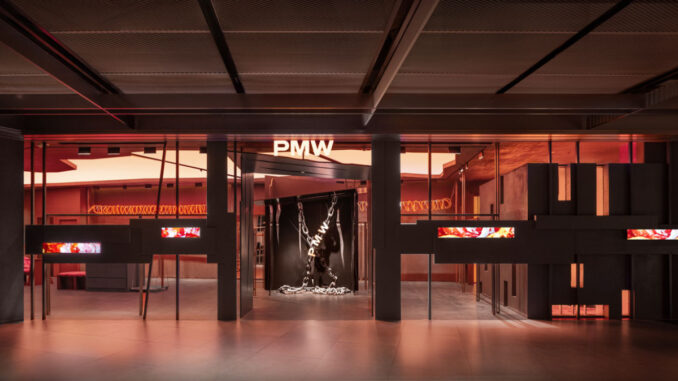
Designed by ADS for PMW in Chengdu, the PRISON Store Concept redefines the retail environment as an immersive brand experience where architecture, lighting and large-scale installations work together to shape a compelling spatial narrative.
For contemporary fashion brands, physical stores have evolved into powerful brand communication tools. They express identity, reinforce brand positioning and create lasting emotional connections with customers. In this project, architecture itself becomes a communication tool, transforming every visit into a memorable experience.
A narrative concept that shapes the customer journey
Many concept stores rely on spectacular visual gestures to attract visitors. Here, however, every architectural element contributes to a carefully orchestrated narrative.
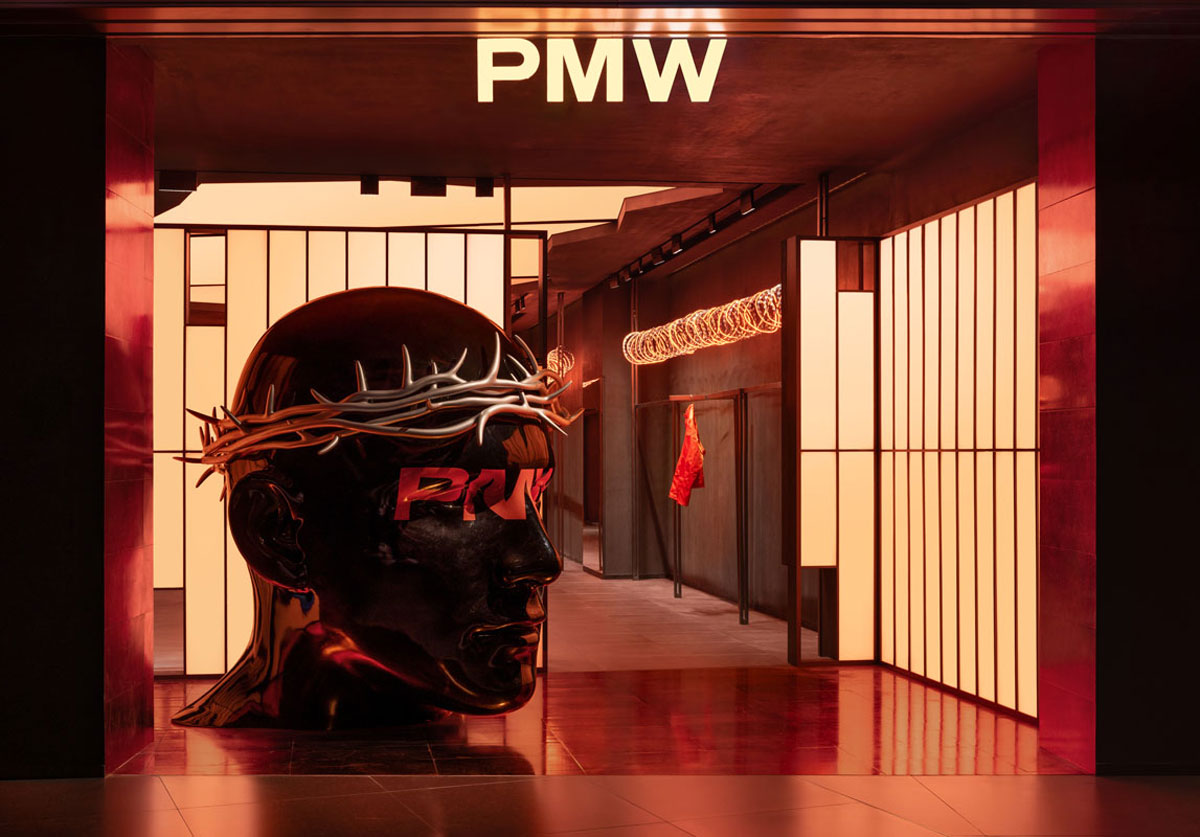
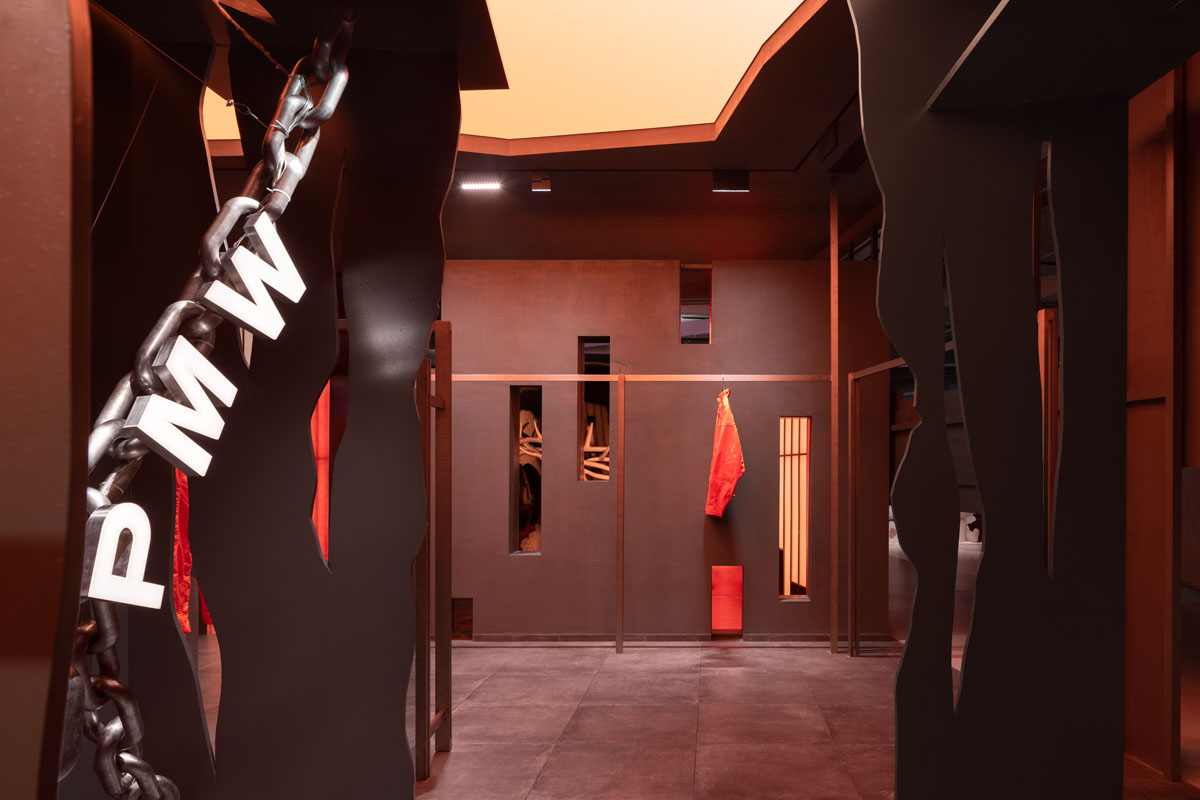
Visitors enter a surreal environment inspired by the symbolism of confinement rather than a literal interpretation of prison architecture. A monumental sleeping figure crowned with silver thorns introduces the journey, while fractured ceilings and controlled lighting effects blur conventional perceptions of time and space.
Rather than recreating a prison, the project uses this imaginary setting to evoke curiosity, tension and discovery, encouraging visitors to experience the store as a sequence of emotional moments rather than a conventional shopping destination.
Materials, lighting and surfaces redefine spatial perception
The atmosphere is created through the interaction of materiality, light and texture. Dark metallic finishes contrast with flooring inspired by volcanic stone, while reflective surfaces subtly amplify depth and perspective.
Lighting extends well beyond its functional role, becoming an essential design component that continuously alters the perception of the interior through carefully balanced shadows, warm tones and controlled lighting effects.
Material finishes, textures and bespoke display elements further reinforce the store’s identity, demonstrating how interior design and furnishings contribute as much to the brand experience as the architecture itself.
The layout becomes part of the retail experience
Rather than simply organising product displays, the layout guides visitors through a carefully choreographed sequence of spaces.
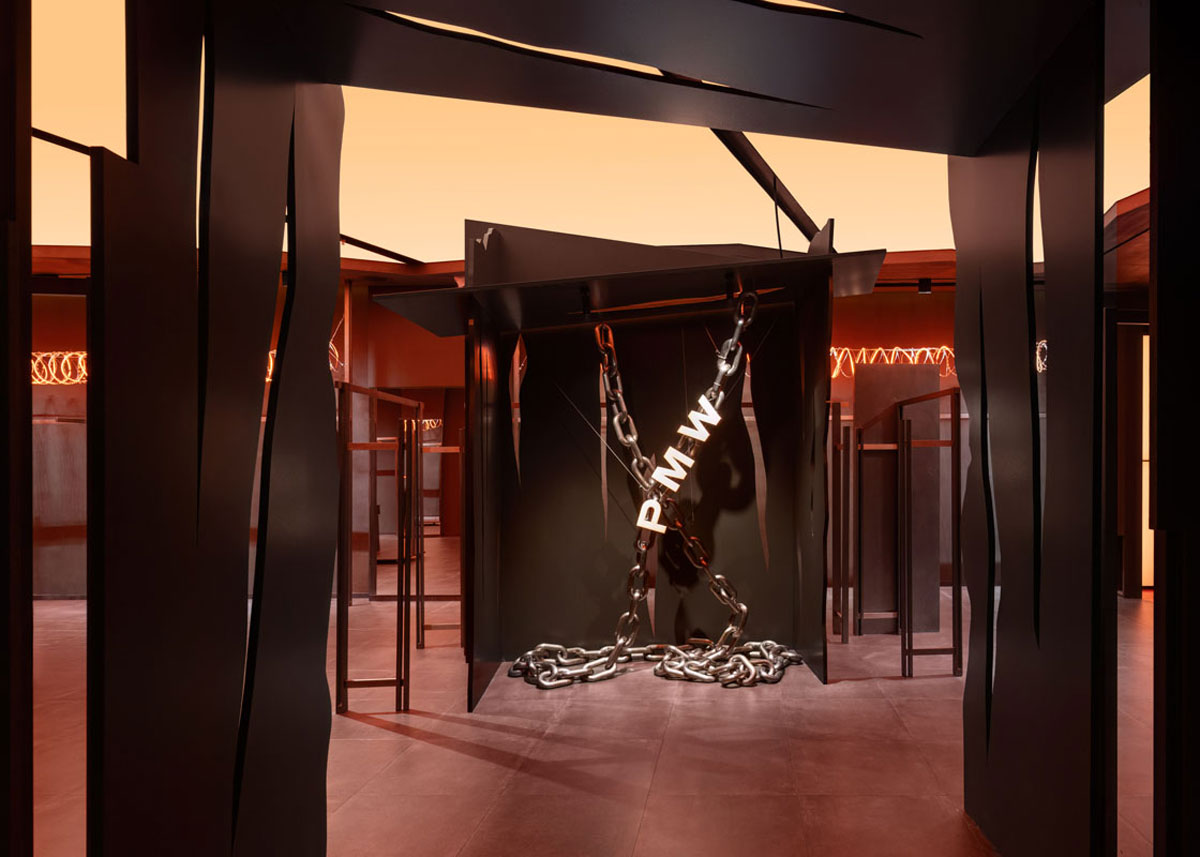
Narrow passages alternate with more open spatial sequences, while monumental installations, suspended chains, sculptural volumes and industrial-inspired structures generate a rhythm of discovery throughout the store.
At the heart of the interior, a striking central installation becomes the focal point of the entire project, while architectural elements positioned along the route constantly reshape the visitor’s perspective.
Within this framework, circulation is not merely functional. It slows movement, encourages exploration and naturally directs attention towards selected products without relying on conventional promotional strategies.
Visual merchandising supports the architectural narrative
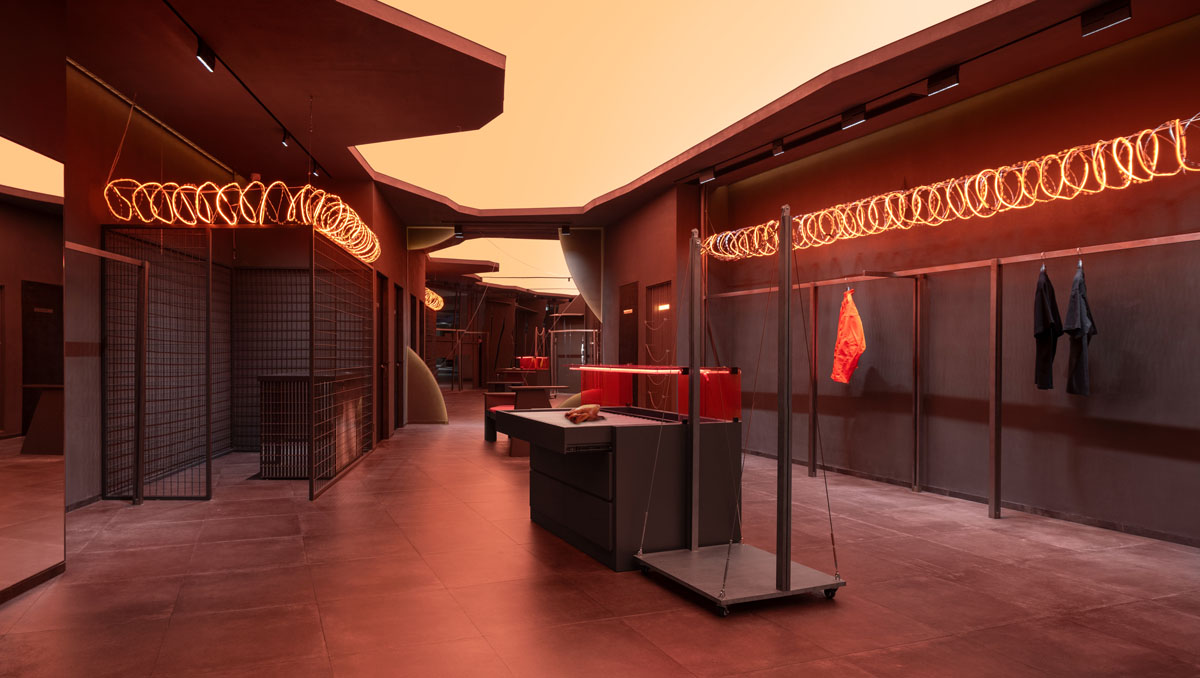
The merchandising strategy follows the same restrained philosophy. Products are displayed through deliberately restrained display systems that allow the architecture to remain the dominant visual language.
By reducing display density, each garment gains greater presence while reinforcing the sense of exclusivity that defines the brand. Rather than competing with the interior design, the merchandise becomes part of a larger spatial composition where every element contributes to a consistent brand identity.
Beyond scenography: architecture as a branding tool
The project demonstrates that experiential retail extends far beyond spectacular installations. Its strength lies not in individual visual statements—the monumental chains, fractured ceilings or sculptural entrance—but in the consistency with which every design decision supports a single narrative.
Architecture, materials, lighting, circulation and visual merchandising operate as an integrated system that strengthens brand recognition while creating an emotionally engaging environment.
For fashion brands, this approach transforms the physical store into a permanent communication platform. The space does more than accommodate products; it expresses the brand’s character, differentiating it within an increasingly competitive marketplace where collections and pricing alone are rarely enough to stand out.
Ultimately, the project highlights a fundamental principle of contemporary retail design: memorable customer experiences emerge not from the quantity of dramatic features, but from the coherence of the overall concept. Even relatively compact retail spaces can generate lasting emotional connections when architecture, interior design and brand storytelling work together as one.
A concept store designed to leave a lasting impression
Occupying 133 square metres, the PRISON Store Concept demonstrates how retail design can move beyond commercial function to become an immersive brand environment.
Architecture, immersive installations, lighting and visual merchandising work together to create a distinctive spatial identity, confirming one of the defining directions of contemporary retail: today, the physical store is not simply a place to sell products, but a strategic medium through which brands communicate their identity, strengthen customer engagement and create lasting emotional connections.
In an increasingly competitive market, designing a store that people remember means creating value that extends well beyond the moment of purchase.
Credits
Design: ADS
Client: PMW
Location: Chengdu, China
Area: 133 sqm