
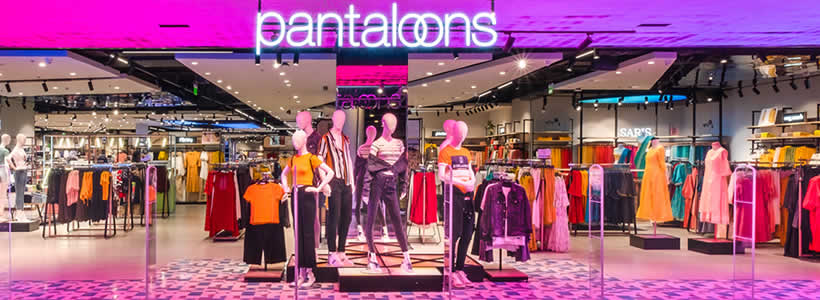
Indian fashion retailer Pantaloons worked with London-based creative agency Dalziel & Pow to develop a new store concept introduced in 2020 across locations including Mumbai, Bangalore, Lucknow and Delhi.
The project translates the brand’s repositioning into a flexible retail system designed to accommodate changing collections, visual merchandising and locally relevant communication. Rather than relying on a fixed store language, the concept combines adaptable displays, digital content and clearly differentiated departments.
A flexible retail system for changing collections
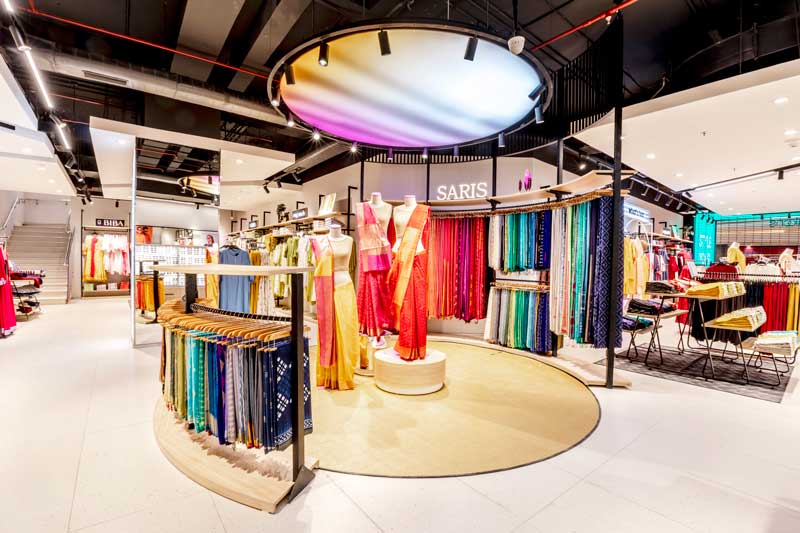
The stores are conceived as adaptable environments capable of responding to new products, seasonal trends and different merchandise categories.
The spatial framework acts as a neutral but recognisable base for changing collections, allowing the visual identity of the store to evolve without altering the overall concept.
This flexibility also supports the rollout of the system across different locations, where common design principles can be combined with more specific local content.
Visual merchandising becomes part of the store architecture
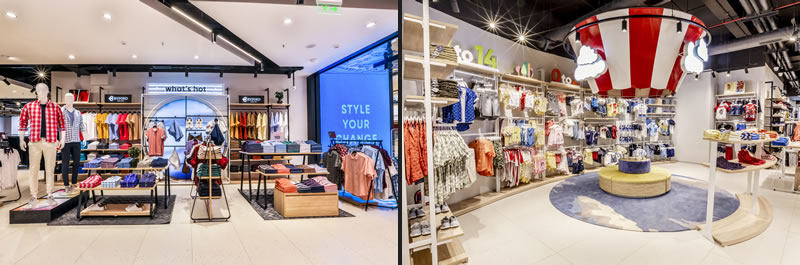
Visual merchandising plays a central role in the concept, connecting product presentation with the broader organisation of the store.
Displays are used not only to present garments, but also to communicate styling combinations, seasonal themes and product relationships.
Rather than operating as a separate layer applied after the interior design, visual merchandising is integrated into the spatial system and contributes to the way customers move through and interpret each department.
A digital shopfront adapts to products and local content
The storefront incorporates a large digital wrap capable of displaying continuously changing content.
The system can be updated to communicate new product launches, campaigns and other brand content without modifying the physical structure of the shopfront.
It can also be adapted to specific locations, allowing stores to introduce messages connected with local events and festivals.
This digital layer therefore becomes part of the façade rather than a separate communication element.
Departments are organised as distinct destinations
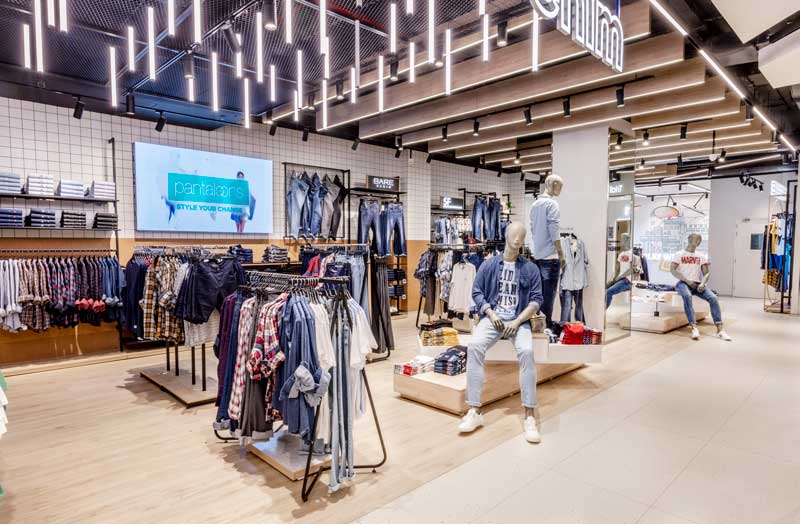
The layout creates guided routes both within individual departments and between different areas of the store.
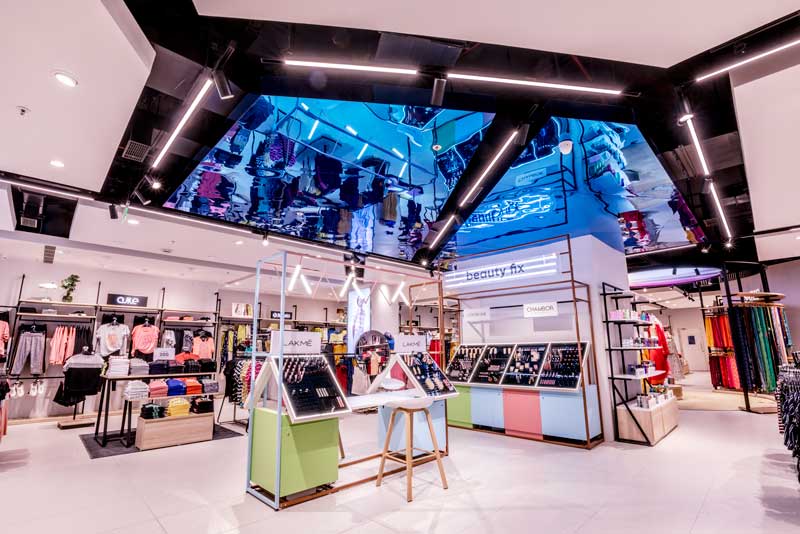
Colour, materials and architectural elements are used to distinguish the departments while maintaining continuity across the overall concept.
Some areas are marked by fragmented ceiling structures, while others use large translucent discs as visual focal points.
The Cosmetics department integrates branded products within the broader Pantaloons store identity, while the Lifestyle area organises home products by category and combines them with dedicated visual merchandising.
Interactive fitting rooms and playful elements complete the experience
The fitting rooms introduce a more interactive component through the combination of colour, lighting and sensor-based elements.
Customers can activate an illuminated mirror by stepping onto a sensor pad positioned within the space, transforming a functional fitting-room element into part of the store experience.
In the Kids department, a large hot-air-balloon display creates a recognisable visual landmark and differentiates the area from the other departments.
Together, digital communication, flexible displays, visual merchandising and interactive elements establish a retail concept in which each department has its own identity while remaining part of a consistent Pantaloons store system.
Brand: Pantaloons
Retail concept: Dalziel & Pow
Rollout: Mumbai, Bangalore, Lucknow, Delhi and other locations in India