
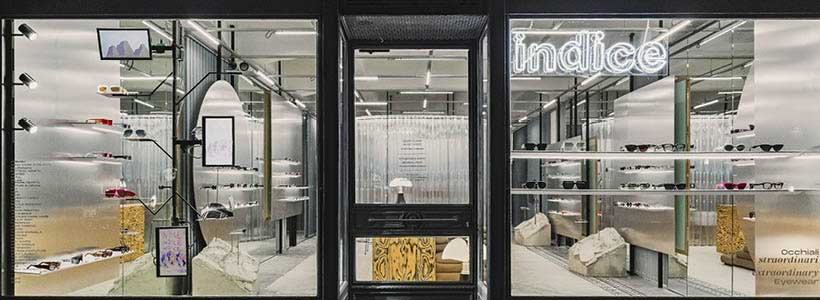
The new project for Ottica Indice in Cortina d’Ampezzo, designed by Studio di Architettura Labzona, develops a design language that enhances the relationship between contemporary furnishings, original surfaces and iconic elements of Italian design. Located in the centre of the Alpine town that will host the 2026 Winter Olympics, the boutique continues the design path already developed by the brand in its Brescia and Forte dei Marmi stores.
The project works on the balance between preservation of the existing envelope and the introduction of new display elements, without altering the original character of the space. It defines a retail environment where materials, lighting and furnishings constantly interact with the existing architectural structure.
Custom furniture and recovered original surfaces
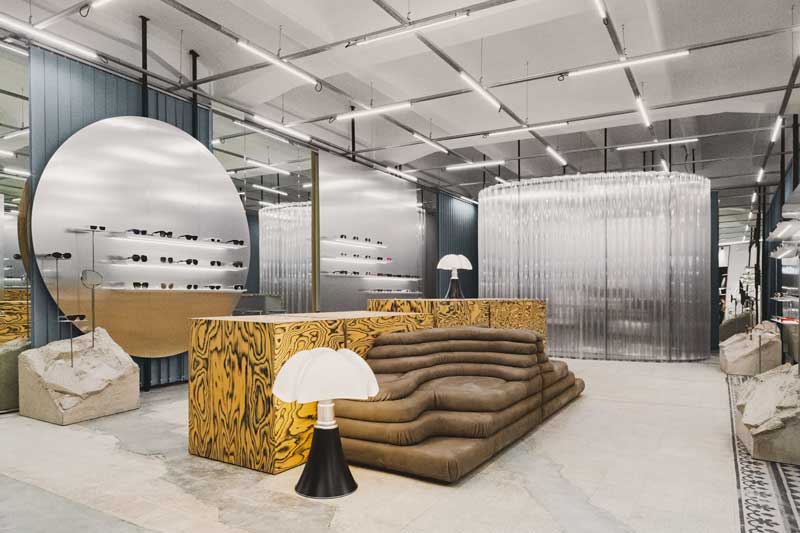
The store layout integrates custom-made furniture with the recovered original flooring, keeping the material stratification of the space visible. This choice preserves the identity of the place while introducing a contemporary display system dedicated to eyewear.
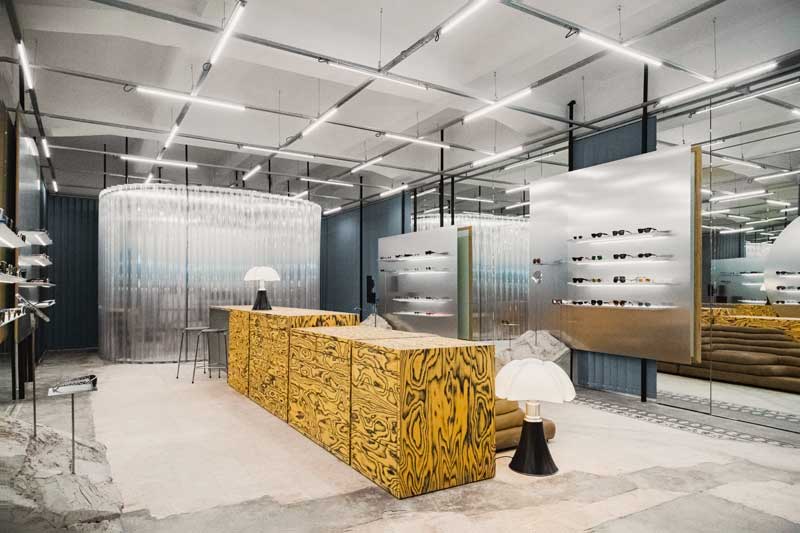
The ceiling entablature dialogues with an exposed aluminium lattice structure, where LED lamps are integrated. Lighting contributes to the spatial rhythm and enhances the surfaces and display elements inside the boutique.
Materials, colour and visual merchandising
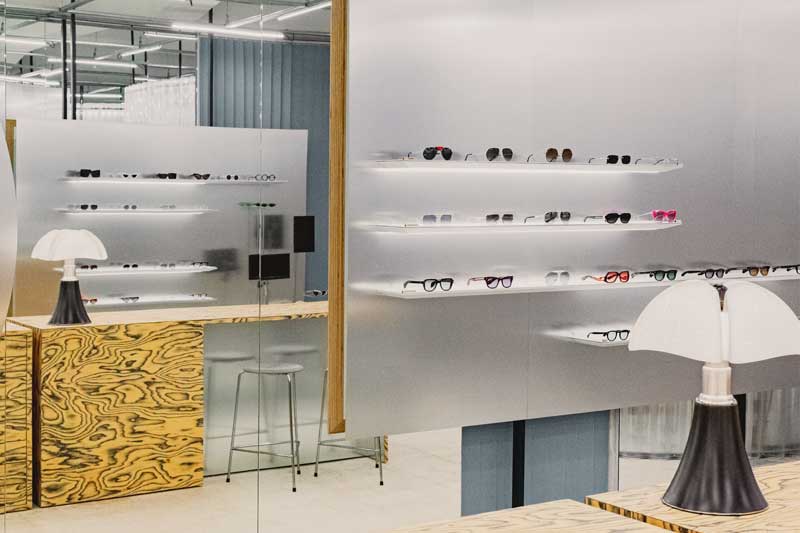
Mirrors and coloured curtains alternate on the walls, introducing visual depth and creating a dynamic background for eyewear display. Geometric elements and stones used as display supports reinforce the material dimension of the project and contribute to the visual identity of the space.
At the back of the store, a wall made of metal and corrugated polycarbonate defines the examination room, creating a functional separation without interrupting the visual continuity of the interior.
Iconic pieces and optical store layout
A monolithic storage unit clad in Alpi lignum, designed by Ettore Sottsass, is positioned at the centre of the space. The layout is completed by the Terrazza sofa designed by Ubald Klug for De Sede and the Pipistrello lamps by Gae Aulenti.
The inclusion of recognizable design pieces helps define a retail environment that combines display function, interior design and material research, while maintaining a strong relationship with the existing architectural context.
LABZONA
Labzona is an architecture studio based in Brescia and Milan. The studio works on architectural design, interior design, urban research and furniture, developing projects in residential, retail and commercial fields.
by AN Shopfitting Magazine no.169 ©