
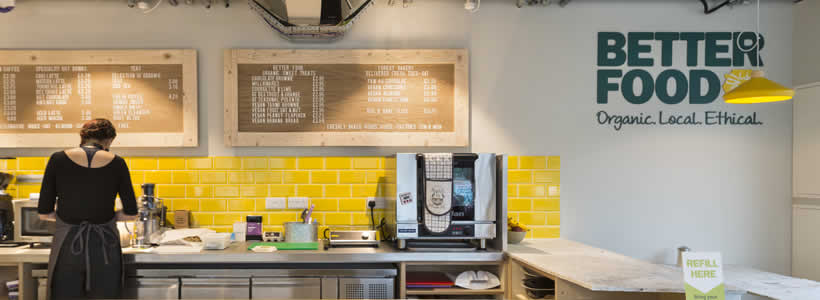
Better Food has opened its fourth store in Bristol with a new 3,000 sq ft retail and café-deli concept on Gloucester Road. Designed by Bristol-based studio Phoenix Wharf, the project evolves the retailer’s format while reinforcing the values that have defined the business since its foundation 30 years ago: organic sourcing, local production and ethical food retail.
Located on one of the UK’s best-known destinations for independent businesses, the new store combines a deli, café, refill station and retail warehouse within a single environment. The project was developed to support Better Food’s growing presence in Bristol while maintaining the community-focused identity that has contributed to the retailer’s long-term success.
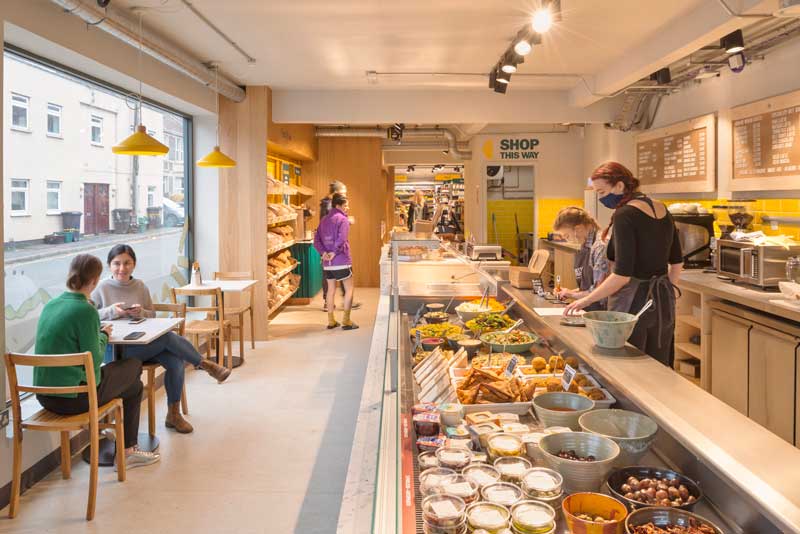
The store layout combines deli, refill and retail warehouse functions
The new Better Food store is organised around three core retail functions: a café-deli, a refill area and a retail warehouse. The layout also incorporates back-of-house facilities, staff spaces and customer amenities.
The building configuration allowed Phoenix Wharf to create two separate customer entrances. Visitors can access the deli and café area directly from the street or enter through the retail warehouse section, creating flexibility in customer circulation and supporting different shopping missions.
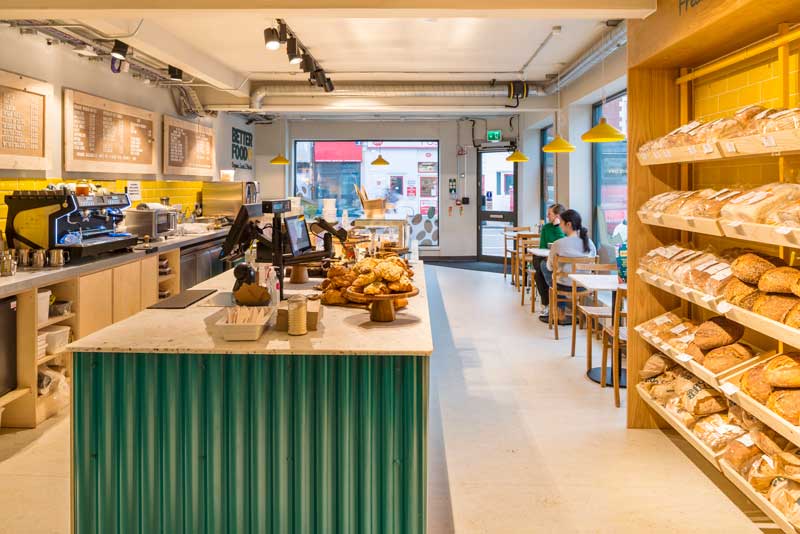
A previously divided floorplan was transformed into a continuous retail environment by removing an internal wall. The resulting layout connects the deli area, refill zone and warehouse section into a unified customer journey, in line with contemporary approaches to food retail design.
The design reflects Better Food’s community values and brand identity
The design brief called for a contemporary and cost-conscious retail environment that incorporated Better Food’s established green and daffodil-yellow brand palette. The retailer also requested that the new store remain accessible and familiar to its existing customer base, avoiding an overly premium aesthetic that could weaken its strong community connection.
To inform the design strategy, Phoenix Wharf analysed Better Food’s three existing stores and consulted extensively with shop-floor teams. This research helped identify operational strengths and areas for improvement, allowing the new format to respond directly to customer and staff needs.
A collaborative workshop with the client placed the retailer’s mission at the centre of the project, ensuring that design decisions reflected the company’s commitment to local communities, ethical sourcing and environmental responsibility.
Sustainable materials support the project’s environmental objectives
Material selection played a central role in the design process. Phoenix Wharf prioritised products that balanced durability, affordability and environmental performance.
The flooring specification features Marmoleum Marbled by Forbo, a material produced primarily from natural raw materials and designed to minimise environmental impact. Throughout the project, the design team focused on materials with strong sustainability credentials while maintaining commercial practicality.
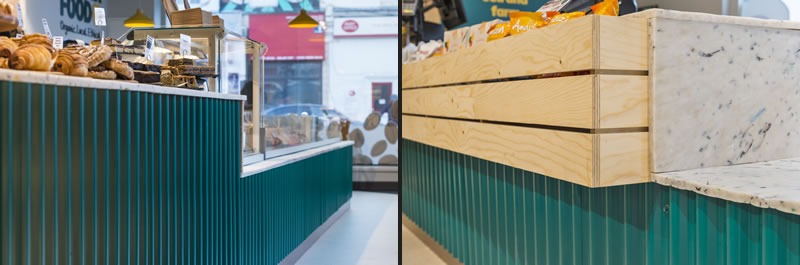
One of the most distinctive features of the store is the use of a new surface developed by Nurdle, manufactured from recovered ocean plastic. The material is used for table tops, counters and customer touchpoints throughout the interior and represents its first known commercial application within an interior design project.
Corrugated metal, plywood and selected oak veneer elements contribute to a material palette that is simple, robust and visually consistent with the retailer’s values.
The deli area combines hospitality and retail within a flexible environment
The café-deli occupies the right-hand side of the store and includes a takeaway food counter alongside a 14-seat café area. The space is designed to support both quick visits and longer dwell times.
A large servery positioned against the rear wall features powder-coated corrugated metal finished in Better Food’s signature green. Countertops are manufactured using the recycled ocean-plastic material supplied by Nurdle, while yellow tiling behind the counter references the retailer’s bee symbol and visual identity.
Pendant lighting in mustard yellow is combined with directional track lighting to provide both atmosphere and functional illumination. Warm grey wall finishes and consistent flooring create visual continuity across the interior.
The refill station encourages low-waste shopping behaviours
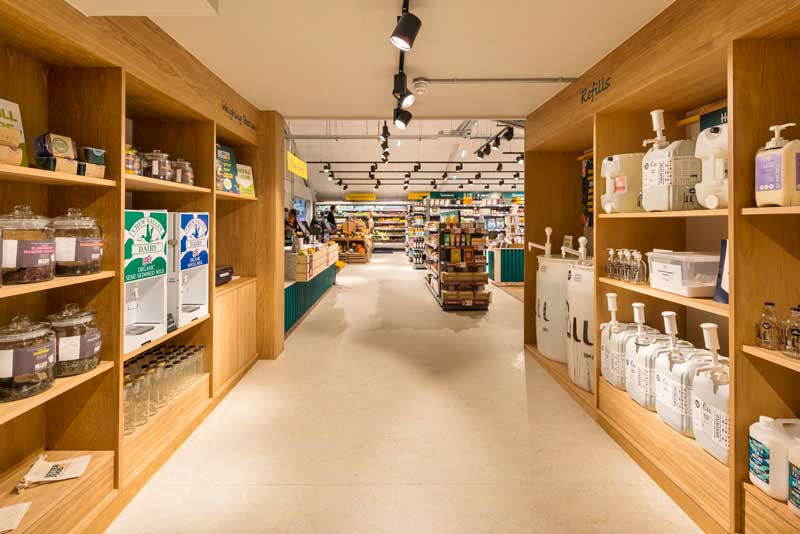
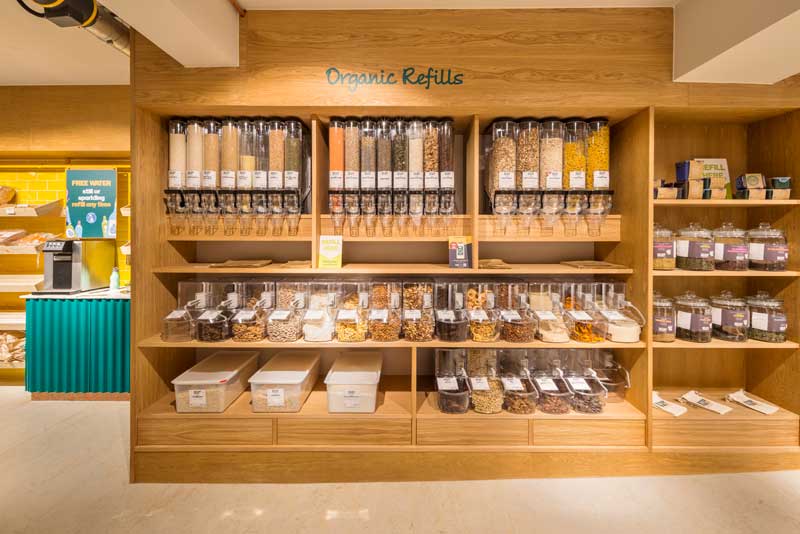
Located in the central connecting zone, the refill area supports Better Food’s commitment to reducing packaging waste. Customers bring reusable containers, weigh them before shopping and purchase products according to the quantity required.
Custom cabinetry with oak veneer detailing houses the refill dispensers, while clear product identification and dedicated service points simplify the customer experience. The till area continues the project’s material language through the use of green corrugated metal and recycled ocean-plastic surfaces.
The refill zone functions as both a retail destination and a practical demonstration of the retailer’s environmental values.
The warehouse section prioritises clarity, flexibility and product accessibility
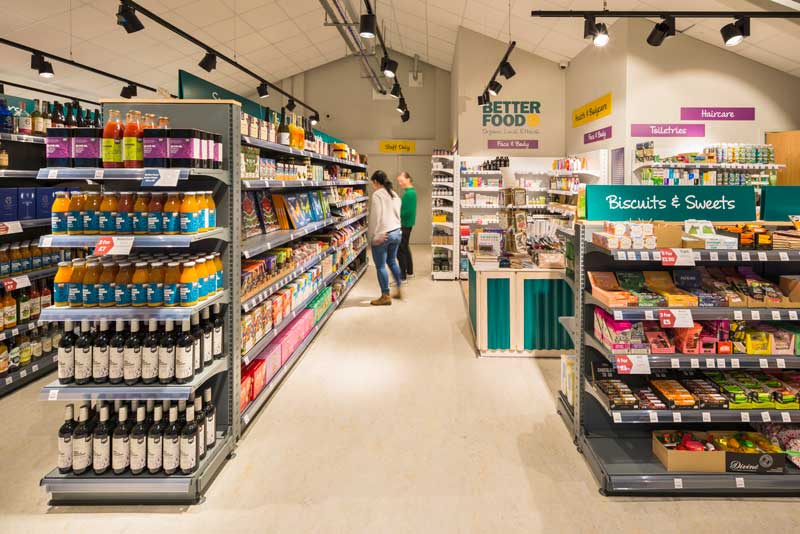
The final area of the store is dedicated to a retail warehouse format. This section adopts a more restrained design language, supporting product visibility and operational efficiency.
Track lighting, neutral finishes and high-level wayfinding graphics create a straightforward shopping environment that complements the more experiential character of the deli and refill areas.
By combining hospitality, refill retail and warehouse merchandising within a single destination, the Gloucester Road store represents an evolution of the Better Food format while maintaining the principles that have shaped the business for three decades.
The project demonstrates how retail design can support sustainability objectives, operational requirements and community engagement within a cohesive customer experience.
Location: Bristol, United Kingdom
Design: Phoenix Wharf
Photography credit: Story Photography