
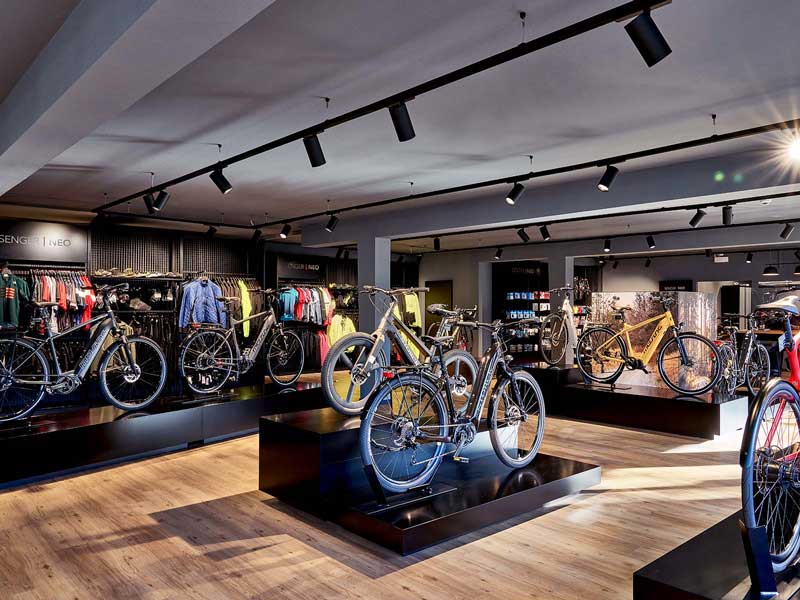
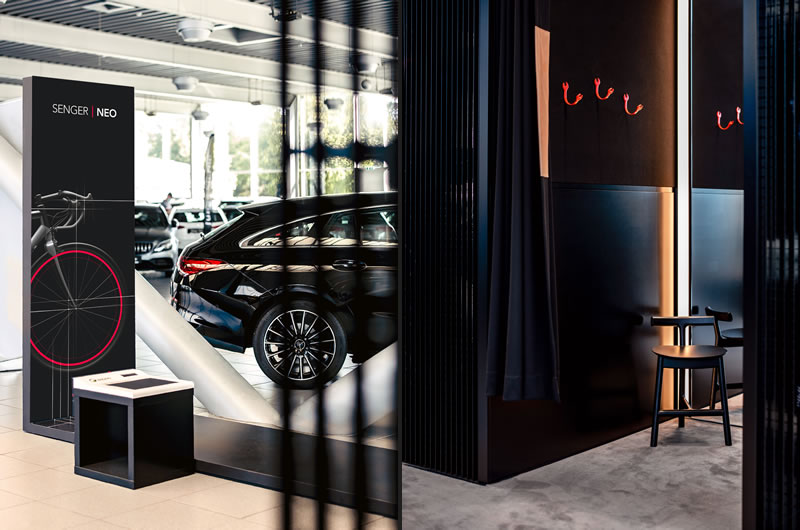
atelier 522 develops the retail concept for the Senger Group through the launch of SENGER | NEO, a new store format dedicated to future mobility solutions. Developed for the Mercedes-Benz locations in Rheine and Oldenburg, the project introduces a retail environment focused on bicycles, e-mobility and customer experience within the existing architecture of the automotive retail network.
The concept expands the traditional car dealership model through a showroom environment that combines hospitality, product storytelling and flexible display systems. The intervention reflects the growing transformation of mobility retail, where automotive spaces evolve into multi-category experience-driven environments.
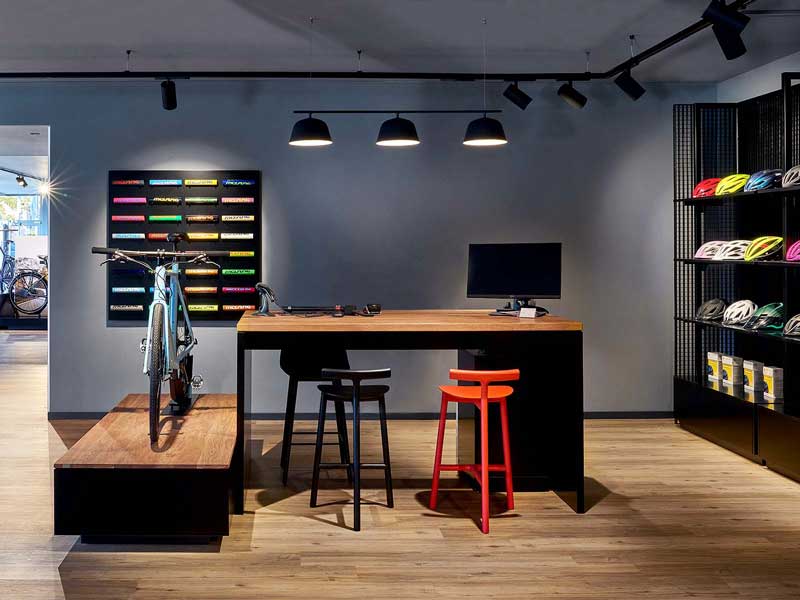
The mobility showroom integrates hospitality and customer interaction into the retail journey
Rather than functioning as a conventional bicycle store, SENGER | NEO is conceived as a hospitality-oriented showroom designed to support customer interaction throughout the entire purchasing process.
The layout introduces multiple areas dedicated to consultation, exchange and product configuration. Each staff workstation is paired with a multifunctional platform used both for bicycle configuration and as a staging element during product collection and delivery.
The project emphasizes customer comfort and personalized interaction, redefining the relationship between product display and retail service within contemporary mobility environments.
Materials and muted tones create continuity with the automotive retail architecture
The material palette establishes visual continuity with the existing Senger automotive dealerships while introducing a softer and more contemporary retail language.
Real wood, powder-coated MDF surfaces and metal grid systems are combined through restrained tones and tactile finishes. The materials remain intentionally neutral, allowing bicycles and accessories to become the focal elements of the space.
The balance between technical materials and warm textures contributes to a refined showroom atmosphere aligned with the premium positioning of the mobility concept.
Modular display systems adapt the presentation to different bicycle categories
The project uses modular presentation systems to create differentiated product staging based on bicycle typologies and customer use scenarios.
Mountain bikes are displayed on inclined platforms and metal grid structures, while racing bicycles are presented on smooth MDF surfaces that visually reference asphalt roads. The modular configuration allows products to be quickly identified and visually categorized within the showroom.
This approach strengthens orientation, improves visual merchandising and supports a more intuitive customer journey across the retail environment.
Scenic visual communication connects mobility products with lifestyle experiences
Large-format landscape visuals positioned behind the products introduce a narrative dimension into the showroom environment. Mountain trails, urban scenarios and panoramic roads visually connect the bicycles with specific lifestyle experiences and modes of use.
The scenic communication system transforms the retail environment into an immersive mobility experience, reinforcing emotional engagement and helping customers imagine different forms of movement and travel.
The project demonstrates how contemporary mobility retail increasingly integrates architecture, storytelling and customer experience into a unified spatial concept.