
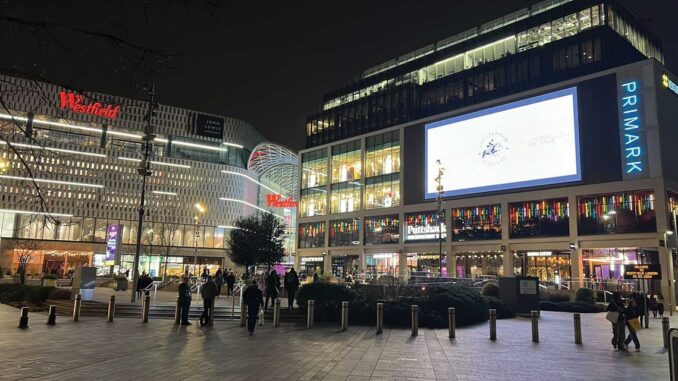
Today’s editorial is dedicated to London, the only city in Europe that can still surprise from a retail perspective, apart from Berlin, which we would like to make our next destination, as it appears to be undergoing a period of strong investment and the arrival of new brands.
Before leaving, we spoke with several industry professionals to understand whether there was any city in Europe currently more significant than others in terms of emerging retail trends. Almost no one took a firm position, stating that there were no particularly relevant novelties at the moment. In reality, perhaps because we had not travelled in Europe for some time due to the pandemic, we noticed several changes. While writing this article, the first words that came to mind were those of a famous song by Lucio Dalla: “Dear friend, I’m writing to you, so I can distract myself a little. Since you left, there’s a big piece of news…”
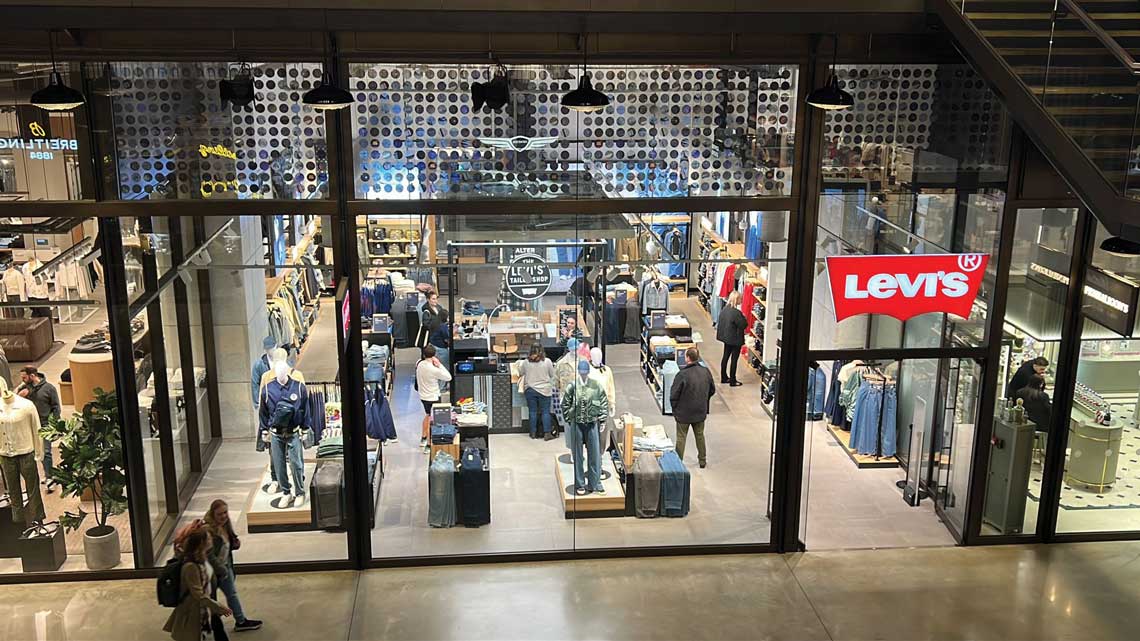
London, the beating heart of retail in Europe
And in fact, although we left with limited expectations, just four very intense days were enough to understand that even today the city still offers a number of surprises. On our return, we can summarise what we observed in three words:
- Extraordinary product offering
- Meticulous visual merchandising
- Inclusivity
The city has expanded so significantly, with a population of around 9,000,000 inhabitants, that it inevitably requires prioritising routes and combining the best-known shopping streets with more niche and secondary areas. We therefore moved from iconic locations such as Regent Street, Liberty, Oxford Circus, Carnaby Street, Covent Garden and other parts of central London, to newer destinations such as Battersea Power Station and Westfield. It was also inevitable to visit Camden Town and Portobello Road, although more for their atmosphere than for reasons strictly connected to retail. Let us now proceed in order and examine the three points we identified.
The product offering
Let us begin with the first point: the product offering. It is almost impossible not to find an item that meets one’s needs. From second-hand products to discounted items and the latest releases, the city offers access to an unmatched range. This translates into extremely strong competition, based mainly on two aspects: product availability, in terms of sizes and colours, and, of course, location. It is not uncommon to find stores within the same segment, often very large in scale, located only a few dozen metres apart. At this point, it is legitimate to ask: according to which criteria does the end consumer, whether local or tourist, decide where to purchase a product, considering that the same item, or similar variants, is available in large quantities across many different stores? It is difficult to provide a definitive answer regarding current consumer behaviour, as the stimuli are numerous: from social media to street advertising, from the media to shop windows and visual merchandising. Most likely, customer decisions are influenced by a combination of all these factors.
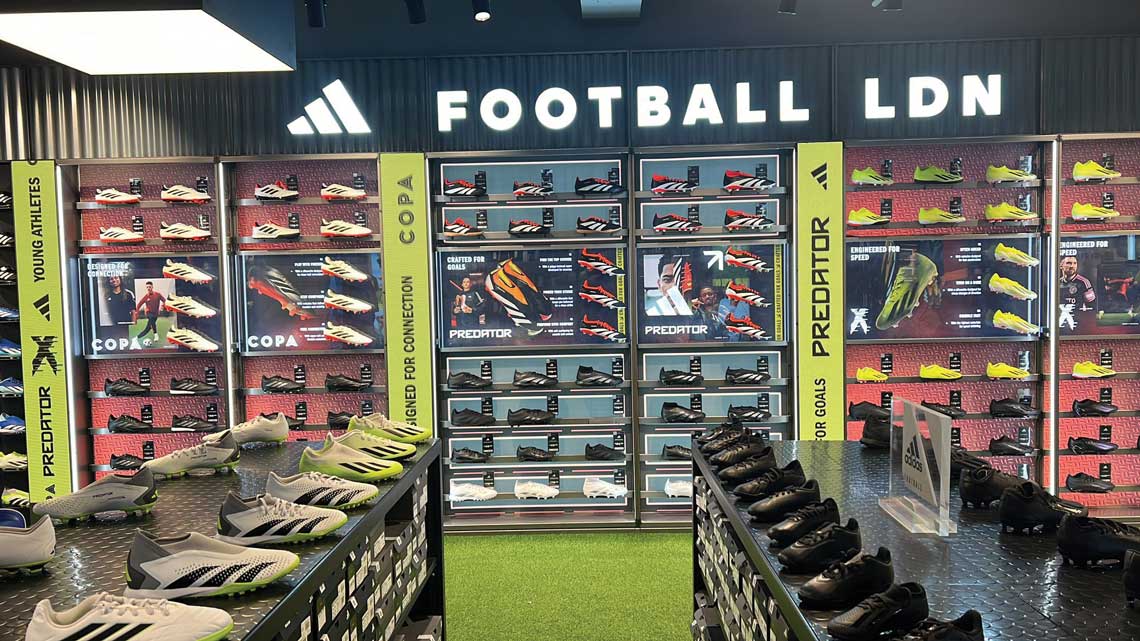
High-level visual merchandising in London retail
The second relevant point is the very high level of visual merchandising, which is the main lever on which the most important chains, as well as second-tier retailers, invest in order to make their products appealing and as visible as possible.
Setting aside for a moment the more theatrical aspect of window displays, which obviously depends on the available budget or on the size and quality of the retail units, it is more interesting to focus on how even those with fewer economic resources are still able to achieve excellent results. What stands out is the meticulous attention paid to the basic principles of visual merchandising, such as product folding, colour organisation and overall clarity of the display. The dominant concept is the right balance between quantity and visibility, namely a sound compromise between assortment density and display quality. Even in stores where the assortment is undoubtedly more mass-market than in certain boutiques, the aim is always to make what is displayed both easily accessible and, above all, clearly readable.
Space is money, so it is not unusual to encounter stores displaying products above 2.20 metres in height, in order to offer consumers the widest possible range. The display principles remain the same, but what is particularly striking compared to our last visit several years ago is that all brands, from the most structured to the most recent ones, have now reached a very high average standard of visual merchandising.
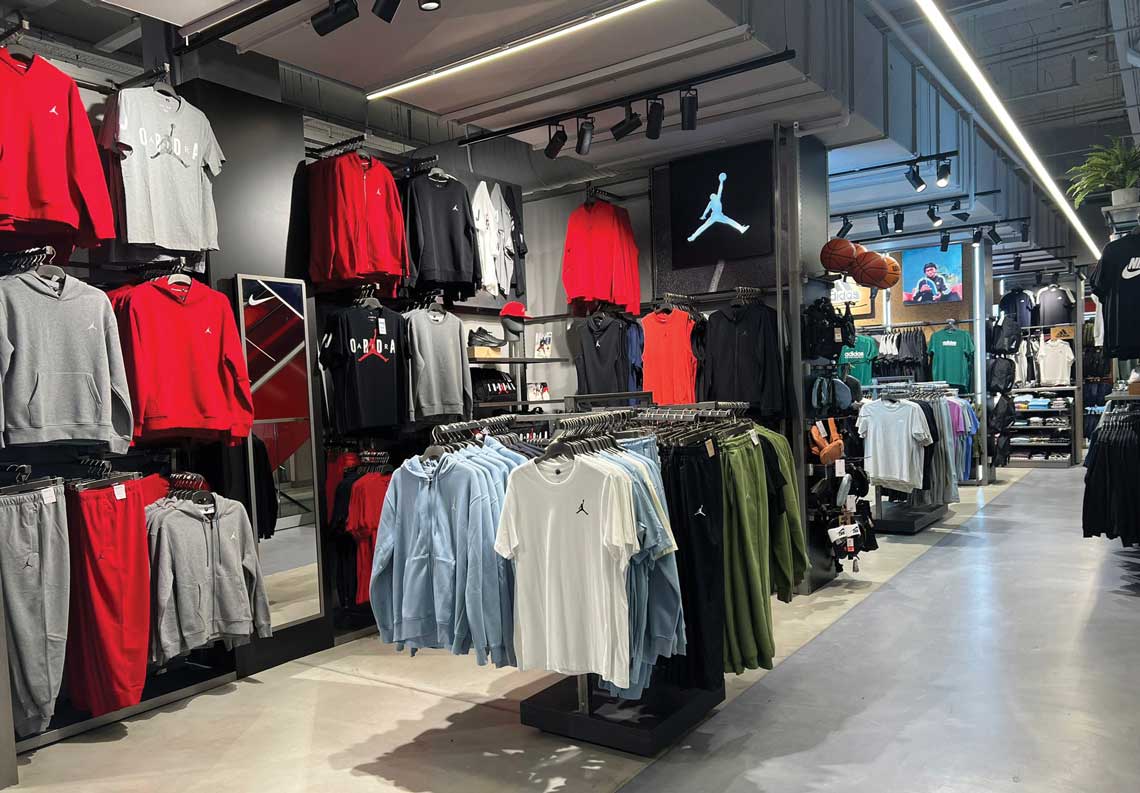
Inclusivity
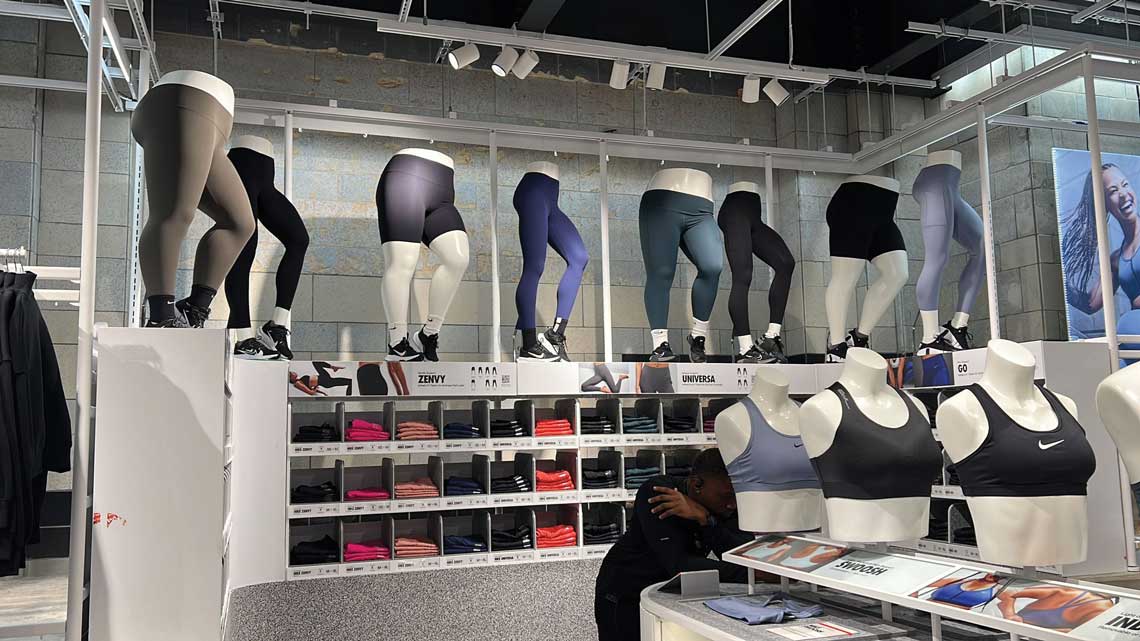
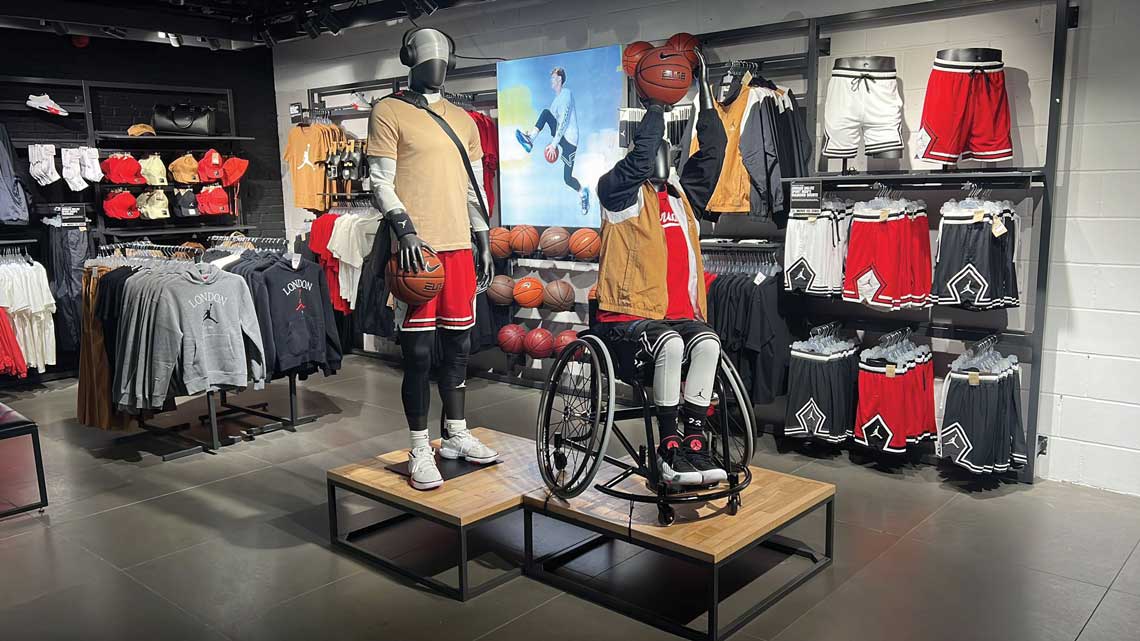
Another aspect that surprised us was inclusivity, not the kind declared through press releases or social media, but inclusivity expressed through facts and concrete actions. It is not uncommon to see the main shop window or the most visible areas inside stores dedicated to people whose physical characteristics differ from what is usually considered “the norm”. From plus-size customers to people with disabilities, major brands as well as smaller chains show considerable attention to social inclusivity. The underlying principle is that the end customer, upon entering the store, should never feel the discomfort of having to ask staff whether they stock the right size for their body shape or suitable products for their needs, as in the case of customers with disabilities who practise sport. The objective is to make all consumers feel equally included.
In conclusion, some people asked us: “How did you find customer service?”
On this point we must be honest. Due to the high volume of customers, and probably also because of a different approach to service, in most cases, beyond a simple greeting, we did not observe a strong intention to engage in an exploratory conversation to build a relationship with the customer. Rather, the widespread concept seems to be to let the customer enter freely, welcome them with a smile and a greeting, and then allow them to explore the store independently. However, when eye contact occurred and the customer asked for assistance, staff often demonstrated a good knowledge of the products they were selling. Therefore, we cannot formulate a definitive judgement, nor can we regard this as a trend automatically applicable to other markets, since major metropolitan areas are obviously very different from smaller cities, and even more so from many cities in Italy. The only recommendation we can offer is to visit the City soon, as it continues to confirm its role as the beating heart of retail in Europe.
Edited by Paolo Zanardi and Roberto Cucco XT Retail
by AN Shopfitting Magazine no.180 ©