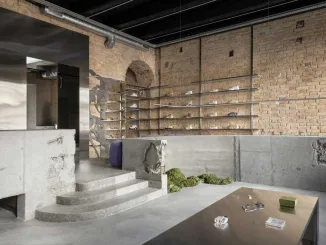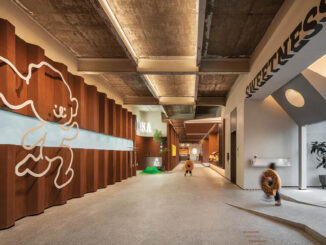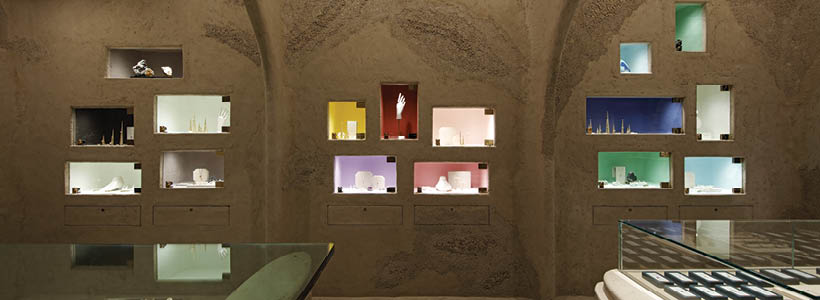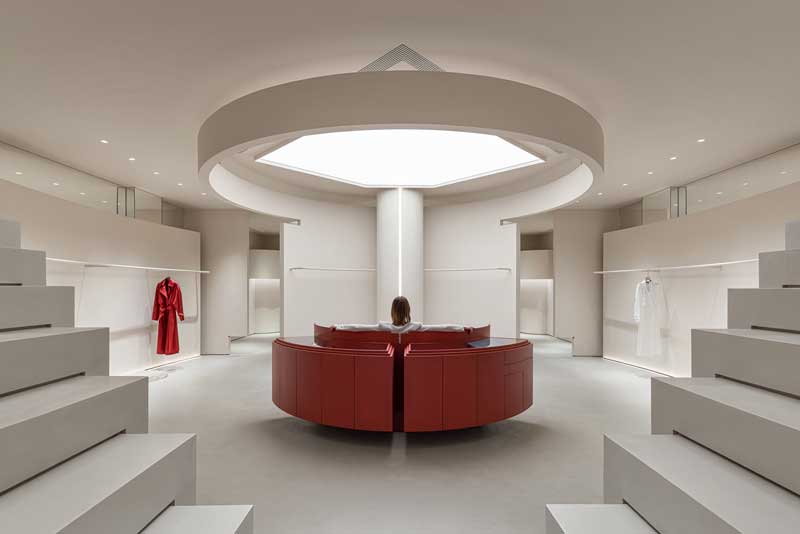
The concrete tag gathers architecture and interior design projects in which concrete plays a significant role in shaping the spatial identity of the interior. Used both as a structural material and as a surface finish, concrete defines floors, walls, ceilings, counters and architectural elements within the design.
In retail, hospitality, food retail and interior design environments, concrete is often used to create continuous surfaces and essential volumes that give spaces a contemporary and material-driven character. The material may be left exposed or treated with finishes that modify its texture and tone, helping to shape the overall atmosphere of the interior.
Alongside cast-in-place concrete, designers frequently employ polished concrete, microcement and prefabricated panels, solutions that provide durability and visual continuity. These characteristics make concrete particularly suitable for high-traffic environments such as shops, restaurants and hospitality venues.
From a design perspective, concrete is often combined with metal, glass, wood or stone, creating material contrasts that define the identity of the interior architecture and balance the technical appearance of the material with warmer or more reflective surfaces.
Articles associated with the concrete tag document projects in which concrete surfaces and elements play a central role in shaping interior spaces and architectural composition.