
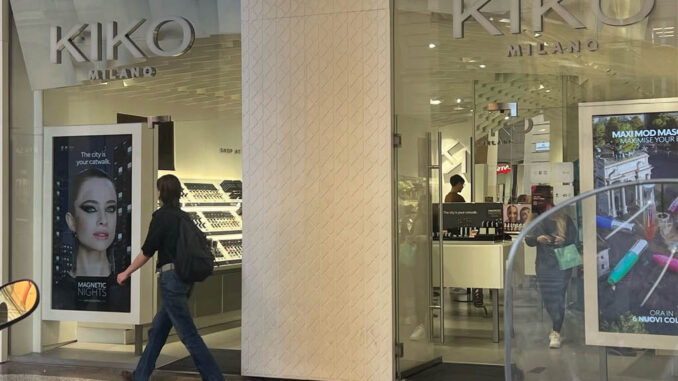
For several years now, and thanks to the explosion of social media, Generation Z has been increasingly linked to image and especially to aesthetics, which has led to a huge spread of cosmetic products on the market. There are now thousands of brands that rely on the most diverse channels and that, with increasingly innovative technologies, communicate services and products to the public.
We therefore wanted to analyze this retail sector, because we believe it is fundamental to understanding the dynamics that drive one of the fastest growing and ever-evolving markets. Cosmetics, which includes beauty products, skin care, makeup, perfumes and much more, has undergone a significant transformation in recent years thanks to the emergence of new consumer trends, technological innovation and a growing focus on sustainability.
The cosmetics market is one of the most resilient and dynamic within retail.
According to recent research, the global cosmetics market has continued to grow, reaching an estimated value of over 600 billion dollars in 2023 (source Euromonitor International), with further expansion forecasts in the coming years. This growth is driven by several factors:
- Increased demand for natural and organic products: consumers are increasingly attentive to the ingredients used in cosmetic products, preferring organic, cruelty-free and vegan options.
- Technological innovation: the use of augmented reality (AR) and artificial intelligence (AI) is transforming the way consumers choose and purchase cosmetic products, offering personalized experiences.
- Growth of the male market: the men’s cosmetics market is also booming, with products dedicated to skin, hair and beard care.
Retail channels in the cosmetics sector
Distribution in the cosmetics sector is divided into different channels, each with its own peculiarities. Monobrand stores offer an immersive experience in the world of the brand, with highly qualified staff and the entire range of products available.
- Large-scale distribution, consisting of supermarkets and hypermarkets,
focuses on convenience and competitive prices, although with a lower level of personalized service. - Pharmacies and parapharmacies have carved out an important niche, focusing on dermocosmetic and natural products, supported by the professional advice of pharmacists.
- Traditional perfumeries maintain their appeal, specializing in luxury fragrances and cosmetics, with expert staff and a curated selection of prestigious brands.
- Finally, direct selling and social selling are gaining ground, exploiting the power of social networks and digital word of mouth.
The evolution of retail channels
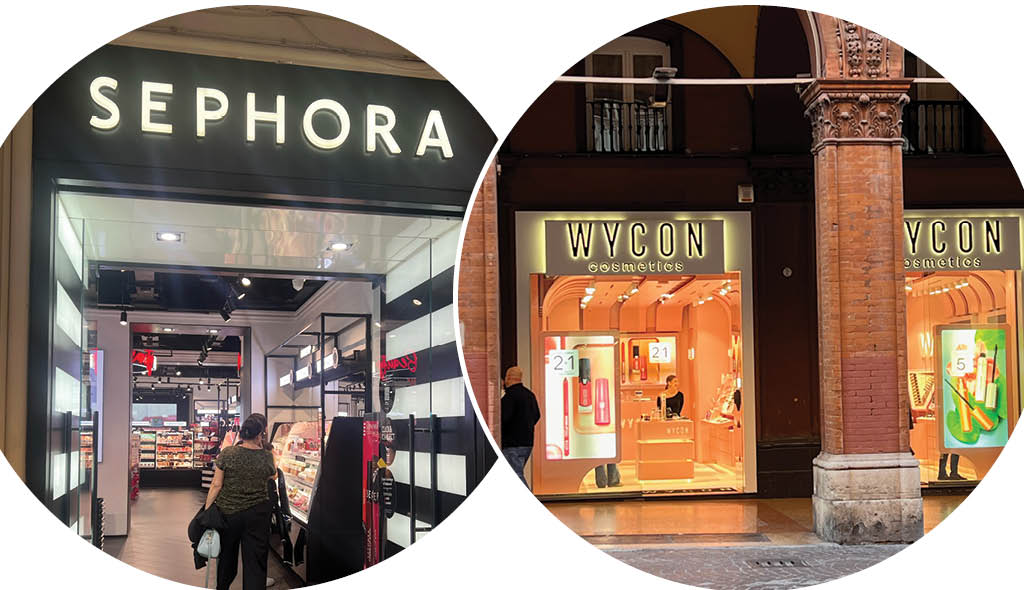
In retail, the evolution of cosmetics sales channels has played a key role. Specialized chains such as Sephora and Douglas, or monobrand stores such as L’Oréal or Estée Lauder, continue to represent a significant share of sales. However, the role of the physical store has changed: today it often serves as a “showroom” where customers can try out products before purchasing online. Indeed, e-commerce has seen exponential growth, particularly during the pandemic. Online purchasing of cosmetics has been facilitated by the introduction of tools such as virtual trial filters and detailed user reviews..
Marketing strategies
Marketing strategies in cosmetics retail are constantly evolving to adapt to new market dynamics. Visual merchandising plays a crucial role in attracting customers’ attention, with eye-catching displays and intuitive product organization encouraging purchases. The use of samples and giveaways remains an effective tactic for introducing new products and building customer loyalty.
Loyalty programs, loyalty cards, and personalized offers are valuable tools for encouraging repeat purchases and building a lasting relationship with consumers. Influencer marketing has taken a central role in promotional strategies, with brands partnering with beauty influencers to reach new audiences and increase the credibility of their products.
Consumer behavior in the cosmetics industry is also changing rapidly in several aspects. One example is the constant search for customization, as is also the case in other product sectors. Consumers are looking for products that are tailored to their individual needs. This has led to the development of personalized solutions, such as DNA-based skincare or custom-made make-up.
How to differentiate yourself in a “jungle” of brands and points of sale?
Many retailers are trying to integrate augmented reality technologies into their stores, allowing customers to virtually “try” products without physically applying them. Customer engagement is very high, also because more and more consumers consider cosmetics as part of their health and wellness regime, choosing products that not only improve their appearance, but also the health of their skin in the long term, and this is certainly also a very powerful sell-out lever for companies entering such a competitive market.
Despite the strong growth potential, cosmetics retail must face some challenges, such as sustainability, in fact many consumers require products that are sustainable and are very careful about the environmental impact. Consumers, in fact, want to know exactly what they are buying and where the products come from. Transparency in ingredients and production processes is an essential element to build customer loyalty. Many online tutorials explain how to read labels and what to avoid.
We now interview one of XT’s most important collaborators, Andrea Marcucci, who boasts a very long experience in this sector, having worked for years as Retail Area Manager at Sephora and Douglas.
Can you describe what the retail reality was like in the companies we mentioned?
Cosmetics retail is a very particular sector in which you deal and relate with a clientele that, through the purchase of a product, also takes home a dream, or the resolution to a problem. Selling a cosmetic product creates psychological and physical well-being. Everything inside the store must be conceived and organized for this objective. Everything must be taken with attention to the smallest details.
What are the main needs and expectations of the final consumer?
The customer inside a cosmetics store expects to find exactly what I said before: the right product that can satisfy certain needs, that can solve some problems, that fulfills a dream. Therefore, he must be welcomed with the greatest possible warmth and must be helped to find the product he wants in the simplest and most effective way possible. The customer must leave the store satisfied whether he has bought or not.
The world of cosmetics is always evolving, what are the main needs today in providing support in the field of visual merchandising and sales techniques?
The cosmetics store must have everything perfectly aligned following an organization that follows a precise Retail Marketing Mix Strategy. Cleanliness, layouts that facilitate certain paths, the right level of music, a good fragrance of the store, and above all an orderly visual merchandising that follows certain schemes and planograms, precisely to facilitate the customer in identifying the product and experimenting with it. Furthermore, the product must be accompanied by excellent customer service, which supports and makes “live” a memorable visit and shopping experience. It is very important to let customers smell the fragrance on special cards or, if the customer asks, even directly on the skin, to let them try the right “texture” of the cosmetic cream, to show the customer how to apply make-up with simple and quick demonstrations.
The world of retail, and therefore also that of cosmetics, is essentially divided into two philosophies of thought: customer service or self-service. What do you think is more effective?
Personally, I believe that in this sector, assisted service is fundamental, especially for the sale of certain types of brands or certain types of products. On the contrary, usually in the points of sale where mass-market products are sold, there is a tendency to favor self-service more. In modernly organized chains or in “niche” stores, the customer is tried to be assisted to make the product “live” through consultancy, and therefore, in this case, it is very important to train the point of sale staff, who must go from being a seller to a real consultant.
We thank Andrea Marcucci for his testimony and together with him we reflect on the next trends in this sector.
Future trends in the cosmetics sector
An interesting path is the integration of beauty and technology, which will continue with the increasing use of smart skincare devices, skin diagnostic tools and AI-based solutions. Stores will tend to be more like beauty salons rather than simple retailers, with specific services and treatments for customers.
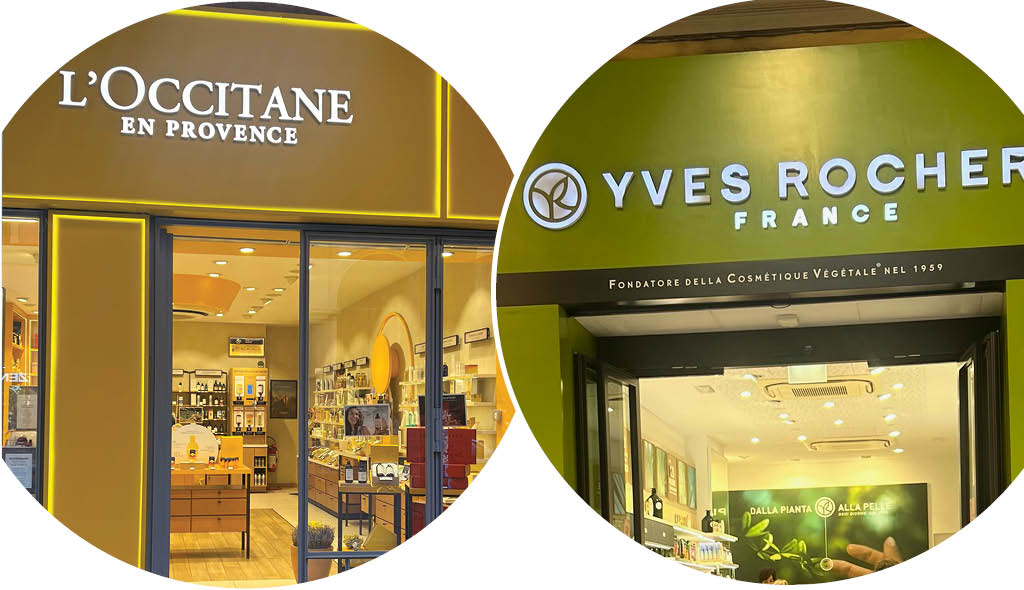
The demand for eco-friendly products will not only be limited to ingredients, but also to sustainable manufacturing practices and reduced environmental impact throughout the supply chain.
Finally, let’s not forget about increasingly multicultural consumers, even in our country, so brands that increasingly offer inclusive products, with a wide range of skin tones and that embrace cultural, ethnic and gender diversity, will have a competitive advantage.
Our analysis of beauty retail shows how dynamic and evolving this market is. Brands that manage to combine innovation, sustainability and excellent customer experience are set to dominate the landscape in the coming years. Future success will depend on the ability to offer personalized shopping experiences, effectively integrate online and offline sales channels, and proactively respond to the growing demands for sustainability and personalization. The future of beauty retail promises to be more technological, personalized and sustainable than ever, promising to completely redefine the experience of purchasing and using beauty products.
by Simona Fiore XT srl
© AN Shopfitting Magazine no.183