
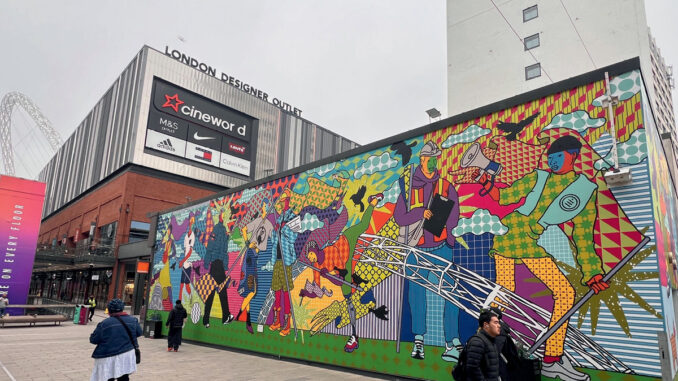
London continues to represent a privileged observatory for international sports retail. Between flagship stores, urban outlets and large shopping malls, the British capital showcases a commercial ecosystem capable of combining aggressive pricing, visual merchandising, digital communication and differentiated retail formats. The tour carried out by XT Retail analyses some of the leading players in the sports sector, from Sport Direct to JD Sports, including Nike, Adidas and Under Armour mono-brand stores, highlighting how layouts, technologies and display strategies contribute to shaping contemporary retail identity.
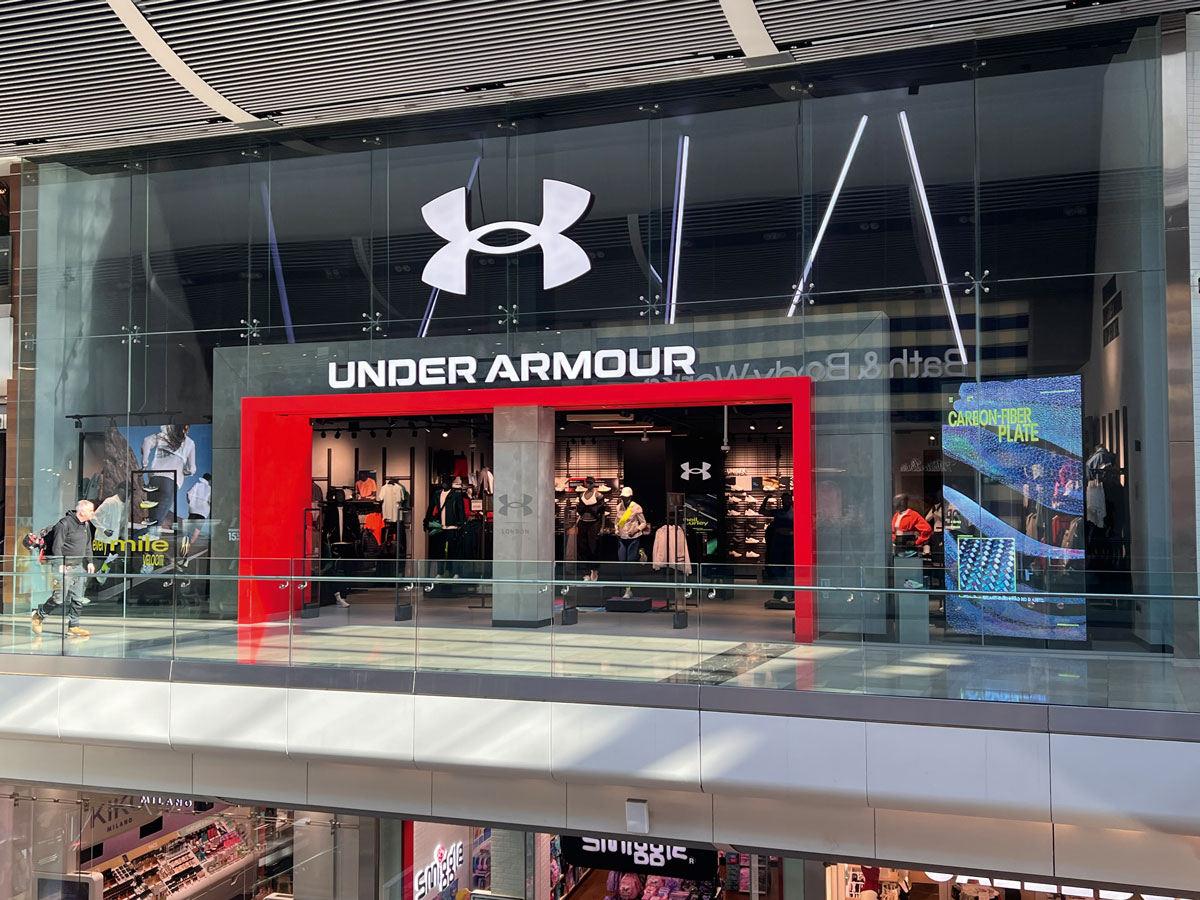
The visit also confirms London’s central role as a laboratory for commercial experimentation. Despite an international economic context marked by instability and changing consumer behaviour, the London market continues to evolve rapidly, especially within the sports and lifestyle segment. The concentration of competitors, the high urban density and the presence of millions of tourists allow different retail concepts to coexist, each with a clearly defined positioning.
London sports retail differentiates formats, targets and pricing strategies
One of the most evident aspects emerging from the visit concerns market segmentation. Sport Direct operates within the mid-low segment through a broad offer focused on convenience and characterised by a strong promotional presence. Store entrances immediately direct attention towards accessories and entry-level products, using display logics similar to large-scale retail environments.
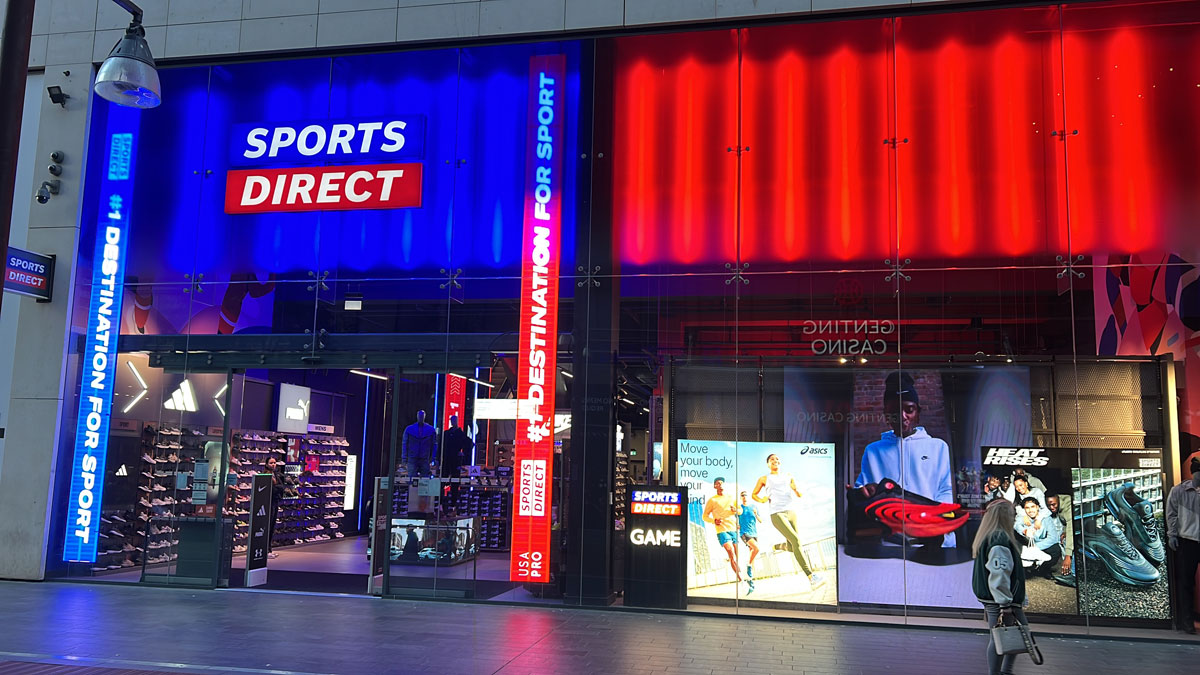
Visual communication relies on large product volumes and highly visible signage, often using simple but immediate solutions. The objective is not the sophistication of the environment, but rather the immediate perception of affordability and assortment. The layout also supports this approach by favouring fast customer circulation and high-density product displays.
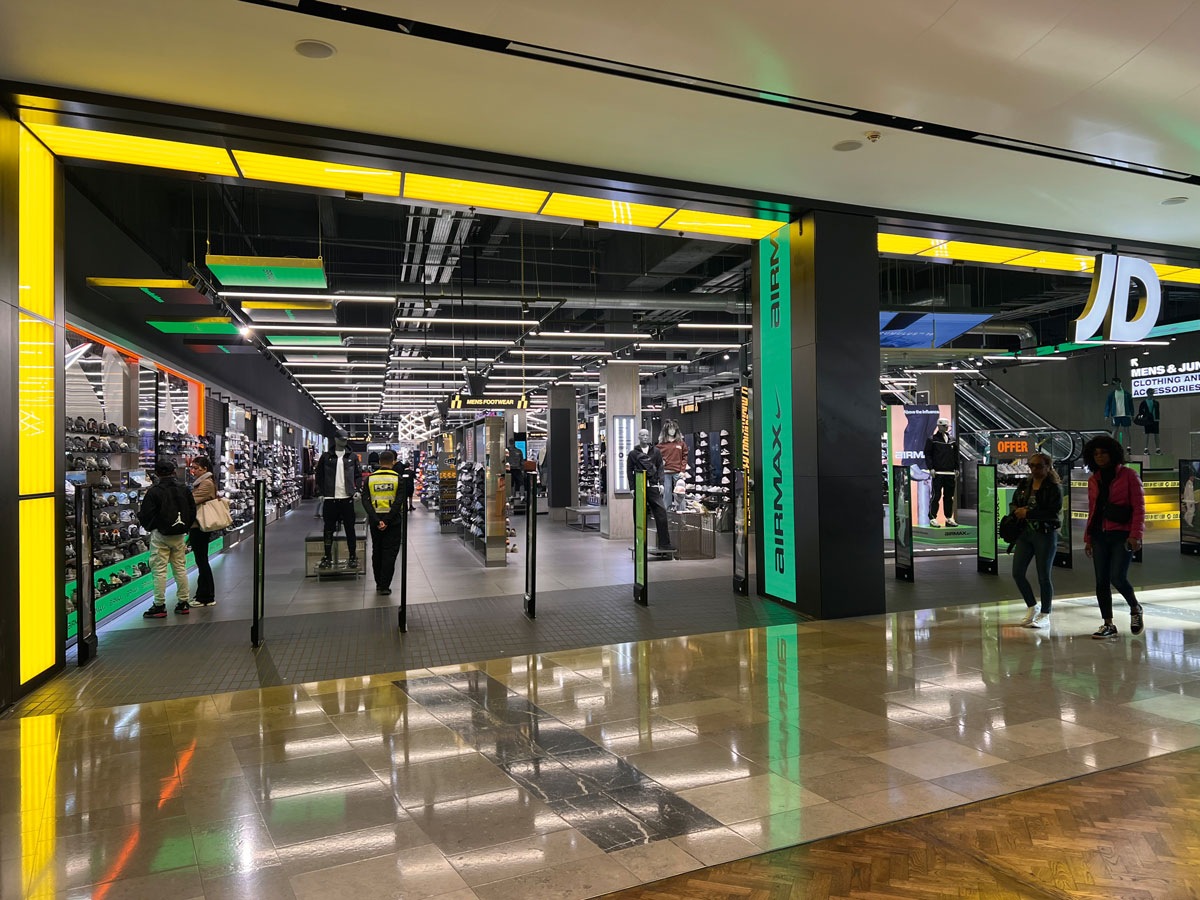
JD Sports maintains a positioning aimed at younger audiences and the sneaker market, while Footasylum occupies an intermediate position with a language closer to contemporary streetwear culture.
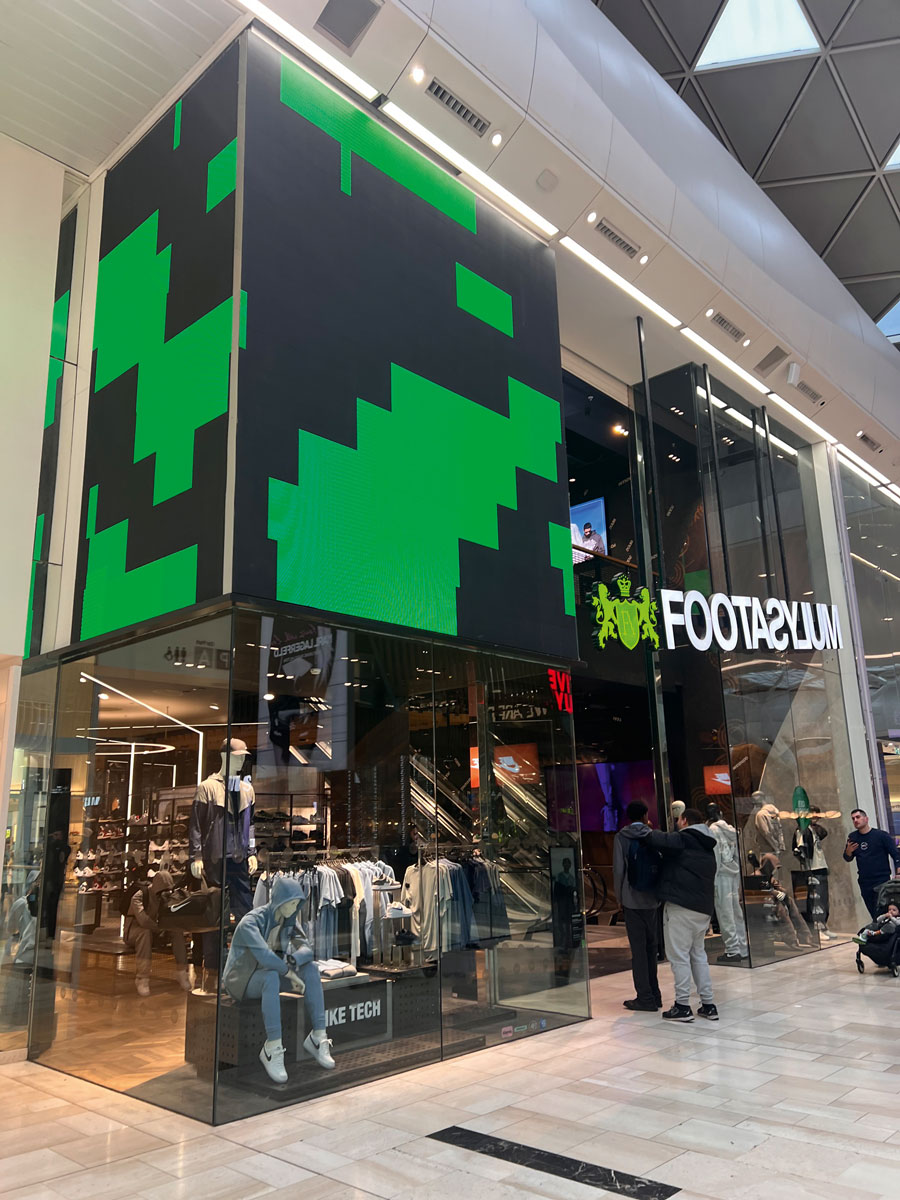
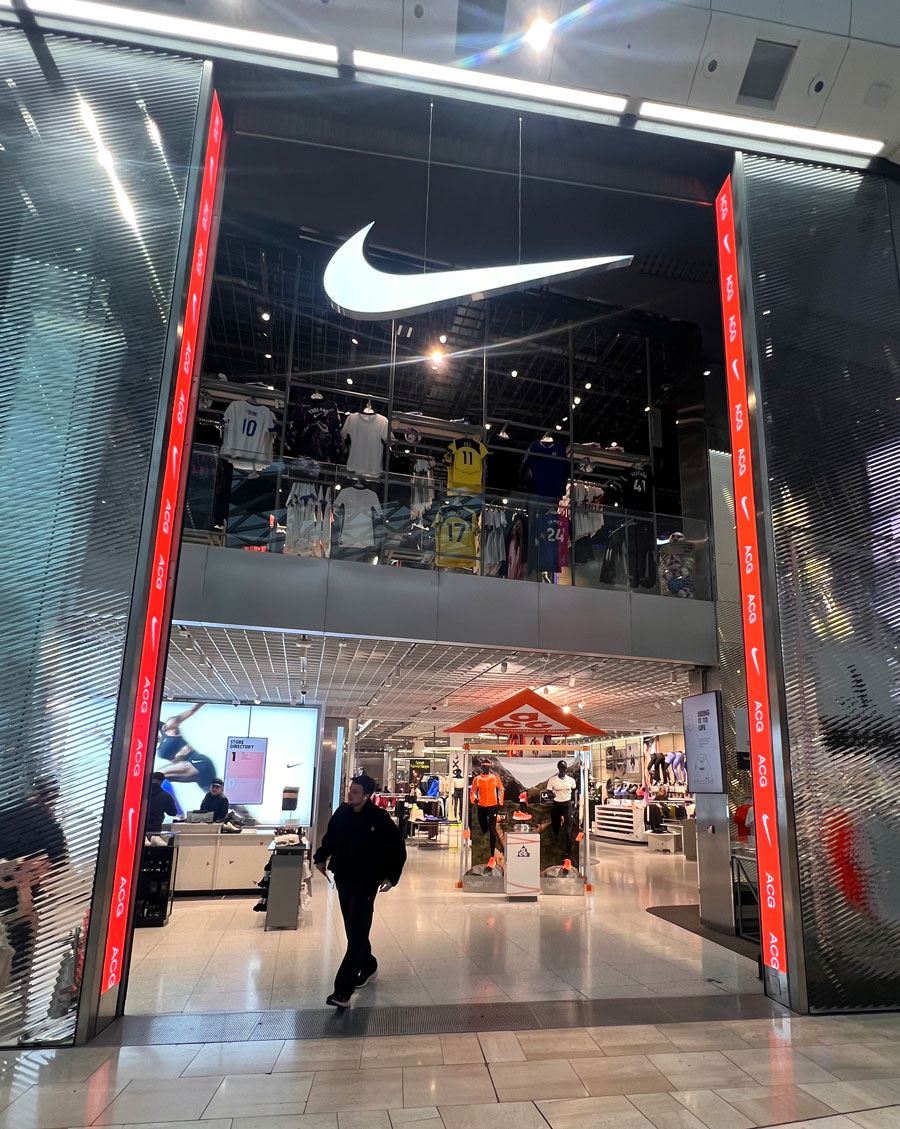
Nike and Adidas mono-brand stores instead focus on stronger brand identity construction linked to product specialisation and the enhancement of lifestyle and performance collections.
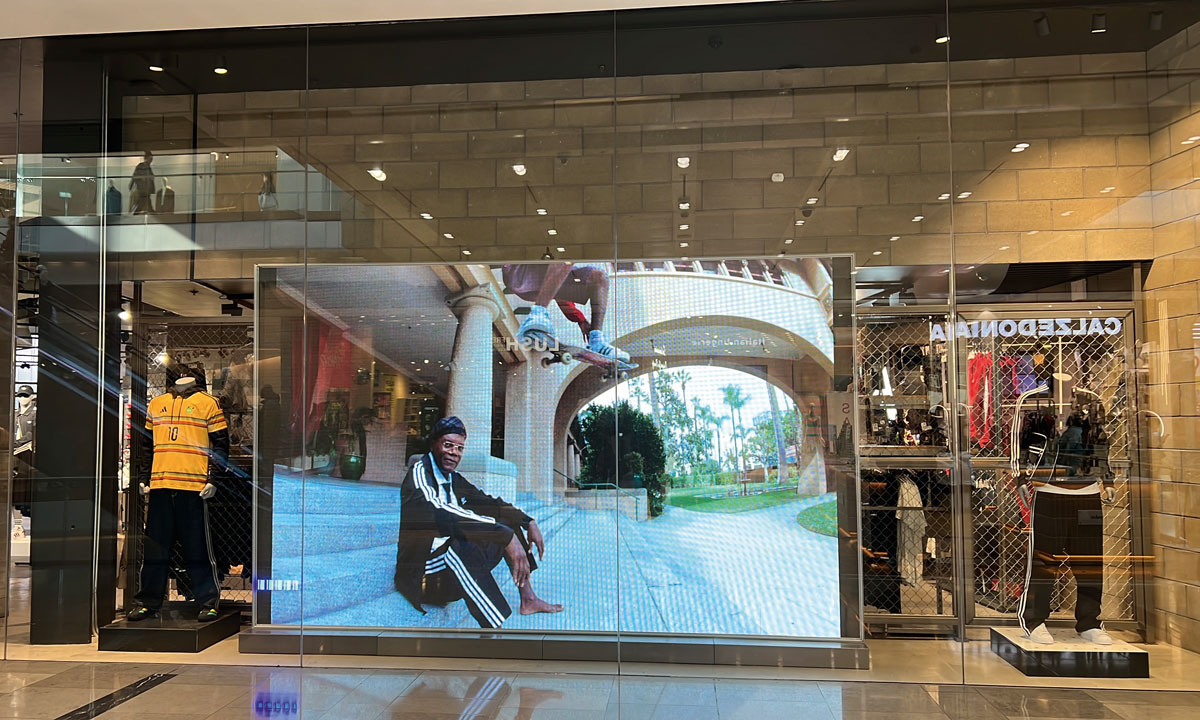
Digital communication transforms storefronts and retail spaces
One of the most recurring elements across the visited stores is the growth of integrated digital communication. LED walls, large-format screens and video content have become integral parts of retail design, contributing to atmosphere creation and visual hierarchy within the space.
Digital installations are no longer limited to storefronts but increasingly define specific departments and product-focused areas inside the stores. In sports flagship stores, video content takes on an immersive and narrative role, strengthening the relationship between product, performance and community.
Lighting also contributes significantly to the retail experience. Linear lighting systems, coloured luminous accents and backlit portals help define entrances, pathways and focal commercial areas. In Nike and JD Sports stores, the contrast between dark surfaces and high-intensity lighting reinforces the technological and urban identity of the environment.
Urban outlets redefine the relationship between convenience and shopping experience
The visit to London Designer Outlet highlights the evolution of the outlet model within the urban fabric. Unlike traditional out-of-town outlet centres, the London complex integrates retail, food and entertainment within an easily accessible and city-connected environment.
The offer includes major international sports brands such as Nike, Adidas and The North Face, maintaining a balance between affordability and perceived quality. Particularly interesting is the promotional communication strategy: staff members use concise and highly legible communication tools, avoiding the excessive visual saturation typical of many discount environments.
The multi-level organisation improves readability of customer flows and product categories, while storefronts alternate transparency, large digital surfaces and high-visibility portals. The integration between commercial architecture and visual communication contributes to making the centre recognisable within the surrounding urban landscape.
Inclusivity and broader targeting influence visual merchandising and display systems
Inclusivity emerges strongly, especially within Gymshark stores, where visual merchandising incorporates mannequins in wheelchairs or with prosthetics. This reflects a broader evolution in contemporary retail communication, increasingly oriented towards representing diverse audiences.
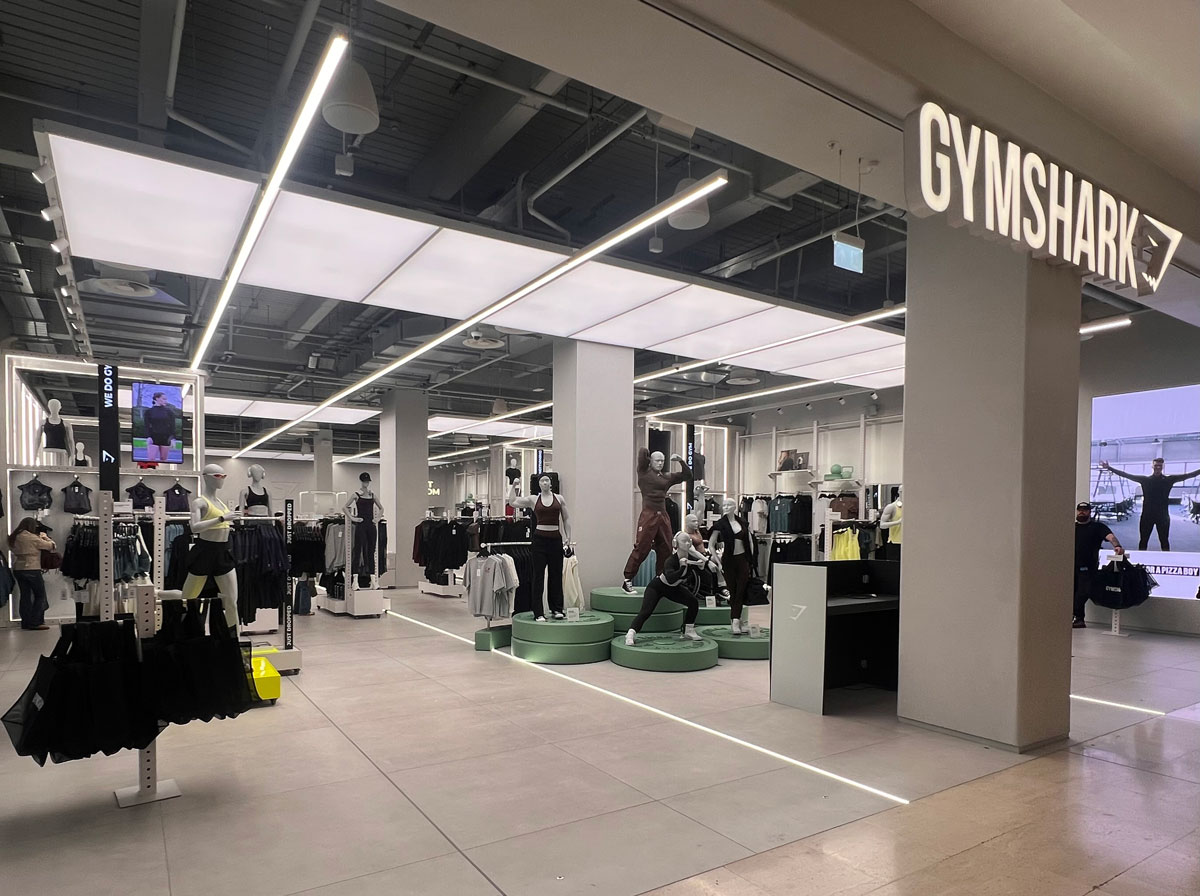
At the same time, attention towards oversized collections and broader target groups continues to grow. Inclusivity no longer concerns only products, but also the construction of commercial spaces, which are becoming more accessible and transversal.
In this context, visual merchandising plays a strategic role. Modular displays, digital content and flexible configurations allow stores to adapt rapidly to assortment changes and evolving commercial needs.
Westfield integrates digital services, loyalty systems and flow management
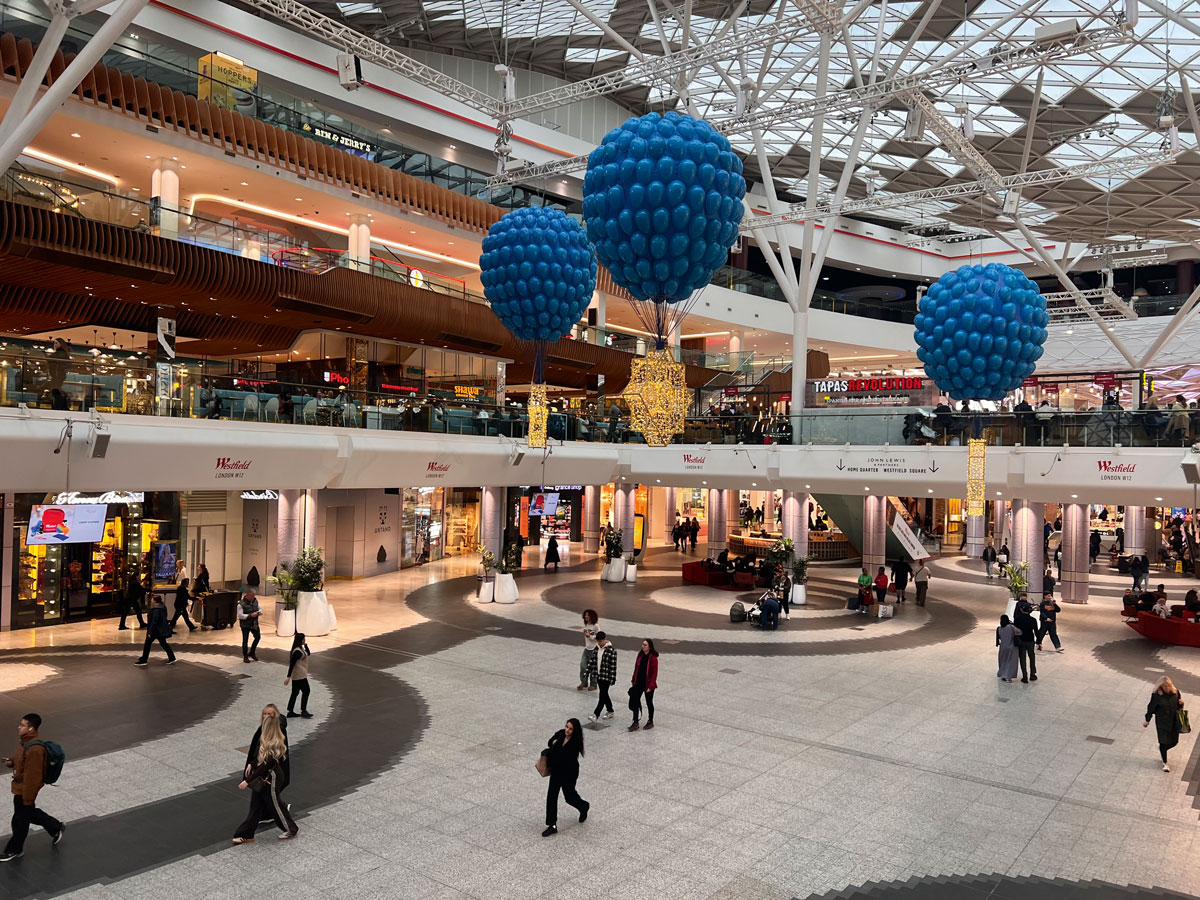
Westfield represents one of the most significant examples of integration between shopping malls, digital services and customer experience. Both London locations confirm an approach focused on simplifying the purchasing process through click & buy systems, dedicated apps and loyalty tools.
The interior architecture privileges large open spaces, fluid circulation paths and strong commercial readability. Common areas become central elements of the overall experience, helping distribute customer flows and improve visitor comfort.
Particularly interesting is the presence of technological solutions dedicated to peak-time flow management. The introduction of automated systems and monitoring technologies demonstrates how contemporary retail increasingly integrates operational technologies without compromising direct customer relationships.
Curated by Paolo Zanardi – XT srl
by AN Shopfitting Magazine no.192 ©