
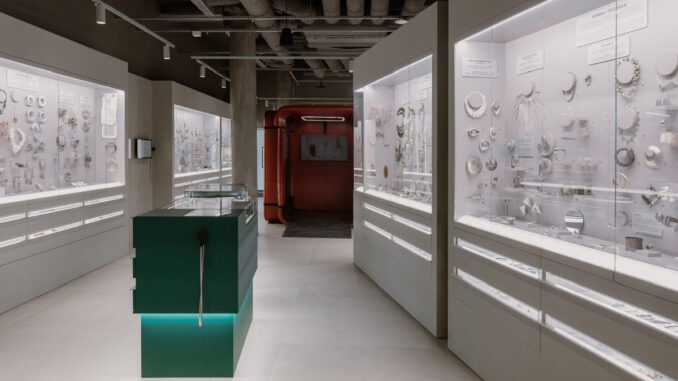
The MoJA Jewelry Museum in Poznań, designed by mode:lina™ architects, transforms contemporary jewelry into a spatial experience shaped through light, materials and display systems. Rather than functioning as a traditional museum, MoJA interprets the exhibition layout as an immersive sequence of interiors where architecture and display continuously interact with the objects on view.
The project was developed around the private collection of Maria Magdalena Kwiatkiewicz and brings together more than 2,500 pieces, including contemporary Polish jewelry, ethnographic artifacts and objects from the PRL period. Therefore, the design challenge was not only to preserve and exhibit the collection, but also to create a narrative system able to guide visitors through different eras, cultures and visual languages.
An exhibition path shaped by light and rhythm
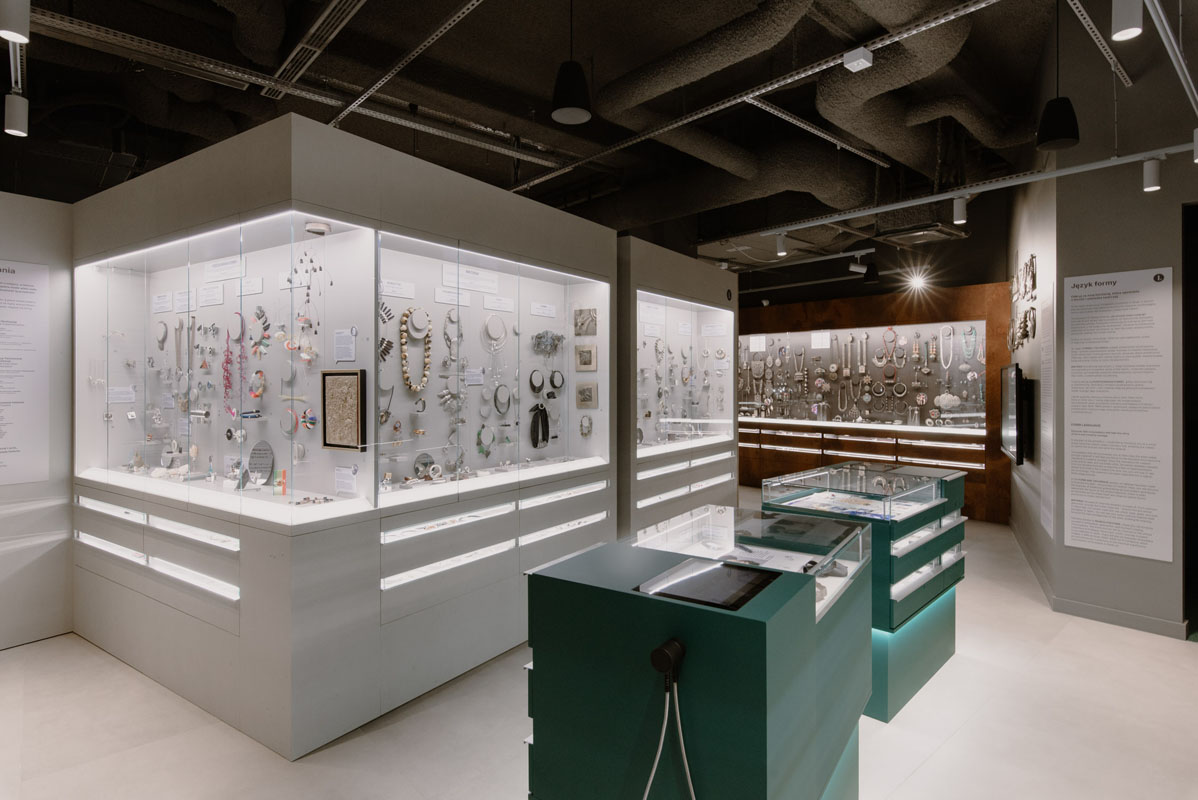
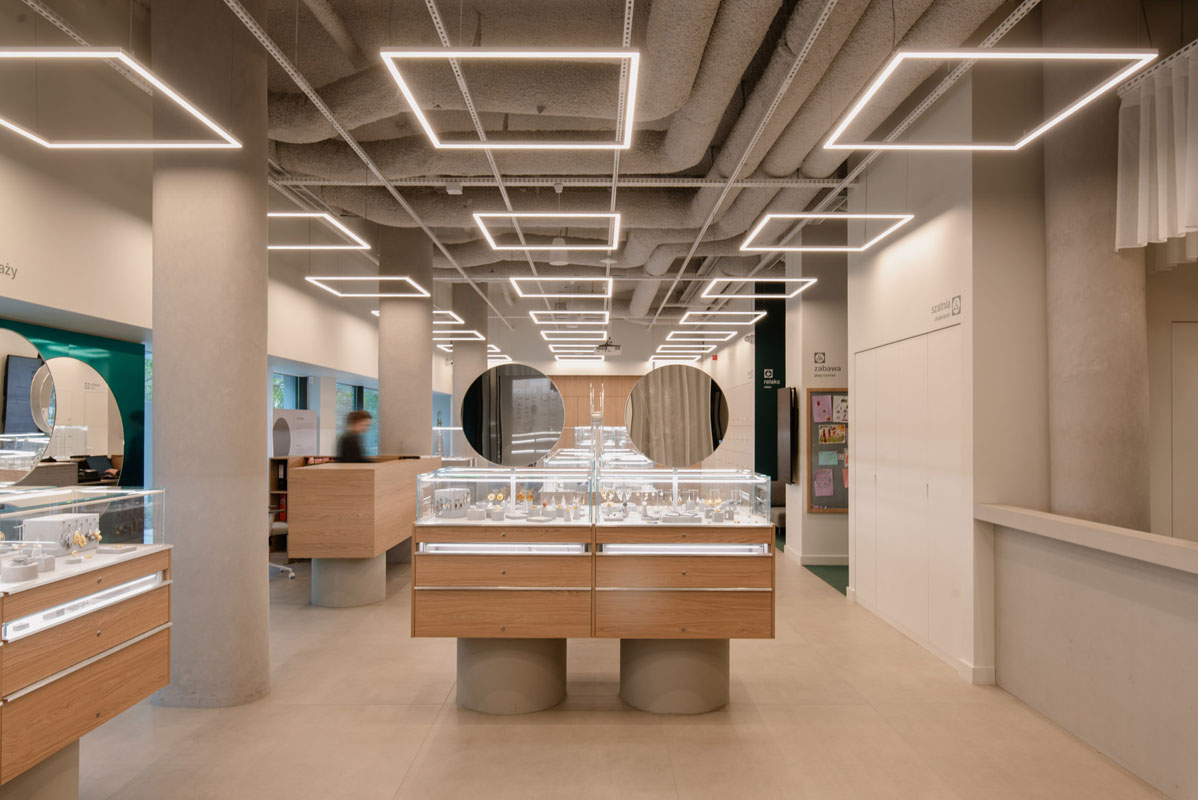
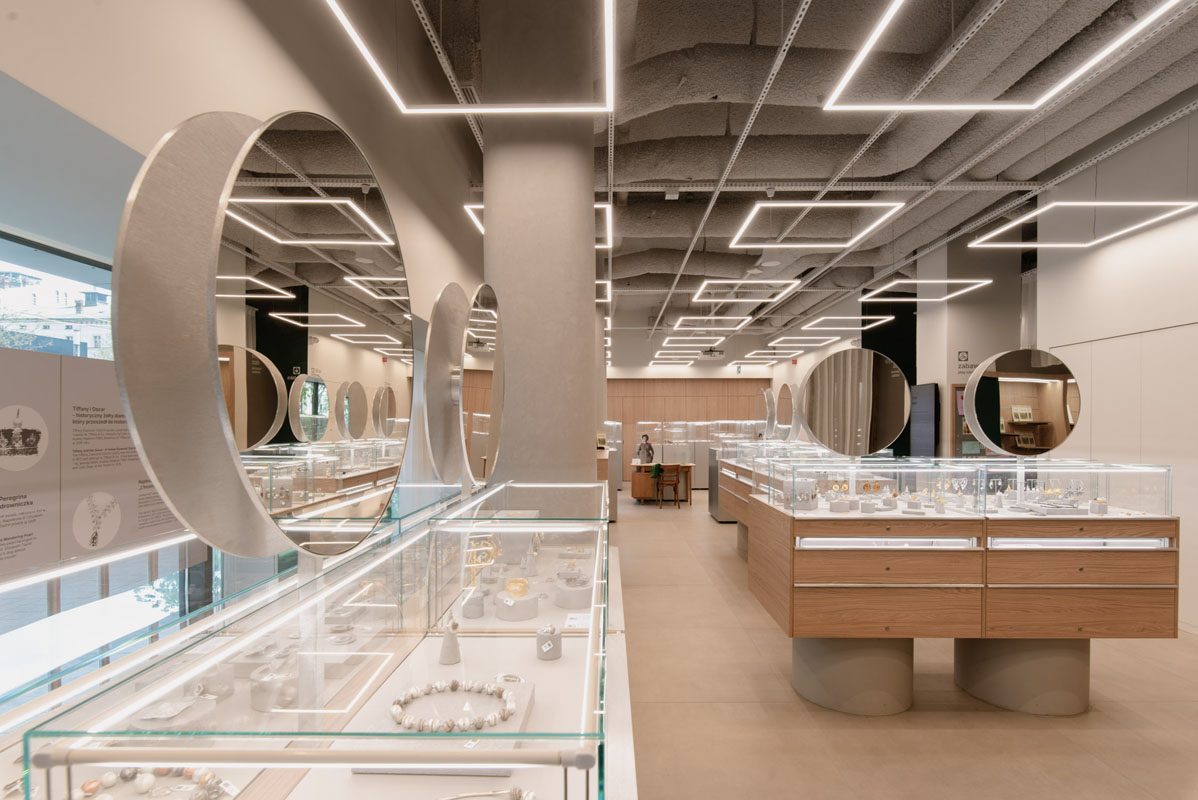
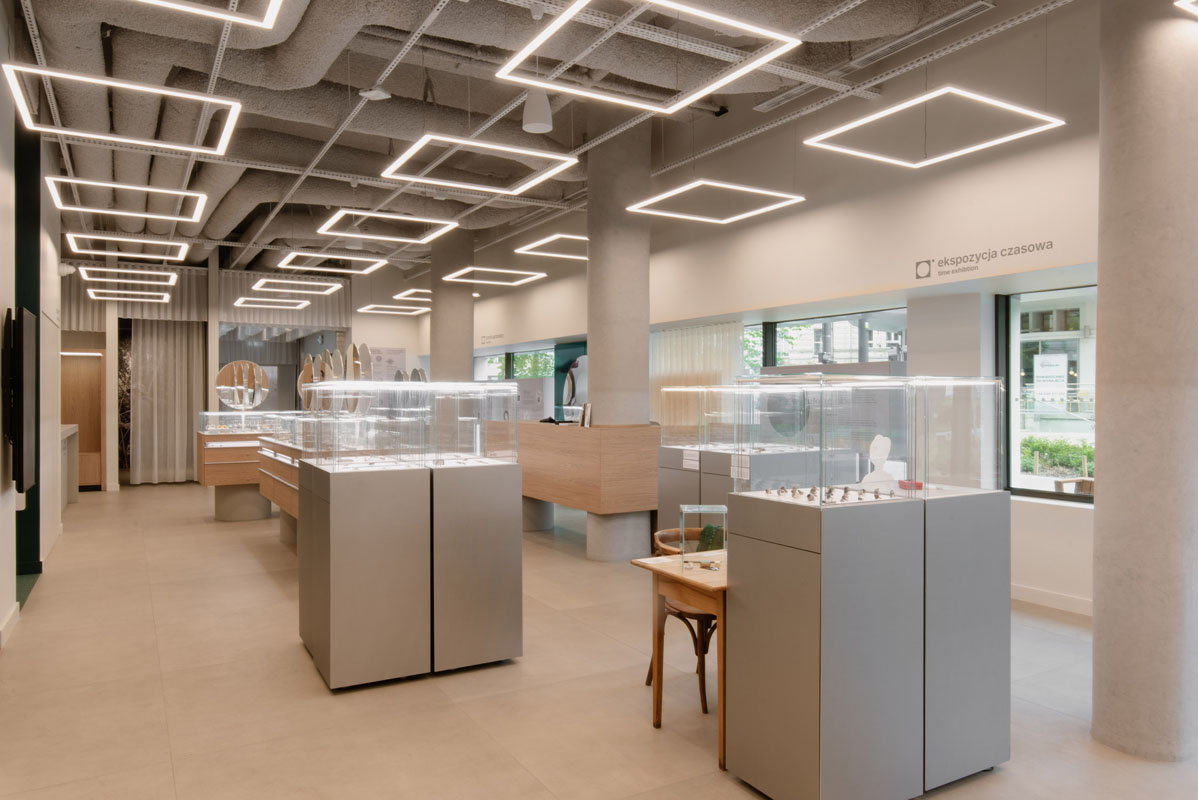
The images reveal a rigorous and highly controlled interior, where lighting design becomes one of the main tools of the spatial composition. Large illuminated showcases define linear paths and introduce an almost suspended atmosphere, further enhanced by the contrast between the exposed technical ceiling and the neutral material palette.
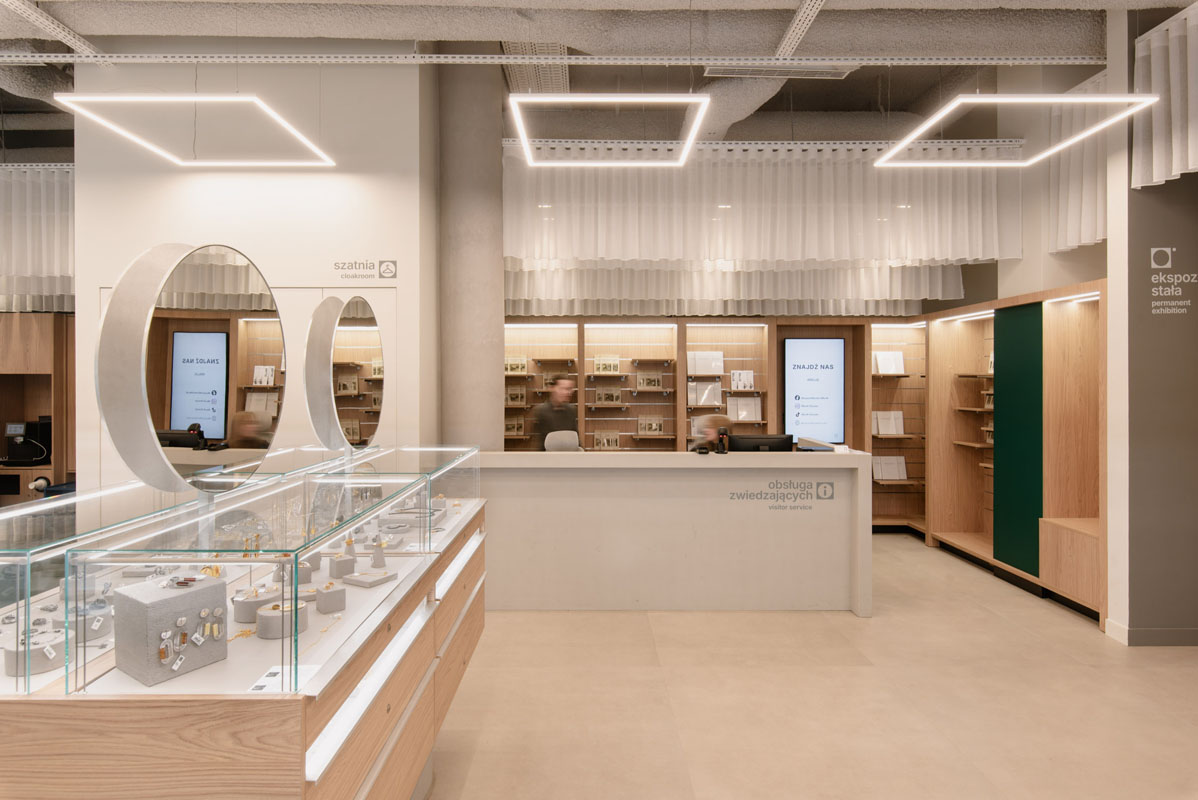
The architecture deliberately avoids monumental gestures. Instead, it organizes the space through precise sequences, alternating open areas with more immersive episodes. In some areas, the result recalls the language of contemporary high jewelry boutiques, especially in the entrance zone, where low display units, circular mirrors, light wood finishes and suspended geometric light fixtures define a refined and accessible environment.
This first area works as a hybrid space between museum, gallery and retail environment, integrating a temporary exhibition area, workshop space and a selection of jewelry by Polish artists.
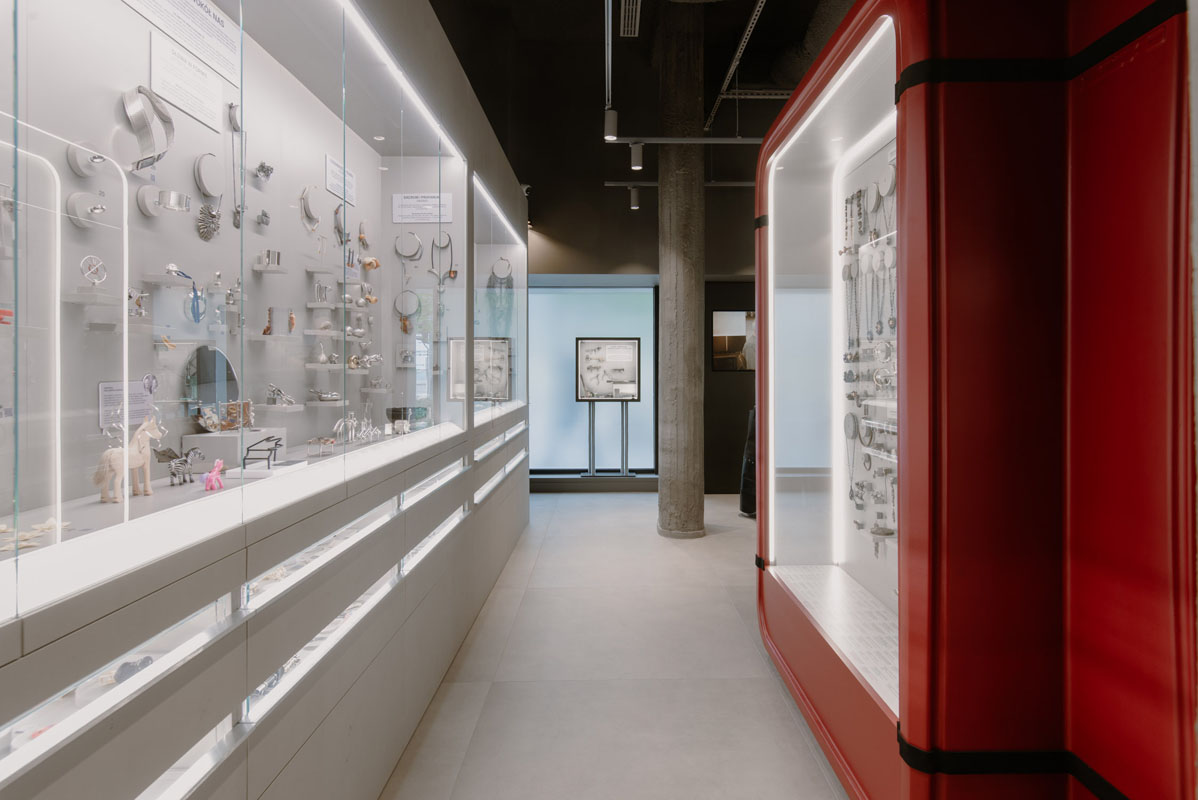
The red K67 becomes an architectural landmark
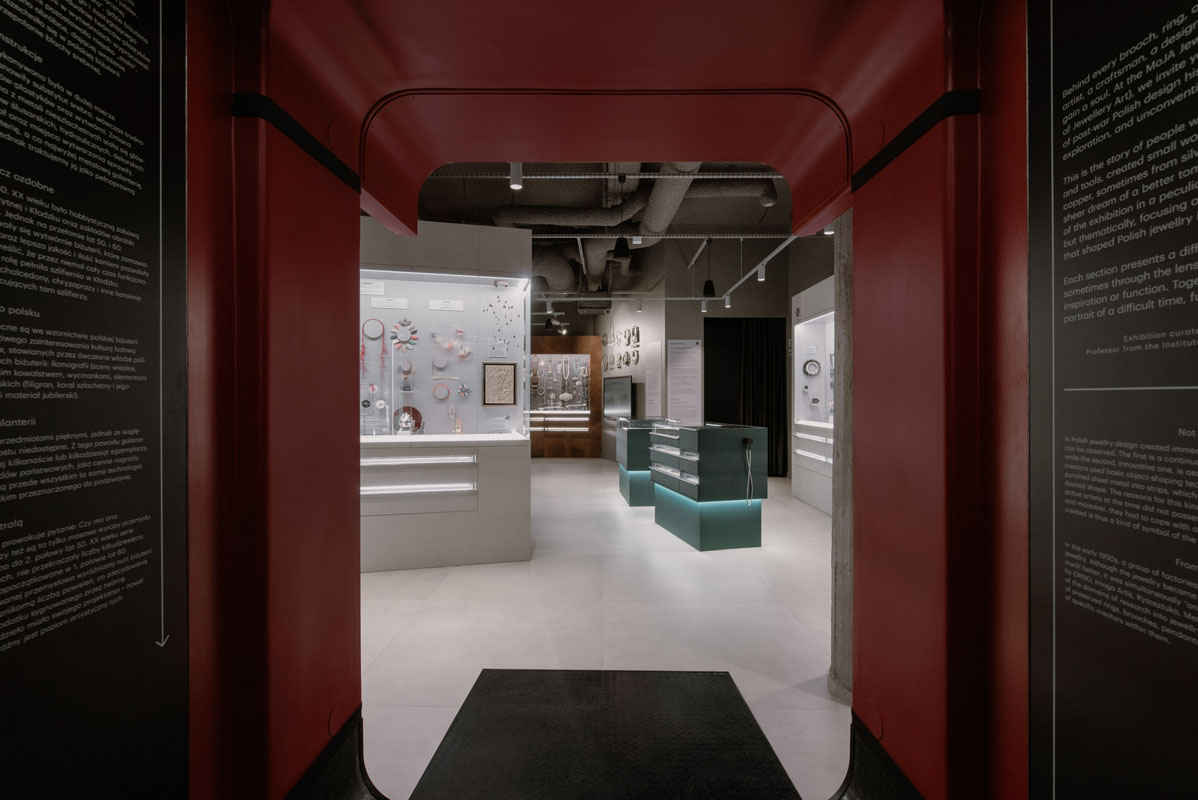
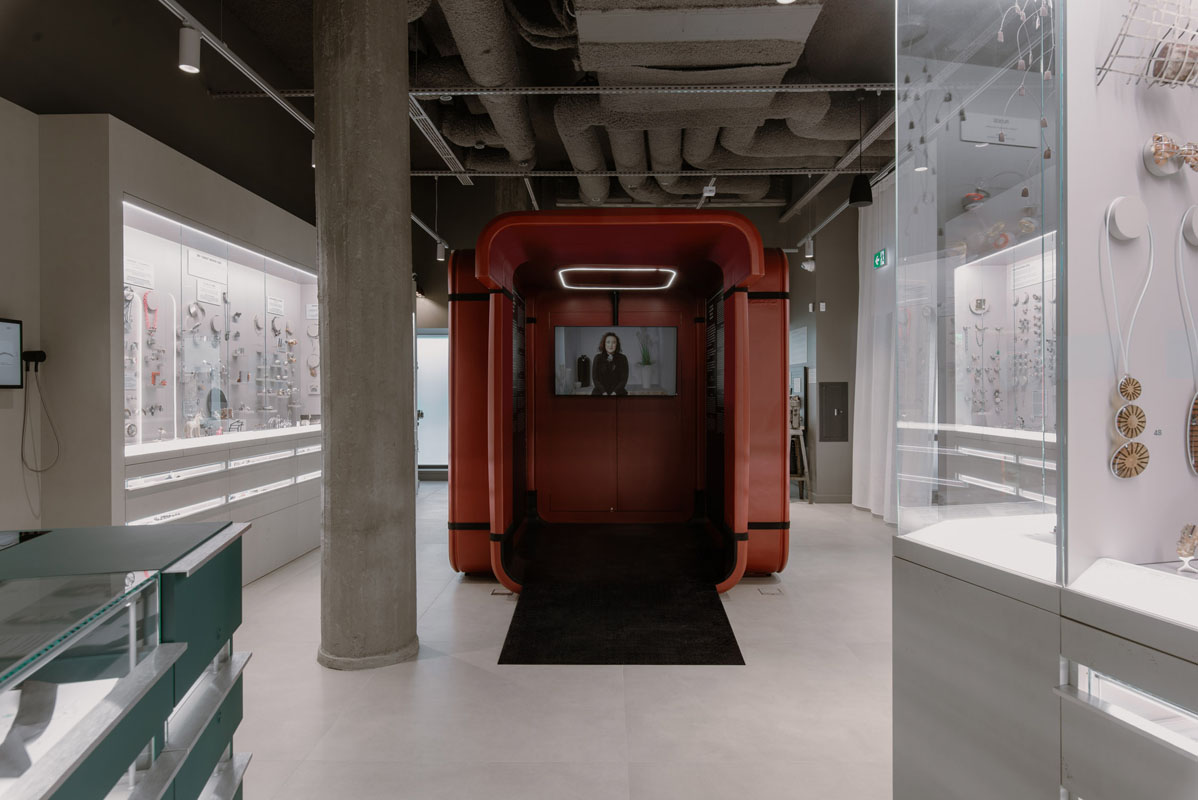
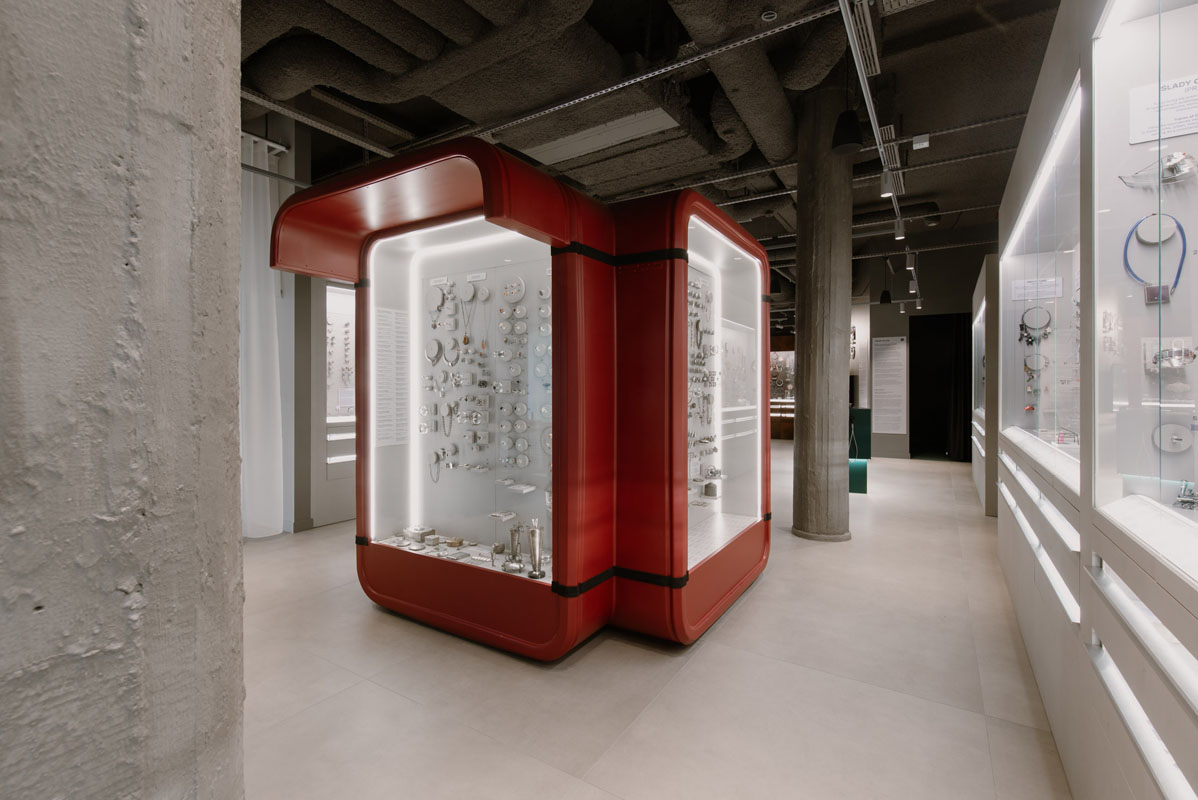
One of the most recognizable elements of the project is the restored K67 kiosk, reinterpreted as an exhibition volume dedicated to the collection of jewelry from the communist-era PRL period. The large red element breaks the neutrality of the interior and introduces a strong visual contrast within the visitor route.
Almost pop in character and highly scenographic, the structure acts at the same time as an installation, a display device and a narrative tool. Set within a space dominated by grey tones, glass and technical lighting, the kiosk becomes a visual orientation point able to redefine the rhythm of the entire exhibition layout.
Materials and scenography create different atmospheres
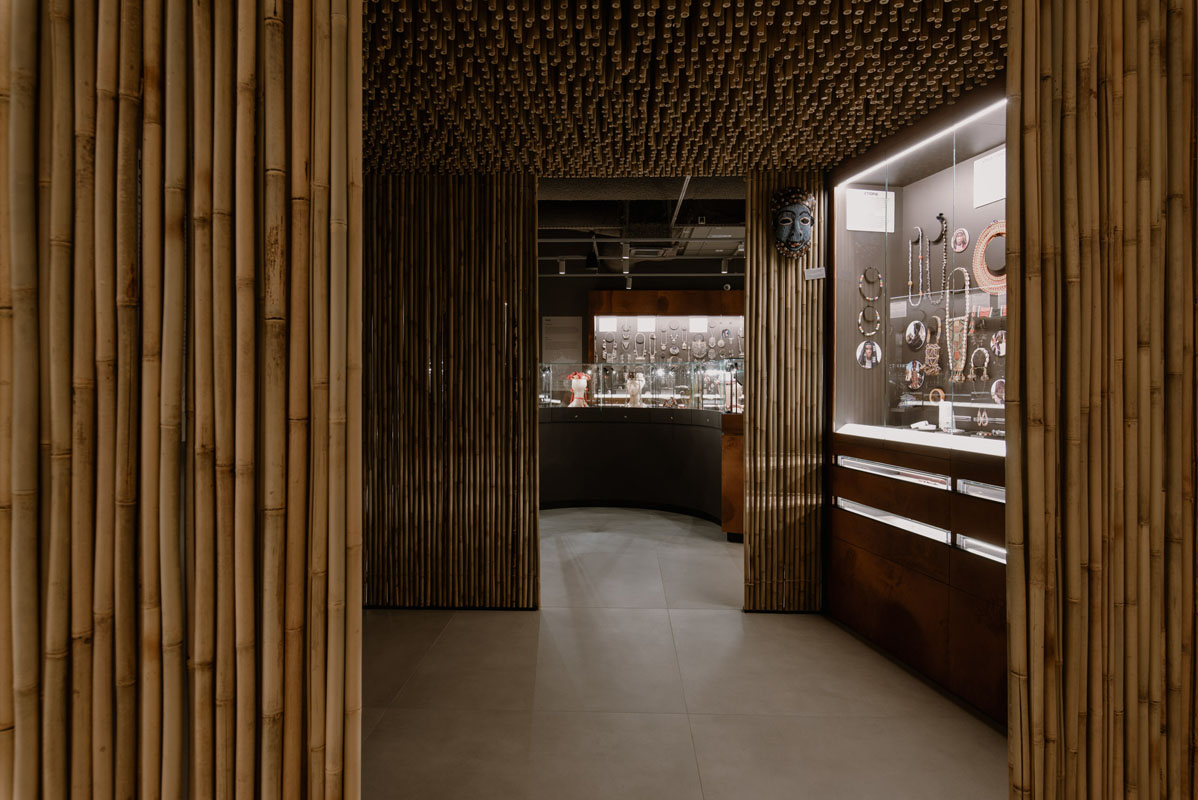
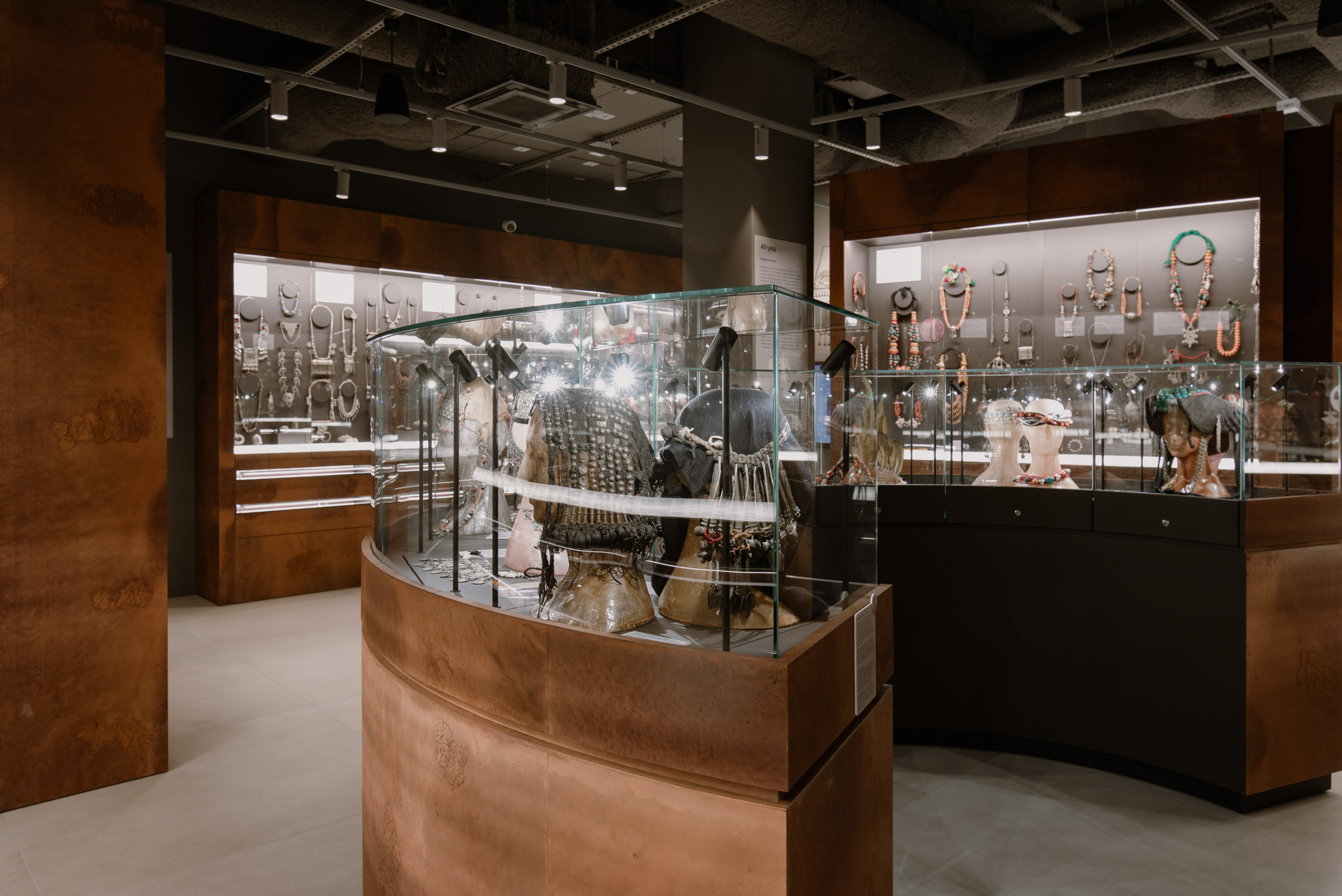
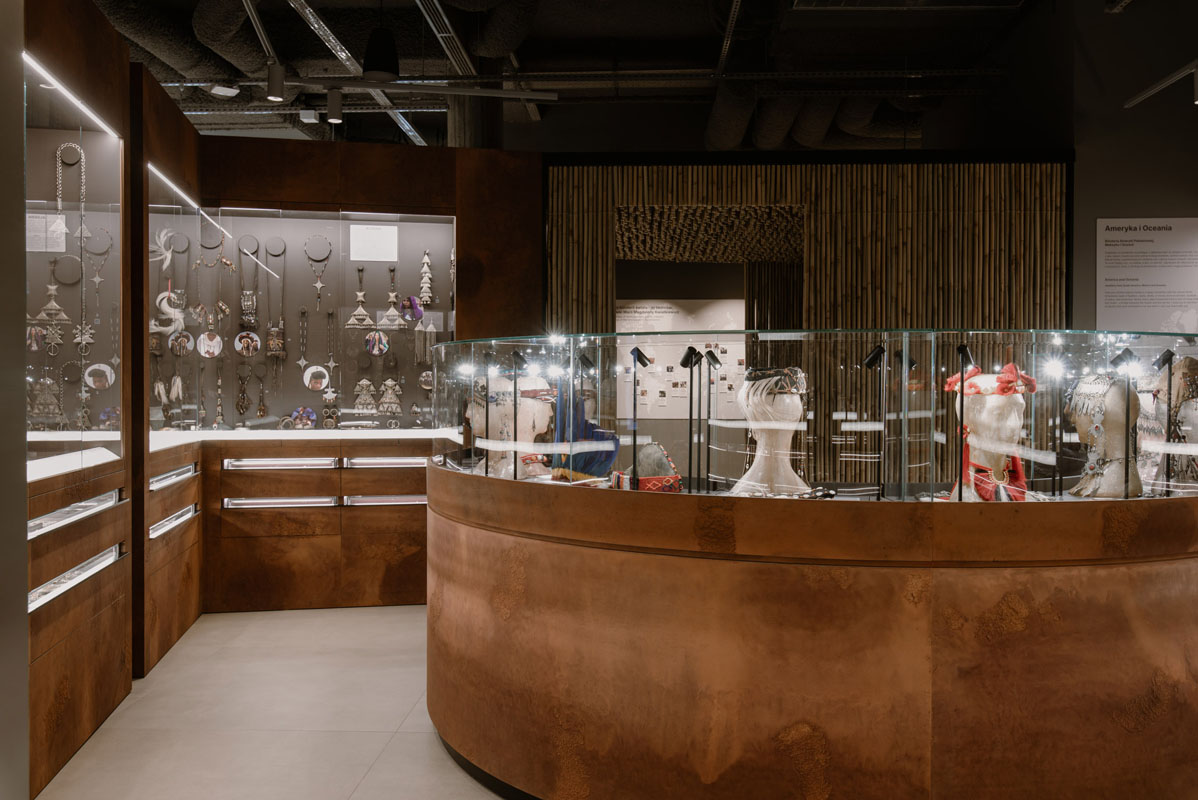
Each section of the museum uses different materials and spatial registers to support the curatorial narrative. The area dedicated to ethnographic jewelry introduces corten-inspired surfaces, warmer tones and a bamboo scenography that completely changes the perception of the space.
The bamboo tunnel, visible in the images, creates an immersive threshold that compresses the passage and transforms the relationship between visitor and collection. Rather than being a decorative feature, it becomes an architectural filter able to introduce a different exhibition atmosphere.
Alongside these more material elements, the project maintains strong technical precision through modular showcases, integrated lighting systems and displays conceived as true museographic tools. Illuminated drawers and magnetic surfaces allow the exhibition to change over time without altering the overall balance of the interior.
MoJA Jewelry Museum between interior design and exhibition architecture
The project shows how a space dedicated to small-scale objects can create an immersive experience through controlled lighting, clear spatial organization and precise display design. mode:lina™ architects developed an interior that never overwhelms the collection, but instead uses architecture and display systems to guide visitors through memory, craftsmanship and material culture.
More than a conventional museum, MoJA appears as a hybrid environment where exhibition design, interior architecture and retail language converge into a single spatial narrative.
Location: Poznań, Poland
Area: 416 sqm
Design: mode:lina™ architects
Photo credit: Patryk Lewinski