
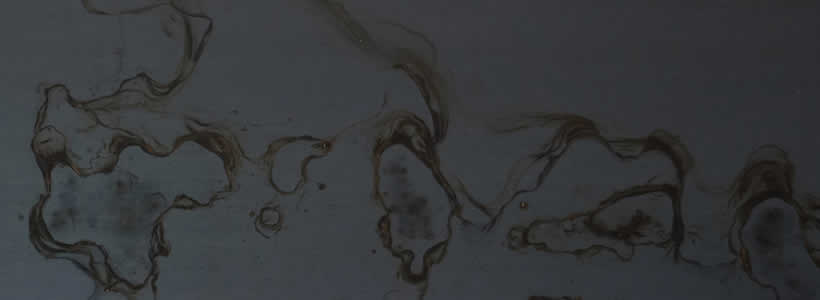
The chromatic variations generated by oxidation transform metal surfaces, creating different tones and textures that can become integral elements of an interior design project. Planium applies this research to a range of metal surfaces, experimenting with processes and treatments that modify the appearance of steel, copper and brass.
The resulting colours can recall shades traditionally associated with artists’ pigments — from ochre and blue to green and darker tones — while originating from the characteristics of the material and the processes applied to its surface.
Mill Scale and Steel Oxidation
Mill scale, the oxide layer that forms on the surface of steel during hot processing, presents chromatic variations generated by the conditions of the rolling process.
The resulting streaks can range from anthracite and blue to magenta tones, giving each sheet a surface characterised by variations that are not completely uniform.
These qualities have also led to the use of mill scale as a decorative surface for cladding and interior design applications.
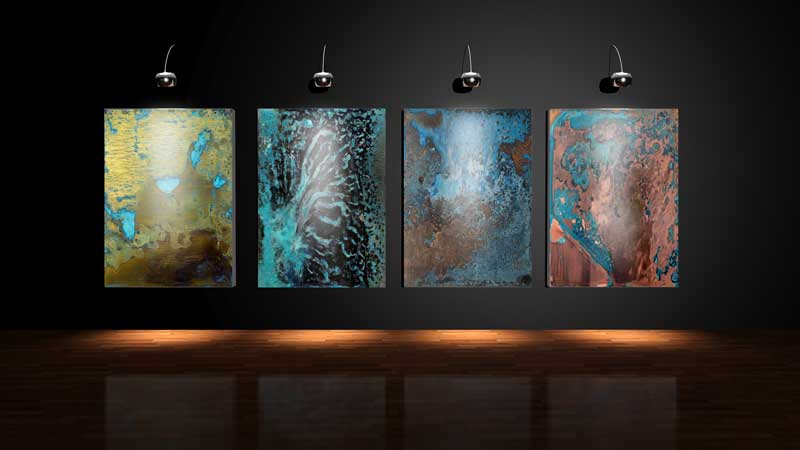
Electrolytic Treatments and Chromatic Variations
Alongside the processes that naturally affect metal surfaces, Planium experiments with electrolytic treatments to further modify the appearance of mill scale.
These treatments can produce burnished effects and different chromatic variations, including green and copper tones.
Oxidation therefore becomes a means of altering the visual character of the metal while retaining the material identity of its surface.
Cemento Inossidabile and Oxidized Steel
Among the surfaces developed by Planium, Cemento Inossidabile is obtained through an electrolytic oxidation process that gives the metal an appearance visually distinct from its original surface.
Oxidized Steel, by contrast, presents a finish in which burnished tones coexist with the lighter, silvery qualities of steel.
The variation between darker and more reflective areas allows the surface to become an active part of the architectural composition, particularly when used for large-scale cladding.
Copper and Brass Oxidation
Copper naturally changes its appearance through oxidation. Its surface gradually darkens, eventually developing very dark tones followed by characteristic green colourations.
Planium also works with controlled oxidation processes to accelerate and direct the chromatic transformation of the material.
Brass can likewise undergo treatments that produce articulated surface variations, including blue and light-blue tones.
Steel, copper and brass can therefore become surfaces defined not only by the original properties of the metal, but also by the transformations generated through oxidation processes, extending their potential applications in cladding and interior design.
Planium: www.planium.it