
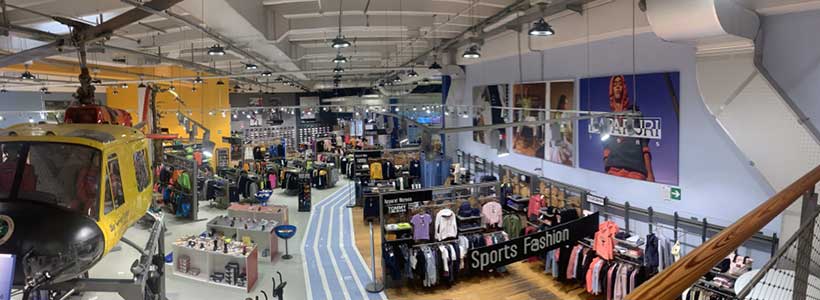
Sports retail is one of the sectors that manages to contain market difficulties more effectively during the pandemic. The need to maintain an active lifestyle, even with restrictions, supports the demand for products dedicated to sport and leisure.
With the return to normality, the physical store regains centrality. Consumers once again appreciate the possibility of trying products, comparing materials and experiencing technical items, footwear and performance accessories directly. At the same time, e-commerce continues to grow, making the need for effective integration between digital channels and the store increasingly clear.
Retail layout and space organization
There are numerous sports retail chains and brands in the Italian market: from CISALFA to AW LAB, from JD SPORT to FOOT LOCKER, from SNIPES to DECATHLON, as well as niche specialist retailers. There are also multi-regional players such as SPORTLER and KING SPORT, alongside individual brands with monobrand stores.
The level of competition is therefore very high, both in terms of image and commercial offer. The Italian sporting goods market now features very different retail formats: from stores specializing in sneakers to large multisport commercial spaces, up to monobrand stores of major international brands.
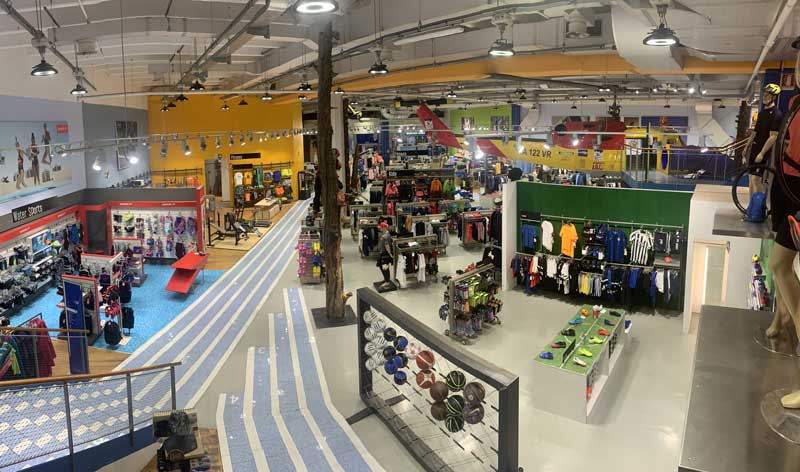
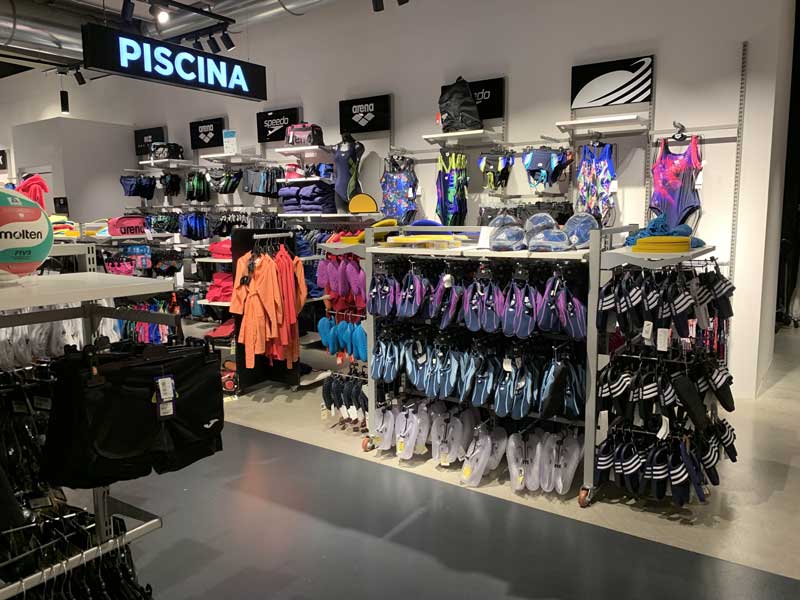
Consumers therefore face a broad and highly competitive offer, where the store layout plays a fundamental role. Retail spaces must be immediately readable, with intuitive customer paths and a clear division of departments.
- division by gender;
- division by sports discipline;
- organization by performance level;
- areas dedicated to sportswear and fashion retail.
In this scenario, visual merchandising becomes an essential tool to facilitate product search and improve the shopping experience. Colors, sizes, accessories and categories must be quickly identifiable, reducing the time spent searching inside the store.
Further insights into retail design dynamics are available in the section dedicated to store design.
The role of footwear in sports retail
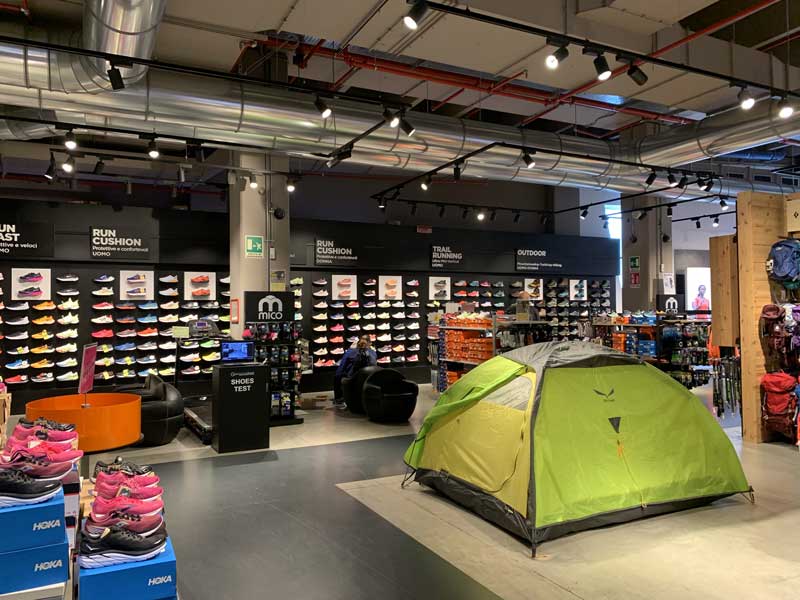
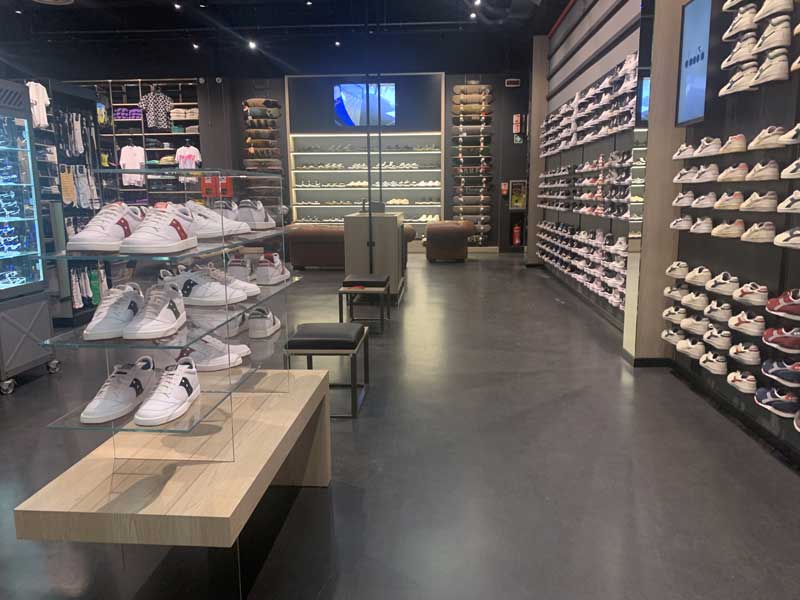
Within sports stores, footwear is now one of the key product categories. The offer addresses very different targets: from consumers looking for everyday comfort to technical users focused on competitive performance.
This leads retailers to dedicate large display areas to shoes, using display systems capable of enhancing both the technical and aesthetic aspects of the product.
- technical-specialist approach;
- sportswear and lifestyle positioning;
- hybrid models between performance and fashion.
Competition is therefore based not only on assortment, but also on the visual identity of the store and the quality of the overall experience.
Physical experience and customer relationship
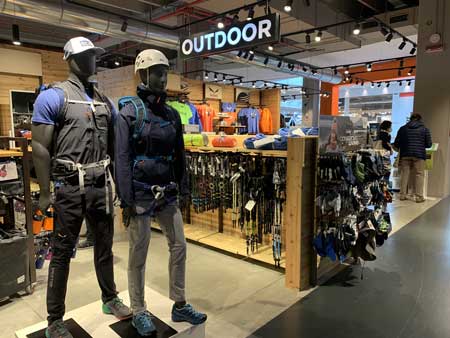
After years of strong acceleration in online sales, consumers are once again valuing direct contact with sales staff. Expertise, advice and assistance become distinctive elements of the physical store compared to e-commerce.
At the same time, new critical issues are emerging in staff management. Many retailers report difficulties in retaining qualified personnel in the medium term, with increasingly high turnover that directly affects service quality.
- knowledge of technical products and performance;
- supporting customers in their choices;
- using integrated digital tools;
- managing omnichannel dynamics.
Technology and omnichannel integration in the store
More digitally oriented customers now require a fluid experience between physical and digital channels. For this reason, many retailers introduce integrated technologies such as:
- touch screen monitors;
- interactive totems;
- handheld devices for sales staff;
- real-time stock checks;
- click & collect services.
The goal is to reduce friction during the purchasing process and increase the operational efficiency of the store.
Visual communication also plays a central role: consumers want to immediately understand the brand identity, the organization of the spaces and active promotions through simple and immediate multi-level communication.
Related insights are also available in the section dedicated to store layout.
Evolution of the sports retail market
The high level of competition in the sector and the constant growth of online sales are profoundly changing market balances. Consumers continuously compare physical stores, e-commerce and outlet channels before completing a purchase.
- service quality;
- direct product experience;
- specialized advice;
- post-sale engagement;
- building an ongoing relationship with the customer.
The future of sports retail therefore appears to be moving towards increasingly omnichannel models, where the physical store evolves from a simple commercial space into an integrated experiential platform.
by Paolo Zanardi – XT srl
by AN Shopfitting Magazine no.169 ©