
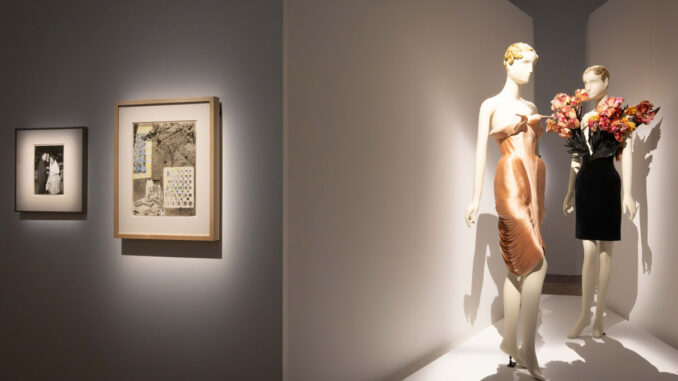
In exhibition design, surfaces can perform different roles: providing a neutral backdrop for artworks, contributing to the colour scheme of the visitor journey or establishing a stronger material presence. “Dalí and Fashion”, on view at Palazzo Reale Milano from 24 September 2026 to 31 January 2027, provides a case study in the relationship between surfaces, light and exhibition design.
For the exhibition, Novacolor supplied a range of finishes for the different spaces, with solutions selected according to the requirements of each area and the way the works are displayed.
Promoted by Comune di Milano – Cultura and organised by Palazzo Reale, MondoMostre and Civita Mostre e Musei, in collaboration with the Fundació Gala-Salvador Dalí, the exhibition brings together more than 200 works, including paintings, drawings, garments, photographs, jewellery, films and documents. The exhibition is curated by Judith Clark, exhibition-maker, art director and Professor of Fashion and Museology at the University of the Arts London.
Surfaces and light in exhibition design
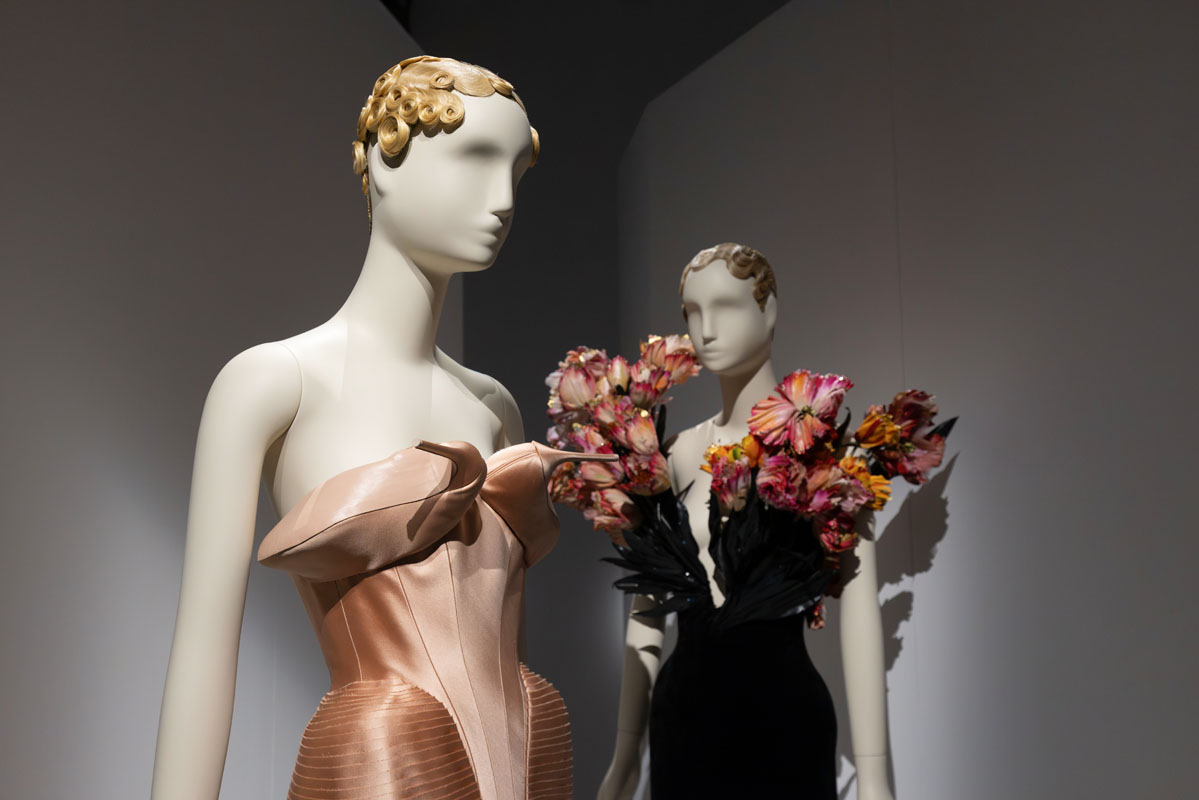
A significant part of the intervention concerns the backdrops against which artworks and installations are displayed. Throughout the exhibition, MATmotion Supreme has been used in white and in a range of different colours.
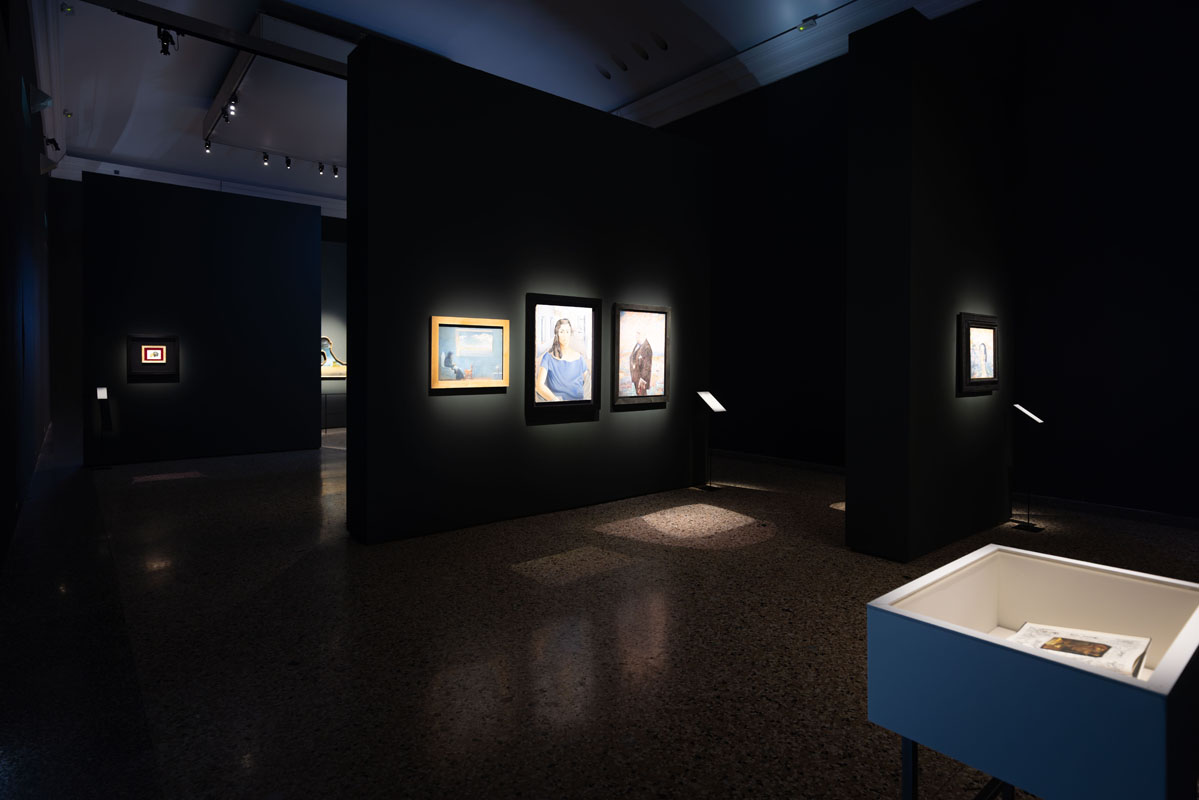
Its ultra-matt finish addresses a specific exhibition requirement: reducing reflections and unwanted light interference on the surfaces to provide a clearer view of the artworks and installations. This becomes particularly relevant in spaces where focused lighting directs attention towards individual works.
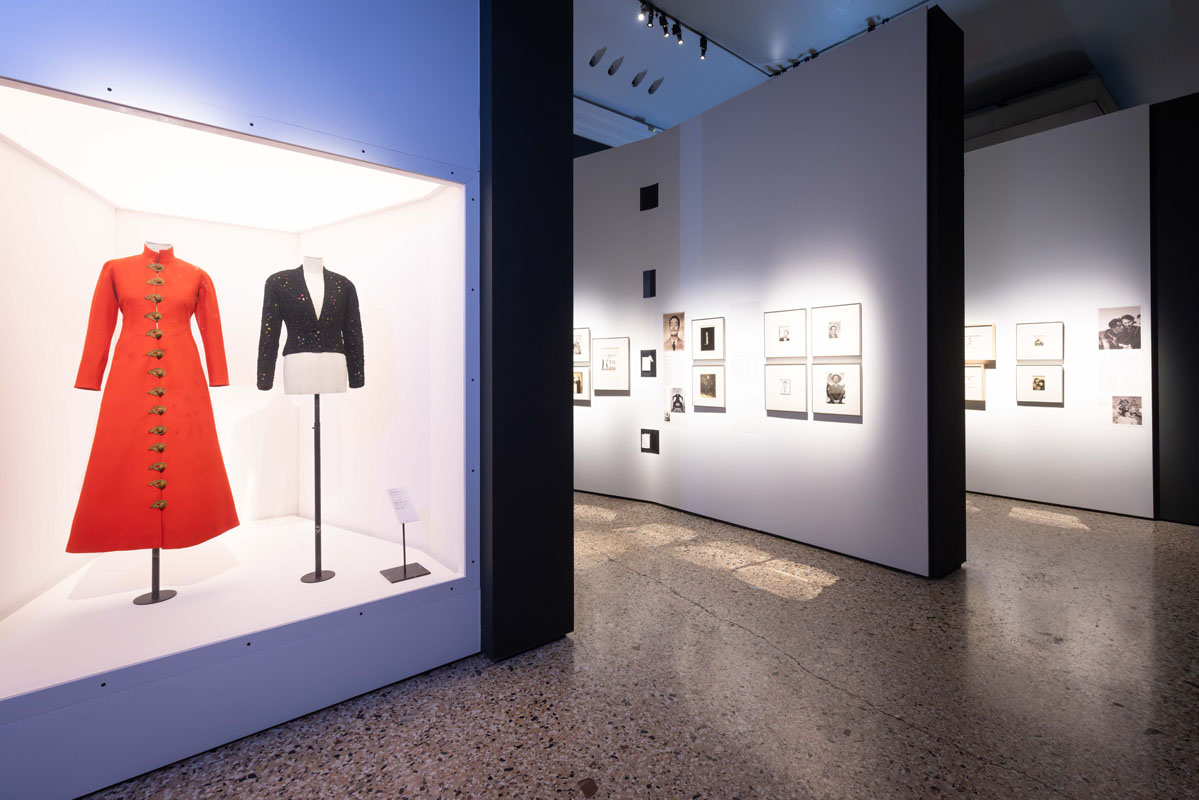
The photographs show walls alternating between lighter and darker tones as backgrounds for paintings, photographs and installations. Light and surface colour therefore contribute to the visual hierarchy of the exhibition.
From backdrop to material surface
The role of the surface changes in the reception areas. At the exhibition entrance, Marmorino KS, a lime-based mineral finish, introduces a more pronounced material quality than the backdrops used throughout the exhibition galleries.
The distinction is significant from a design perspective: the neutrality required of walls displaying artworks is complemented by more strongly characterised surfaces in areas where the space itself takes on a more distinctive identity.
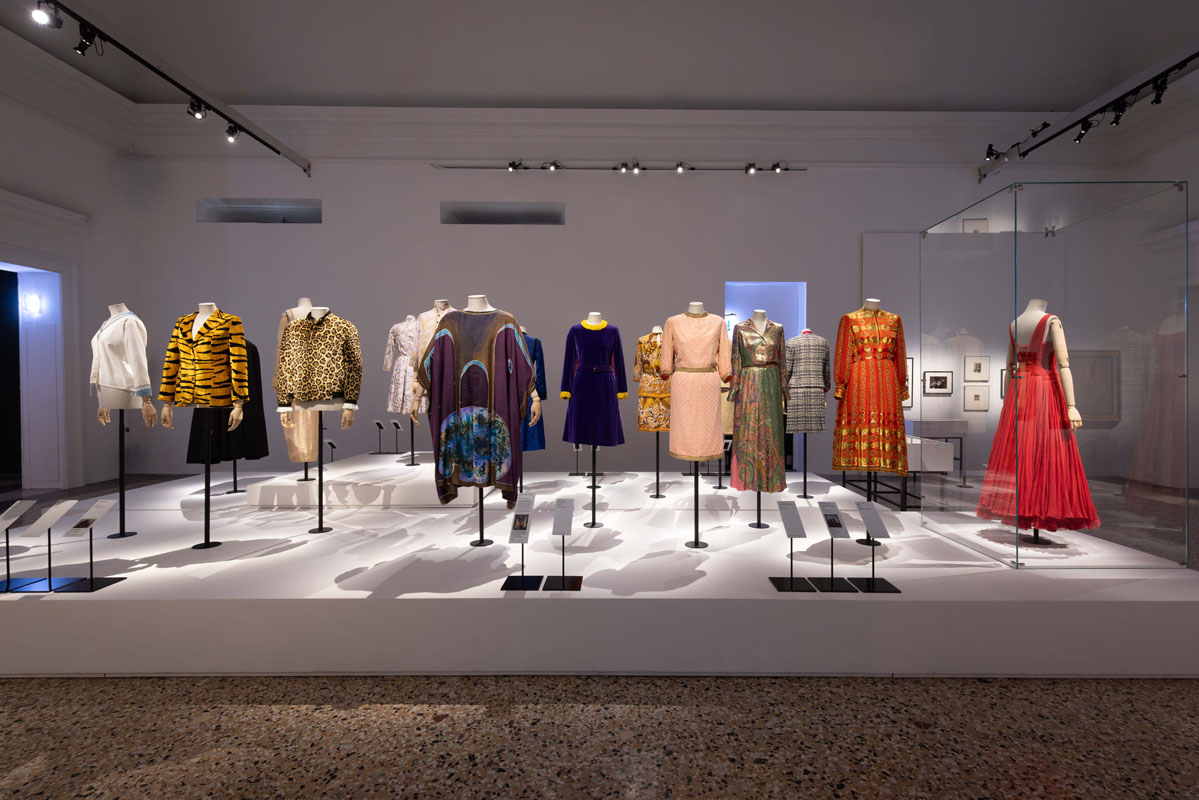
The intervention is completed by a platform finished with Materia Viva Mosaico. In photographs of the installation, its light-coloured surface becomes part of the composition alongside garments and mannequins, receiving the shadows cast by the lighting and contributing to the perception of the displayed objects. Novacolor describes the finish as an element connecting colour, texture and architecture.
Different materials for different exhibition functions
The intervention for “Dalí and Fashion” therefore demonstrates three different ways in which surfaces can operate within the same exhibition: as a visual backdrop, a chromatic element and a material presence.
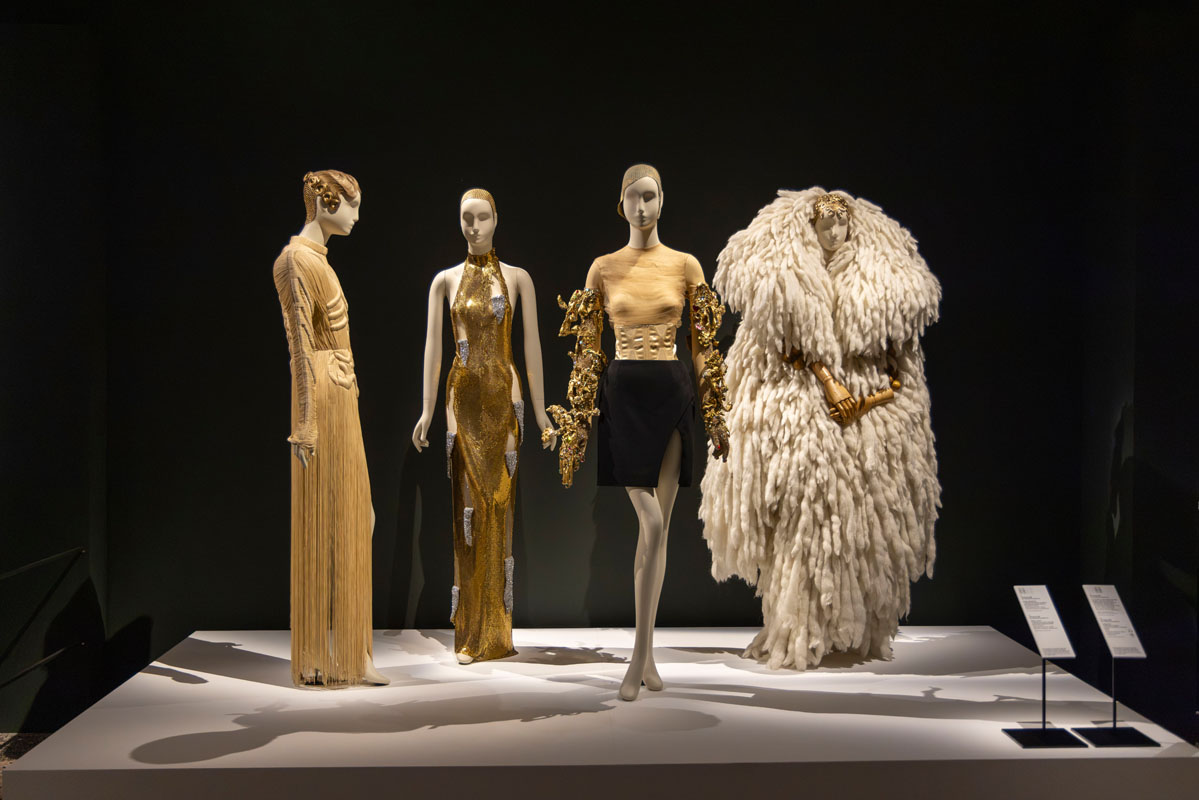
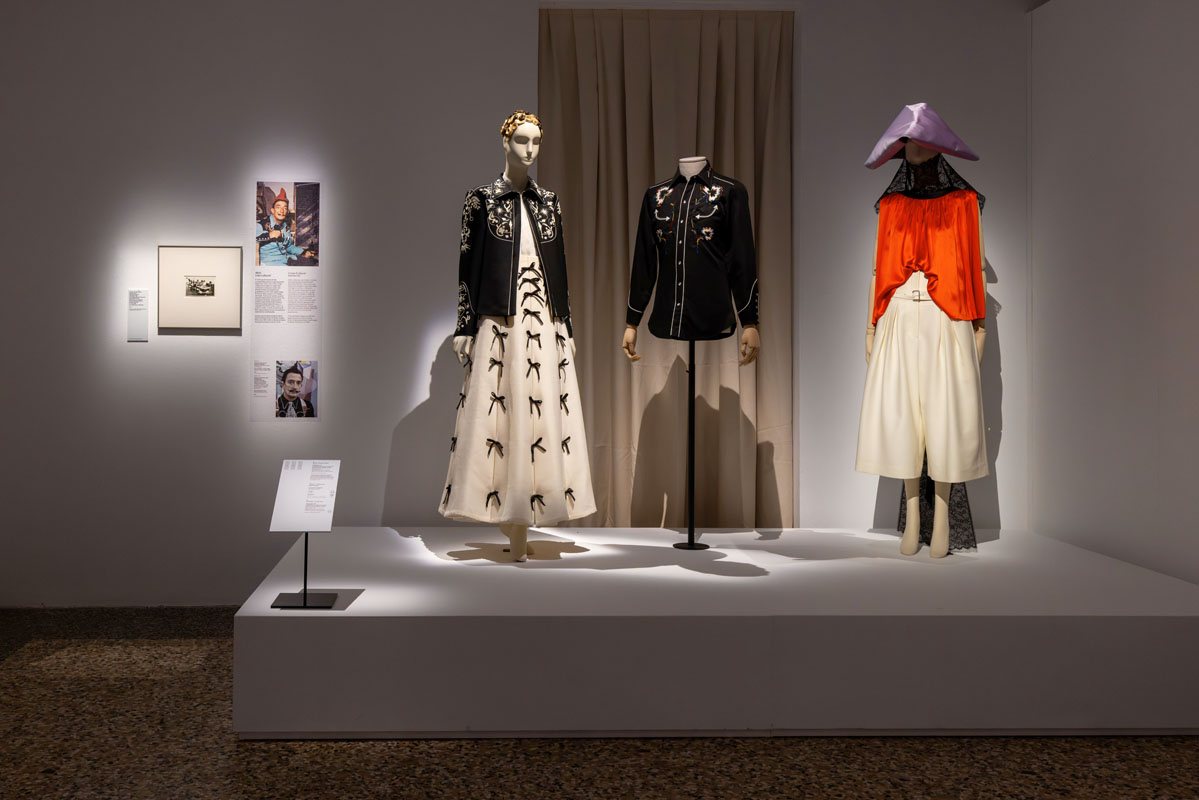
The approach goes beyond simply varying colours and finishes. Each surface responds to the function of the space: neutral when attention needs to remain on the artwork, chromatic when it helps structure the visitor journey, and more material when it contributes to the identity of the environment.
The same principles extend beyond the museum context. Shops, showrooms and commercial exhibition spaces share many of these requirements: managing the relationship between light and surfaces, creating appropriate backdrops for products, establishing visual hierarchies, and using colour and texture without competing with the objects on display.
From this perspective, surface design is not simply the final finish applied to a space, but one of the tools through which the perception of an exhibition environment can be shaped.
Photo credit: Monkeys Video Lab