
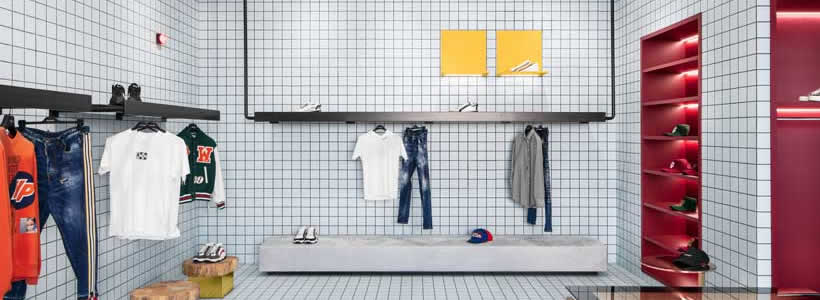
In Castellammare di Stabia near Naples, architect Carmine Abate designs the second Blessing boutique, evolving the retail identity already established in the brand’s first store. The new location, almost twice the size of the original space, preserves the same immersive architectural language based on fully tiled surfaces, scenographic interiors and references to Italian design, while introducing a renewed palette dominated by pale blue, Cartier red and imperial blue.
The project develops a highly recognisable retail environment through the serial use of ceramic tiles, integrated display systems and an atmosphere built around geometry, colour and spatial perception. The boutique combines interior design, visual merchandising and material research to create a compact yet visually immersive fashion retail space.
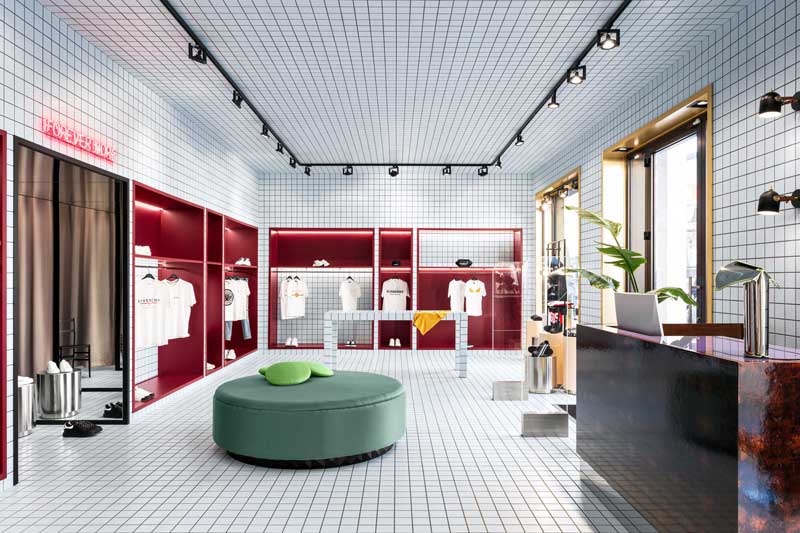
Ceramic surfaces create a continuous and immersive spatial envelope
The defining element of the project is the use of approximately 20,000 ceramic tiles in a 10×10 cm format covering walls, floors and ceilings. The ice-white finish combined with 5 mm grout lines transforms the entire interior into a continuous geometric volume that amplifies spatial perception.
In the new boutique, the tiled surfaces adopt a subtle pale blue tone that acts as a neutral backdrop for the stronger chromatic elements introduced throughout the space. Cartier red panels and imperial blue curtains generate visual depth and reinforce the spatial hierarchy of the interior.
The extensive use of ceramic tiles strengthens the immersive quality of the project while giving the store a strong visual identity that is immediately recognisable both physically and digitally.
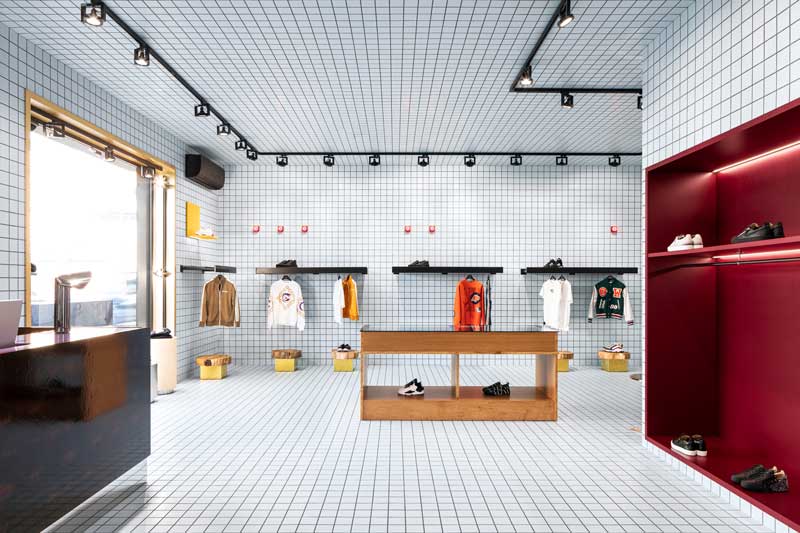
Iconic furniture and scenographic materials reinforce the identity of the boutique
The project preserves several elements already present in the original Blessing store. The walnut burl cash desk, diamond-pattern wooden surfaces and tree trunks positioned on golden cubes remain central components of the boutique’s visual identity.
Iconic Italian design pieces complete the interior composition, including Gio Ponti’s “Superleggera” chair and Mario Bellini’s “Chiara” lamp. These elements introduce references to Italian design culture while contributing to the refined atmosphere of the retail environment.
The mirror generating a “mise en abyme” effect amplifies spatial depth and creates visual continuity throughout the store. At the same time, the red neon sign reading “for ever more”, conceived as a tribute to Irish singer Roisin Murphy, introduces a narrative and emotional dimension to the interior.
The alignment of tiled surfaces becomes a technical challenge within the project
One of the most complex aspects of the intervention involved the installation of the ceramic surfaces. Although the building is not historic, the irregular alignment of the existing walls required significant preparatory work before the tiling process could begin.
Drywall counter-walls were introduced to regularise the geometry of the interior and ensure perfect continuity between floor, walls and ceiling. The objective was to maintain the alignment of every grout line throughout the entire space and achieve a precise geometric grid.
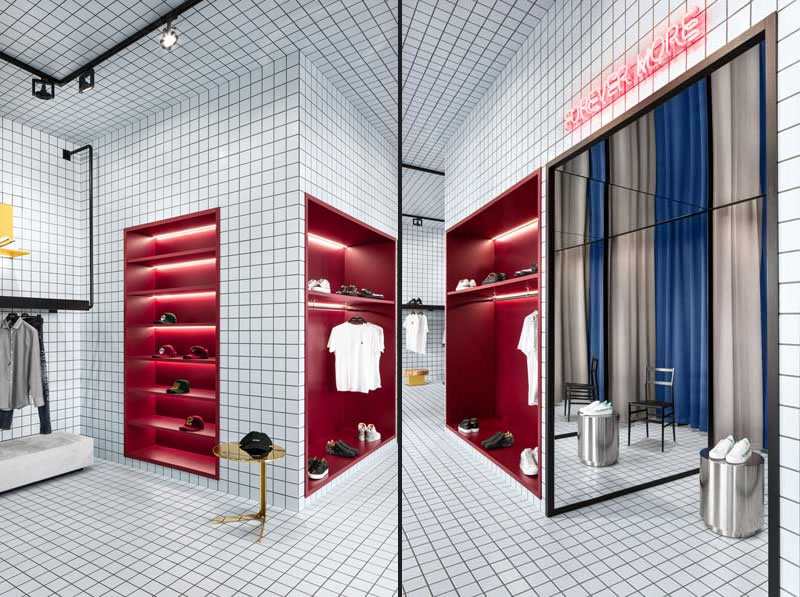
This technical approach reinforces the geometric precision of the project while contributing to the perceptual quality of the interior design.
Colour, geometry and visual merchandising define the customer experience
The boutique develops a retail experience based on the balance between geometric minimalism and strong visual impact. The continuous tiled envelope creates a neutral background that enhances products, furniture and display elements.
Colour is used as a tool to guide visual perception and construct atmosphere, while mirrors, neon lighting and reflective materials increase the dynamism of the customer journey. The project demonstrates how spatial composition and visual merchandising can transform a commercial environment into a highly recognisable immersive retail experience.
Client and Management: Vittorio Pecoraro
Sales Area: 100 sqm
Project: Carmine Abate Architect
Floor and wall tiles: Ceramica Vogue
Photos courtesy: Carlo Oriente