
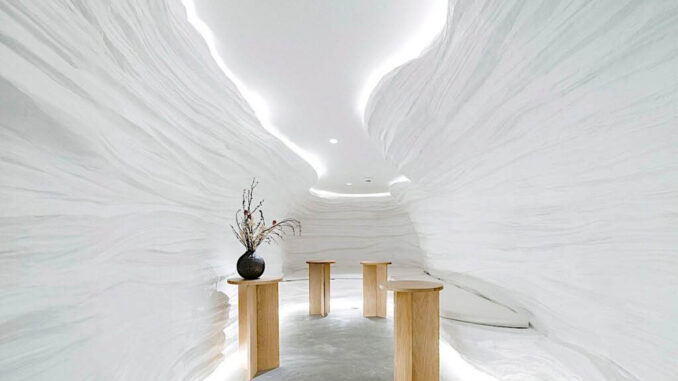
Ksana is a brand of green tea imported from Uji City, Kyoto Prefecture. Conceived as a retail design project, this matcha teahouse builds its identity around time, pause, and perception. The word “Ksana” comes from Sanskrit and refers to a small period of time, or balance. It is also the root of the Thai word “ขณะ” (ka-na), meaning “moment”, and of the Japanese word “刹那” (setsuna), which relates to time.
Rather than translating the brand through explicit visual elements such as color, shape, or material, the interior design works on a deeper atmospheric level. The concept aims to create memory through space. As a result, the surreal-minimalist language responds to the need to escape from the chaotic condition of the city while adapting to the specific character of the site.
Matcha teahouse in Bangkok: Ksana at One City Centre
The flagship store, which is also the brand’s first branch, is located beneath a staircase in a public area next to the plaza of One City Centre, before entering the office complex in the heart of Bangkok. In front of the building, a large water feature reflects the surrounding towers and creates the impression of a concrete mountain landscape. Therefore, the teahouse is conceived as a retreat where visitors can step away from the city and drink tea in a setting that recalls a gorge or a cave.
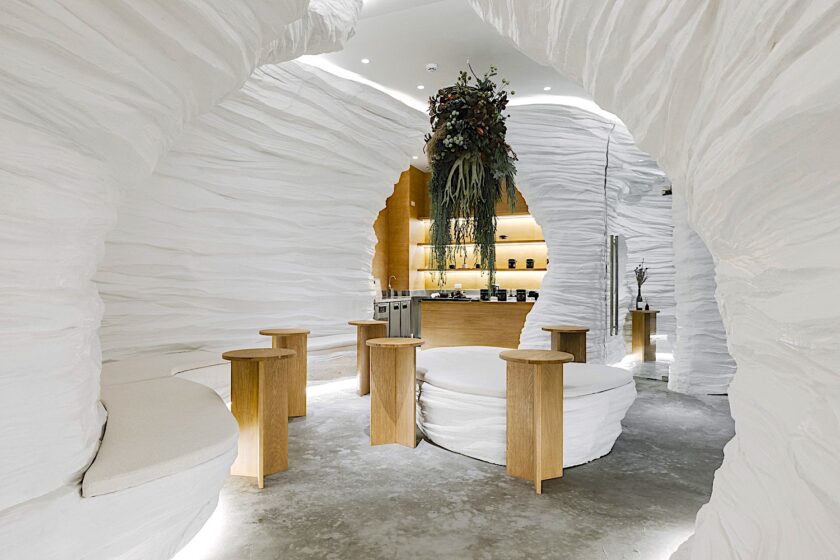
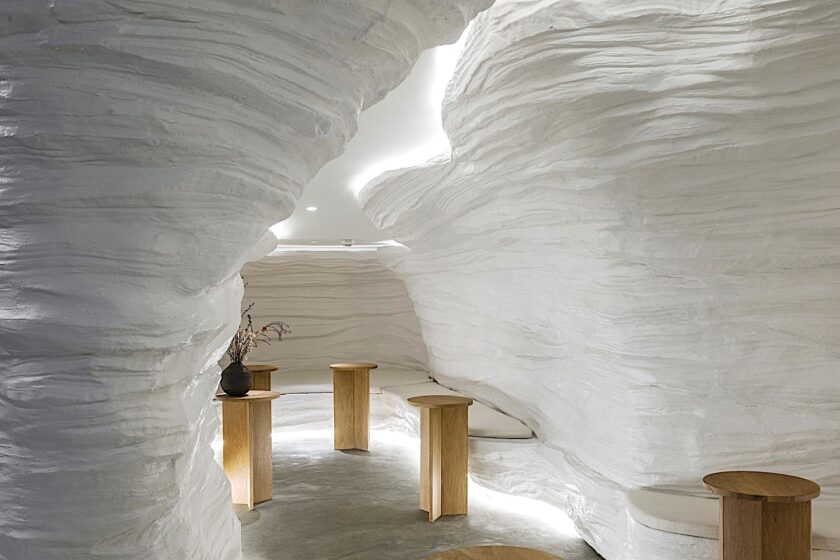
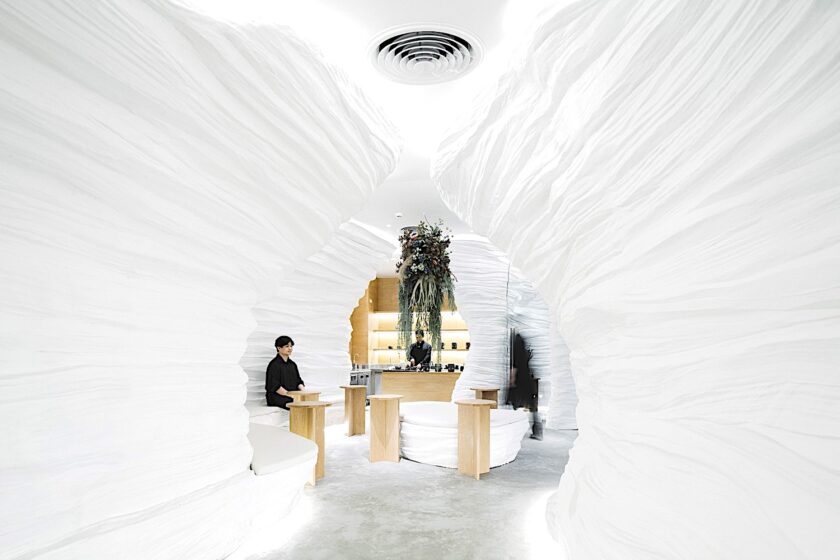
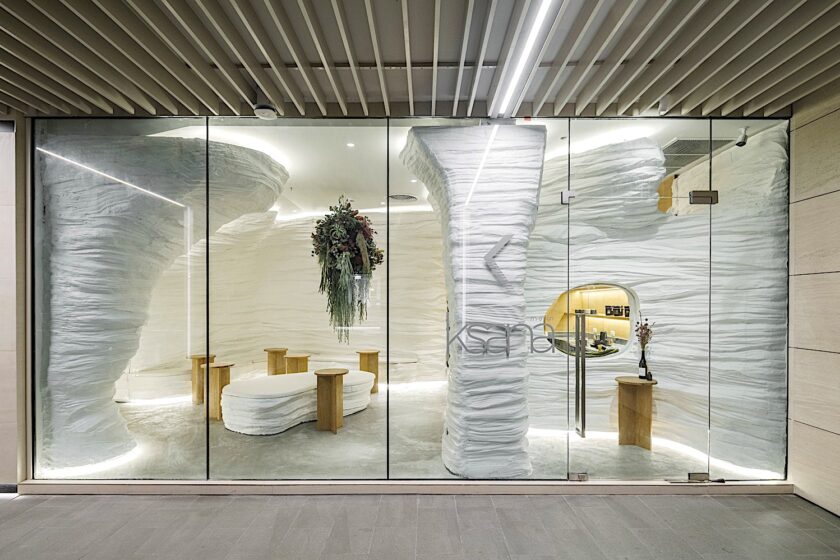
Inside the teahouse, the space below the stairs takes advantage of the site’s low slope to shape a more intimate inner cave for visitors seeking privacy. Access is through a double glass door. The first section is dedicated to takeaway service and delivery pick-up, reducing noise and movement in the main area. The second section is designed for sitting and drinking tea in a calmer environment.
Material palette and immersive retail atmosphere
The cave walls are made of fiberglass over CNC-shaped foam and then molded, scraped, and refined by hand by the sculptors of Art of Tea. This process gives the space a tactile character and strengthens its immersive quality. Oak-toned tables and countertops introduce warmth and highlight the darker tones of the stone teacups and dessert plates.
Additional speakers decorated with artificial flowers by the Japanese floral artist Ganon Florist add a subtle ornamental layer within an otherwise restrained composition. Overall, the project combines custom furniture, crafted surfaces, and controlled spatial sequencing to redefine the matcha teahouse as a place of pause within the intensity of the contemporary city.
Location
Ksana
2nd Floor, One City Centre, Unit R2-02, 548 Phloen Chit Rd, Lumphini, Pathum Wan, Bangkok 10330, Thailand
Design / Architecture Juti Architects
Photo credit Peerapat Wimolrungkarat