
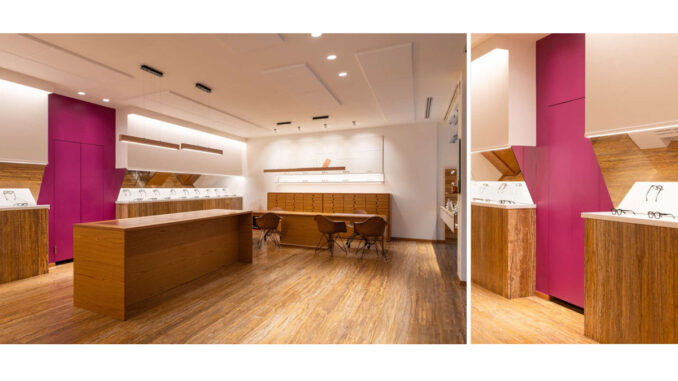
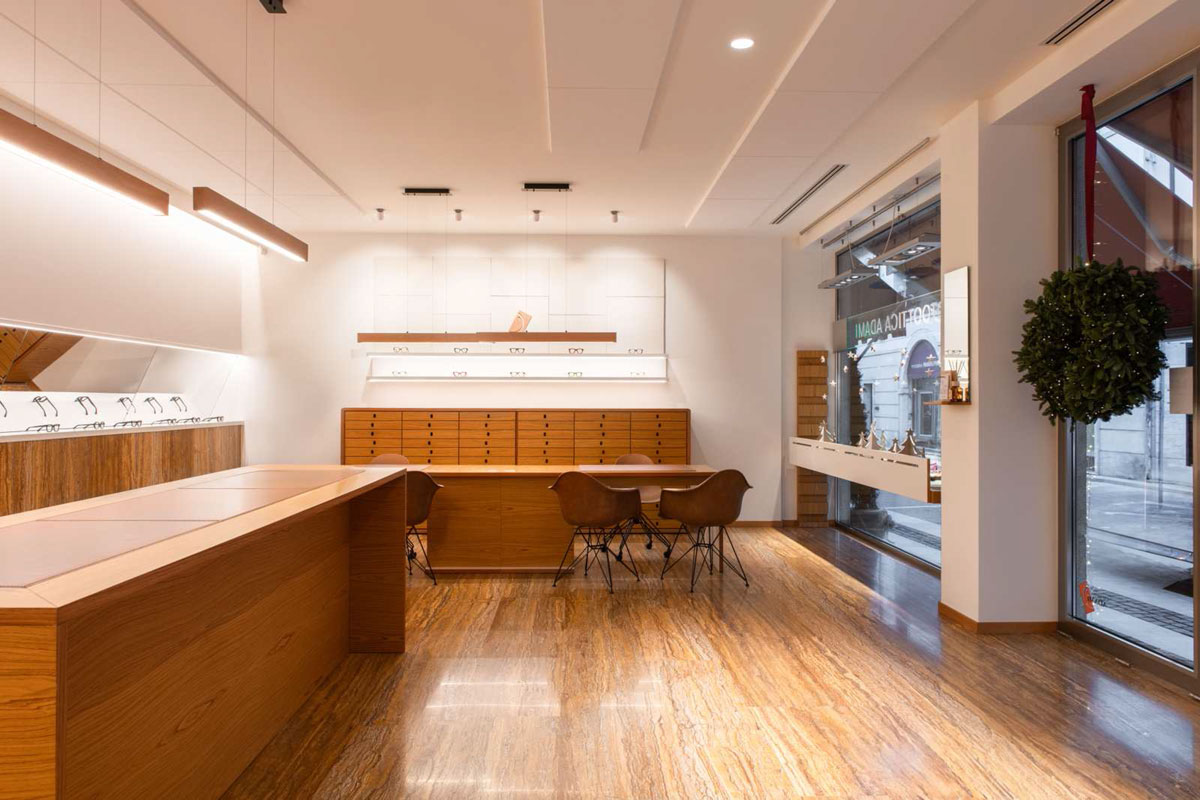
Adami Optical Store has been refurbished by PiùStore, with the project led by Adriana Genro. Rather than replacing the existing interiors, the design embraces a circular approach that preserves the bespoke furniture crafted almost thirty years ago, adapting it to the functional, display and customer experience requirements of a contemporary optical retail environment.
The 80 sqm refurbishment demonstrates how craftsmanship, sustainability and thoughtful retail design can work together to create a renewed identity while respecting the store’s history.
Preserving bespoke furniture strengthens the store’s identity
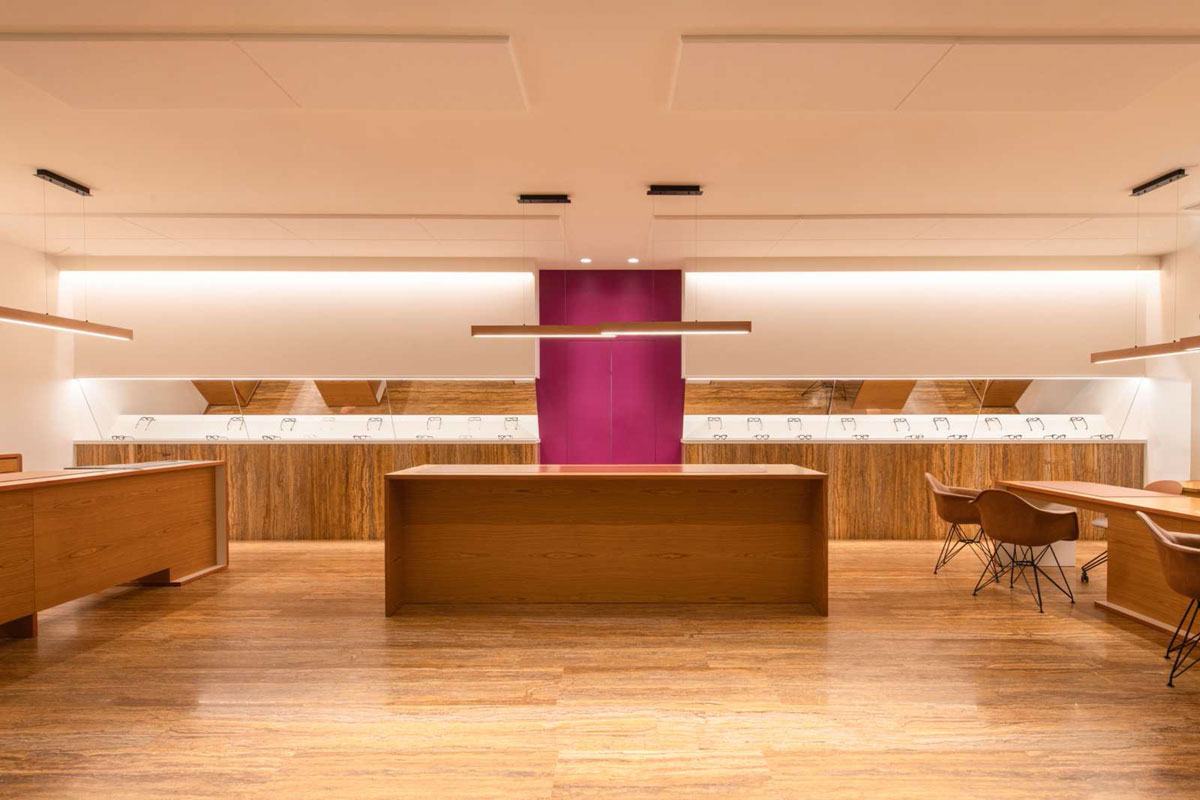
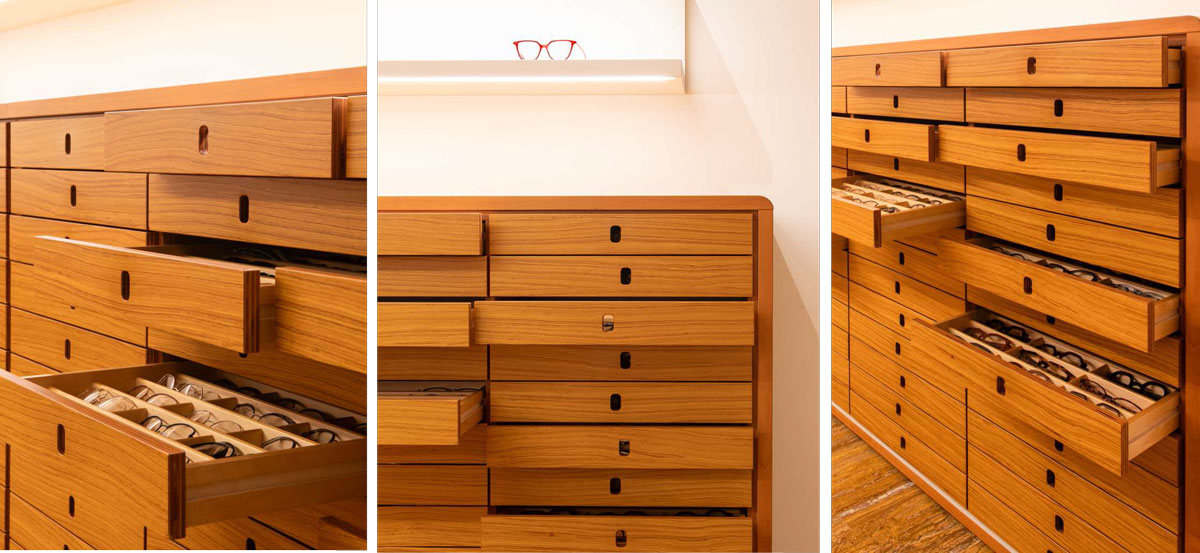
The refurbishment began with the owners’ decision to retain the original handcrafted furniture rather than replace it entirely. Designed specifically for the store almost three decades ago, these bespoke elements represent a valuable expression of local craftsmanship and continue to define the character of the space.
PiùStore’s intervention respects this heritage while introducing a contemporary retail language that enhances functionality, comfort and customer experience without compromising the store’s identity.
Circular design drives the transformation of the retail space
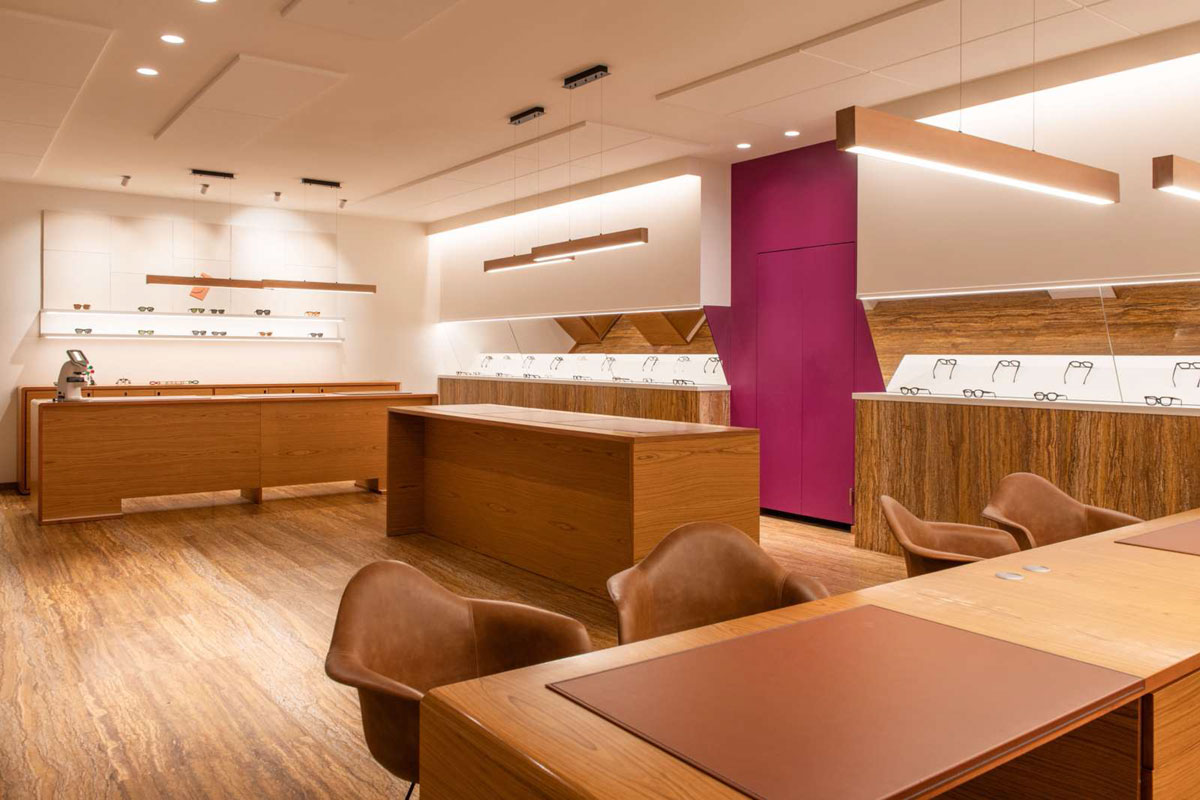
The project follows a circular design strategy based on recovering and upgrading the existing furniture. Working alongside the same craftsman who originally produced the interiors, every element was carefully restored and adapted, preserving its construction quality while meeting current retail requirements.
This tailored approach reduces the need for new production while reinforcing the architectural identity of the store. Sustainability becomes an integral part of the design process rather than an added feature.
Layout, materials and lighting enhance the customer experience
The internal layout has been reorganised to create a clearer and more intuitive customer journey. Display areas, consultation spaces and circulation routes are now better connected, improving the overall readability of the retail environment.
The lighting scheme has been completely redesigned to highlight the eyewear collections while strengthening the visual hierarchy of the interior. Carefully calibrated lighting establishes a balanced relationship between architecture, furniture and product displays.
The project also incorporates natural materials, including acoustic panels made from fungal mycelium and recycled textile fibres, contributing to both environmental sustainability and acoustic comfort.
A mirrored installation transforms an architectural constraint into a design feature
One of the project’s defining interventions focuses on the recessed niches originally designed to display cameras.
Inspired by the installations of Leandro Erlich, a continuous angled mirror transforms this architectural constraint into an unexpected visual feature. The result creates a striking sense of depth, visually enlarging the interior while introducing a theatrical dimension inspired by contemporary installation art.
Colour becomes a distinctive architectural signature
The refraction room door has been reinterpreted as a strong architectural element through the use of a deep purple finish. More than a functional component, it becomes a visual landmark that defines the project’s identity and guides the customer’s perception of the space.
This bold chromatic accent integrates naturally with the overall design language while reinforcing the store’s contemporary character.
Heritage and contemporary retail design come together in a balanced refurbishment
The refurbishment of Adami Optical Store demonstrates that renewing a retail space does not necessarily require replacing its original character. Instead, the project shows how thoughtful design can transform existing resources into long-term value.
By combining craftsmanship, circular design principles and contemporary retail strategies, the project creates a balanced retail environment where identity, sustainability and customer experience coexist naturally.
Location: Chiampo (Vicenza), Italy
Design: Adriana Genro – PiùStore
Photo Credit: Laura Crucitti