
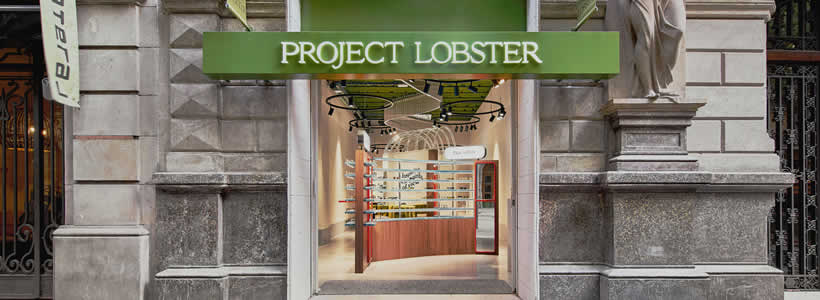
Casa Lobster Barcelona is an optical store designed by El Departamento, the architecture and interior design studio led by Alberto Eltini and Marina Martín. Located in Barcelona’s Eixample district, the project transforms the ground floor of a neoclassical building into a hybrid retail environment where exhibition, craftsmanship and spatial narrative coexist. Conceived for the eyewear brand Casa Lobster, the store interprets retail architecture as an immersive and tactile experience rooted in the historical identity of the site.
The retail layout preserves the architectural heritage of Barcelona’s Eixample
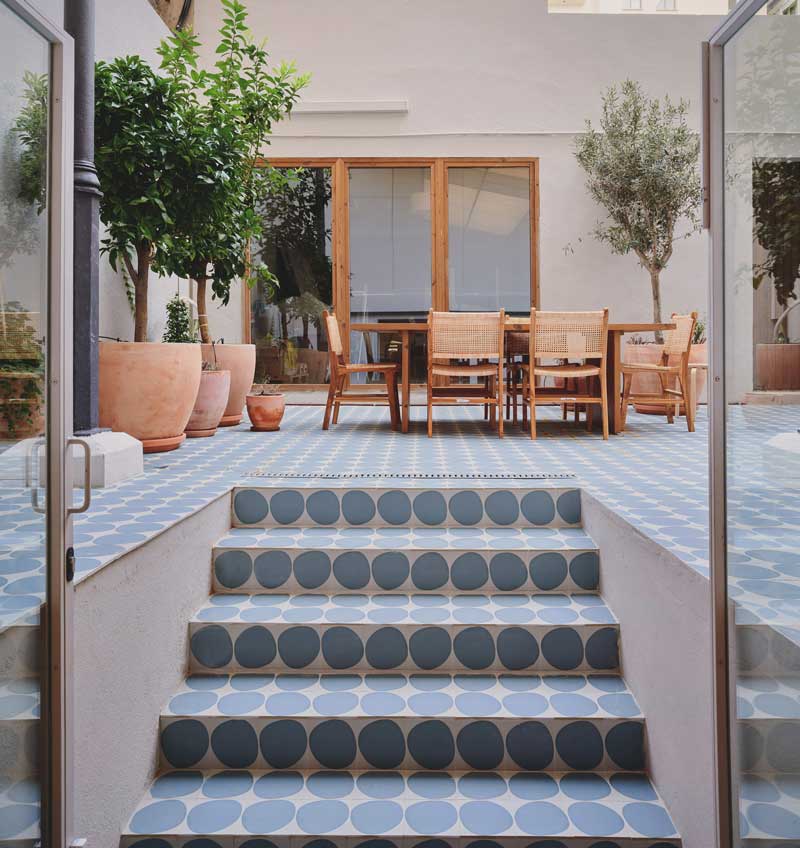
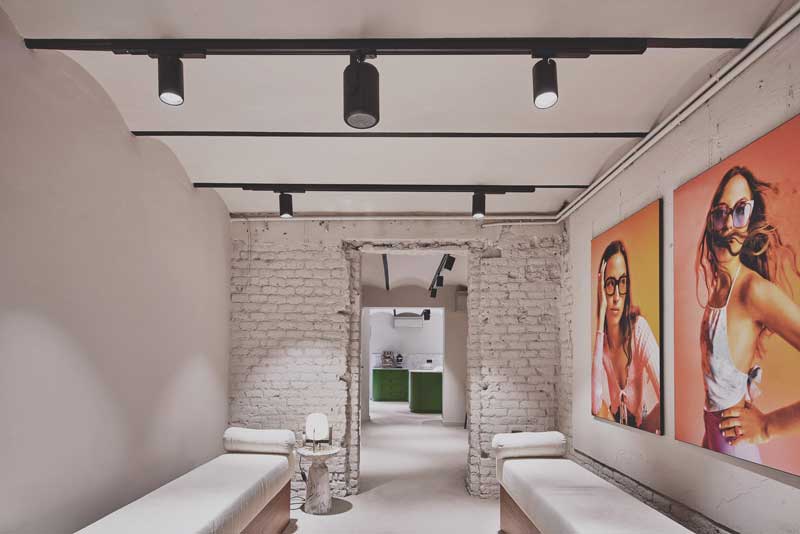
The project occupies the typical ground-floor configuration of the Eixample district, where a sequence of interconnected spaces gradually leads toward an internal courtyard. The original morphology of the property becomes a central component of the design strategy, maintaining the longitudinal spatial progression and the changes in level characteristic of Barcelona’s historic residential buildings.
The designers describe the space as both a physical and symbolic inheritance. Before becoming Casa Lobster, the premises housed the René Metrás Gallery, an influential art gallery founded in the 1960s. This cultural legacy informs the entire project, positioning the store between retail environment and artistic installation.
The optical store concept transforms product display into an immersive spatial installation
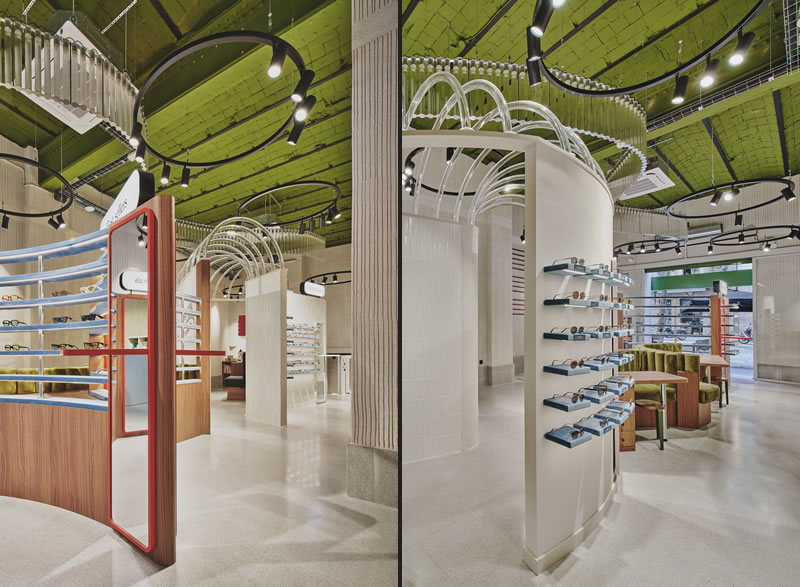
Inspired by the experimental spirit of René Metrás and by several artists exhibited in the former gallery, El Departamento conceived Casa Lobster as a performative retail environment. At the centre of the main room, a large architectural artefact functions simultaneously as exhibition device, spatial divider and experiential installation.
The structure is designed to be crossed, touched and perceived through its materials, textures and lighting effects. Rather than relegating products to perimeter shelving, the project reorganises visual hierarchy through a centralised display strategy that turns eyewear into part of a spatial composition.
This approach challenges conventional optical store layouts, where products are often densely accumulated along walls without hierarchy or interaction. Casa Lobster instead introduces a more curated retail language based on rhythm, perception and movement.
The reinterpretation of the René Metrás Gallery vault defines the identity of the interior
One of the most distinctive references within the project is the reinterpretation of the original glass vault that characterised the rear courtyard of the René Metrás Gallery. Originally designed by architects J. Balari and J. Schmid, the vaulted element becomes the conceptual basis for Casa Lobster’s central “tunnel”.
Inside the store, twelve solid methacrylate tubes form an irregular translucent vault suspended above the circulation space. The intervention creates an immaterial archway that filters light and reinforces the installation-like atmosphere of the interior.
The transparent methacrylate structure also contributes to the perception of depth and continuity, softening spatial boundaries while guiding customers through the sequence of environments.
Materials and lighting reinforce the tactile and atmospheric dimension of the retail space
The interior palette combines tactile materials and soft finishes to define the identity of each area within the store. Velvet surfaces are used to enhance product presentation, while textured renderings emphasise the verticality and solemn character of the main showroom.
Wood introduces warmth and a domestic atmosphere through bespoke furniture solutions, balancing the more experimental elements of the project. Transparent methacrylate diffuses light throughout the space and contributes to the perception of visual lightness.
Textiles are integrated across floors and seating elements, reinforcing the calm and intimate atmosphere that accompanies the customer journey. The material strategy supports a retail experience based not only on display efficiency, but also on sensory perception and spatial comfort.
The project integrates showroom, workshop and transitional spaces into a unified customer experience
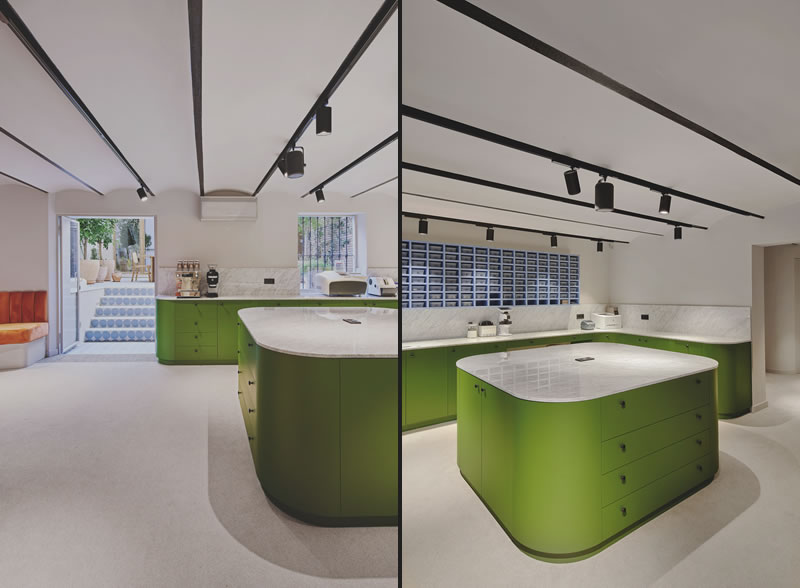
Casa Lobster extends beyond the traditional concept of a showroom. The project also includes an open workshop shared by opticians and clients, storage systems, transitional corridors and an internal courtyard.
These interconnected environments create gradual spatial transitions that encourage slower movement and a more relaxed interaction with the products. The circulation system becomes part of the experiential narrative, connecting functional and emotional dimensions within the retail environment.
Location Calle Consell de Cent 331, Barcelona
Area 210 sqm
Design El Departamento – Alberto Eltini and Marina Martín
Photo Courtesy José Hevia