
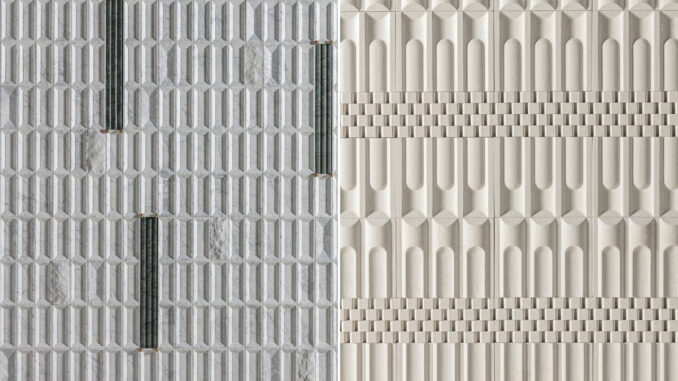
With the Windows of Light and Jadeela collections, Lithea continues its exploration of natural stone cladding, transforming the surface into an architectural element capable of generating rhythm, depth and shifting perceptions. Designed by Shahad Alazzaz – Azaz Architects, the two projects share an investigation into the relationship between materiality and light, while developing distinct expressive languages, both rooted in a dialogue between cultural references and contemporary interpretation.
Natural stone is therefore approached not simply as a finish, but as a material shaped through reliefs, carvings and modular geometries that alter the perception of the wall as light changes across its surface.
Windows of Light: the wall as an architectural sequence
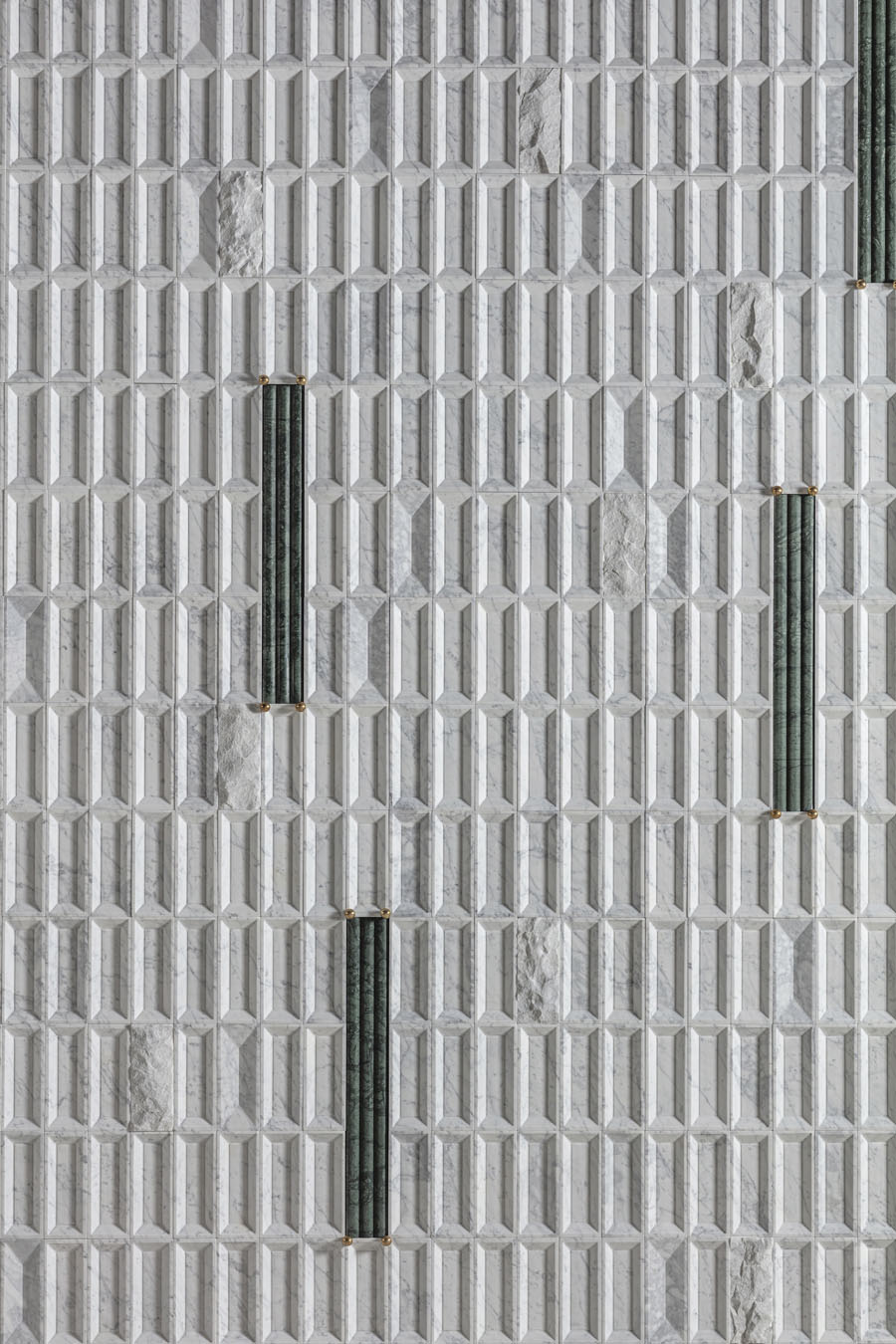
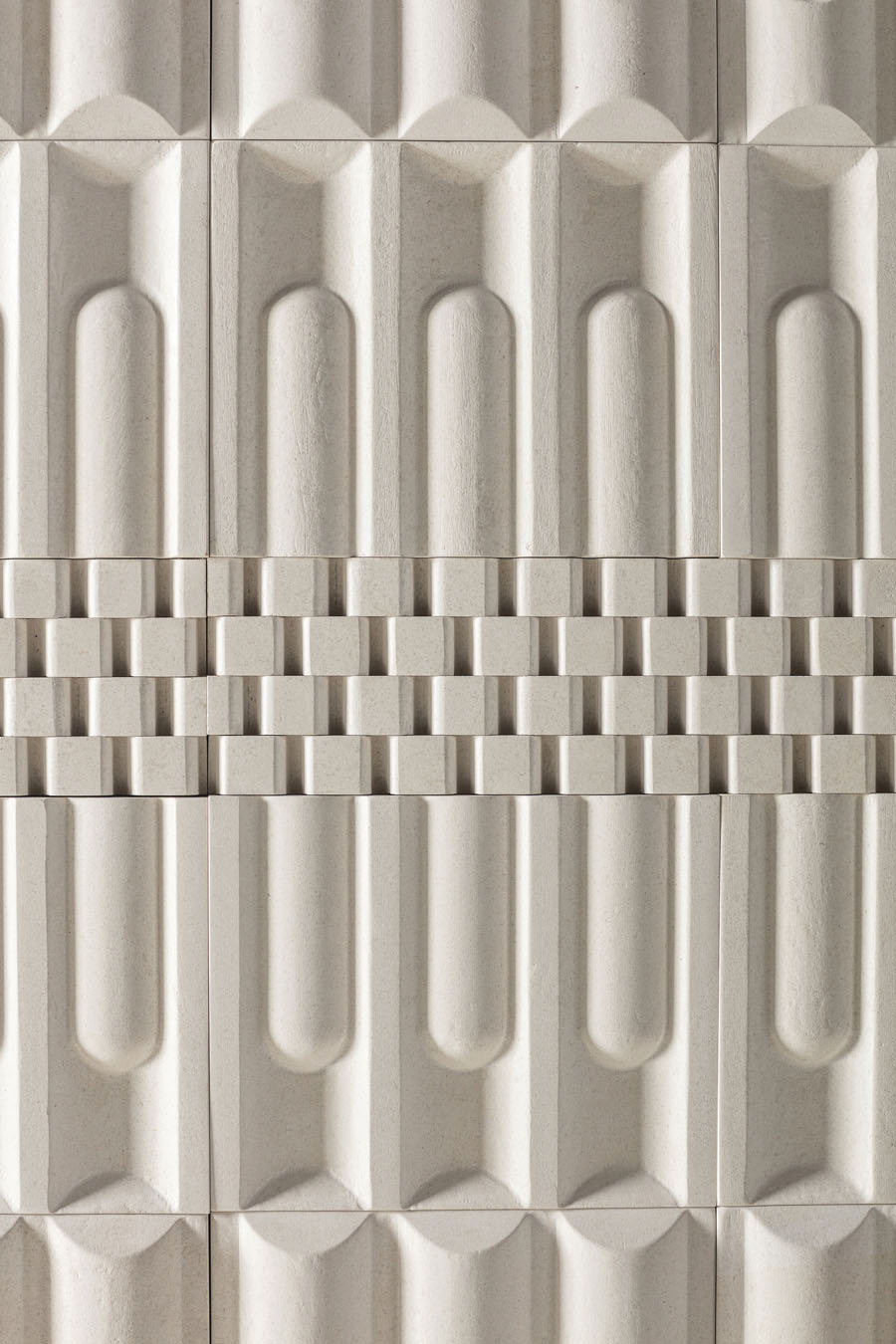
In Windows of Light, the wall is conceived as a modular sequence inspired by the idea of the window, interpreted not only as an architectural element but also as a symbolic threshold between inside and outside, shadow and light, introspection and openness.
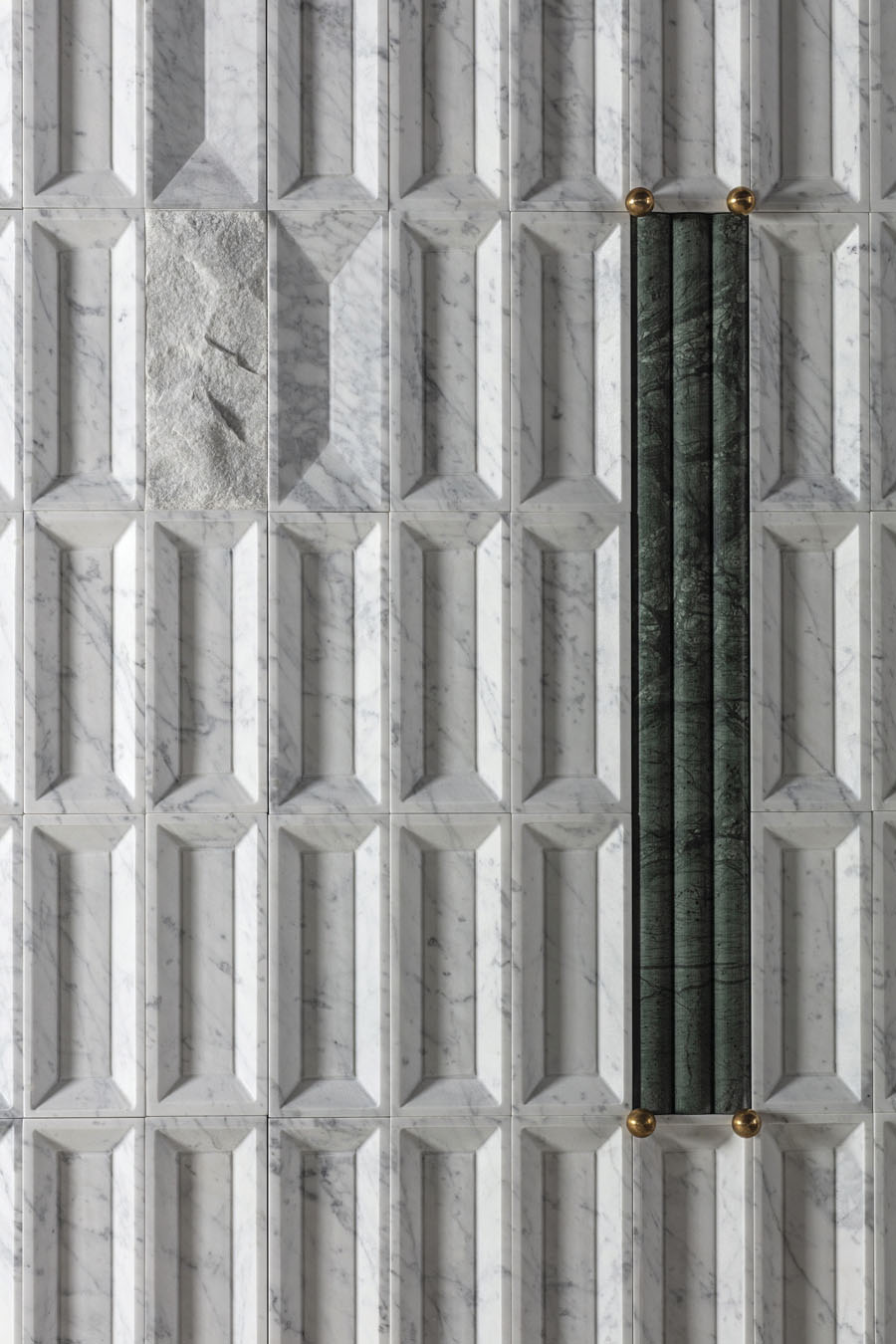
The geometric composition alternates sculpted volumes with material inserts that interrupt the regularity of the pattern through variations in texture and depth. Bianco Carrara surfaces are combined with Verde Guatemala accents and small spherical brass details that mark the junctions and reinforce the graphic precision of the composition.
The result is a three-dimensional architectural skin across which light moves over the reliefs, producing defined shadows and continuous perceptual variations. The modules follow a rigorous yet dynamic sequence: vertical openings, carved elements and material inserts establish a visual rhythm reminiscent of the articulation of historic façades, reinterpreted through a contemporary and restrained language.
Jadeela: a stone surface with a textile quality
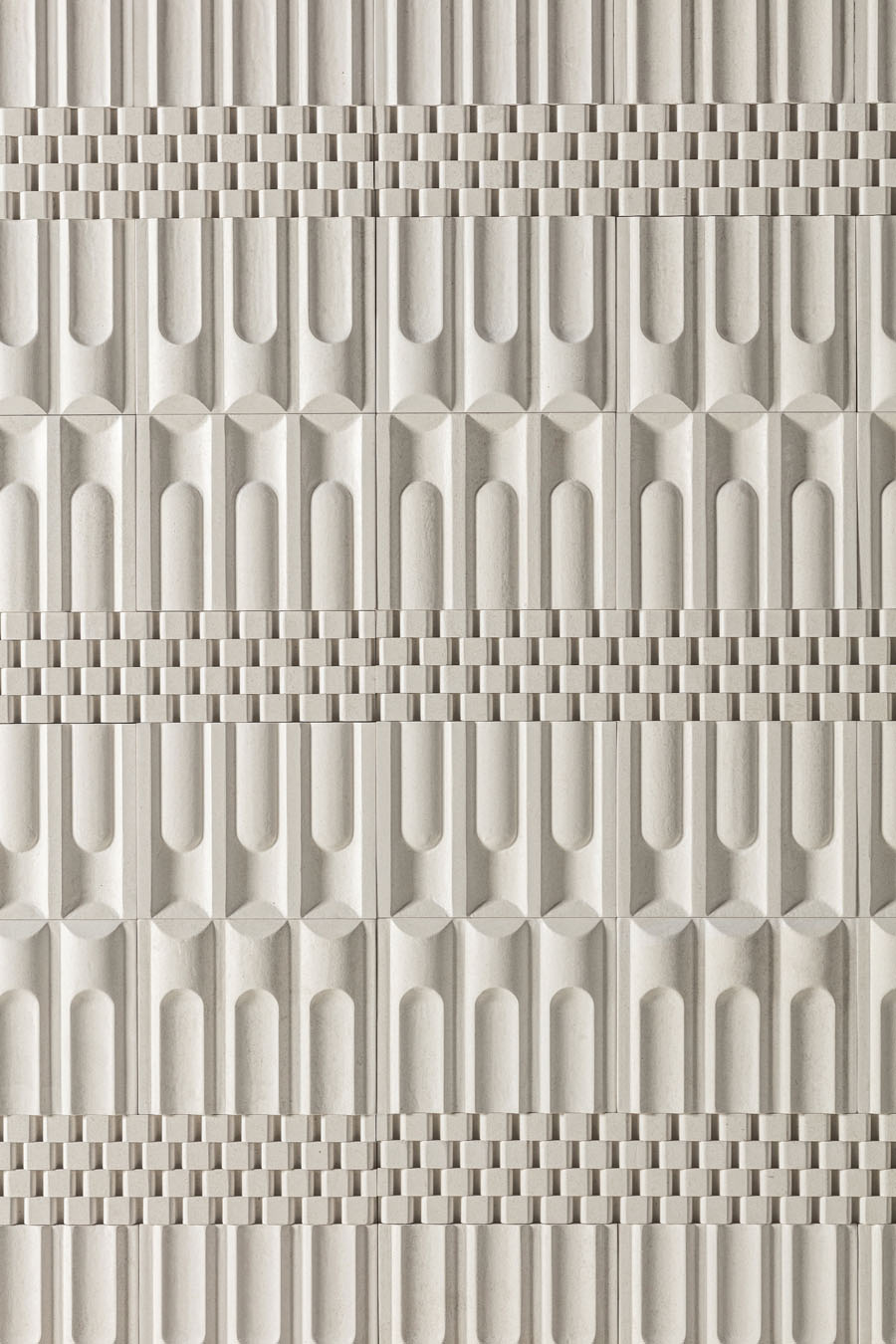
While Windows of Light explores the relationship between openings and luminosity, Jadeela develops a more tactile and ornamental approach. The collection draws inspiration from the Halter Class of the Arabian horse and from the elaborate braiding associated with its aesthetic tradition.
Shahad Alazzaz translates this cultural reference into a three-dimensional surface composed of Bianco Avorio modules, characterised by soft, continuous reliefs that evoke the movement of braids and the precision of craftsmanship.
The wall consequently acquires an almost textile quality. Solids and voids, curves and varying depths create a dynamic composition that changes according to the incidence of light. The pattern generates sculptural fields with a strong visual presence while maintaining a controlled formal language, avoiding excessive decoration.
Stone is treated as a plastic material, creating a sensory dimension through shadows, variations in light and material continuity.
Cladding as an active architectural element
Windows of Light and Jadeela illustrate Lithea’s approach to cladding as an active architectural element, extending beyond a purely decorative function to become part of the perceptual construction of space.
Natural stone is interpreted through a contemporary vocabulary combining craftsmanship, modularity and three-dimensional exploration. The wall becomes a surface whose visual character changes with light, establishing a direct relationship with volume, materiality and atmosphere.
Design: Shahad Alazzaz – Azaz Architects
Firm: Lithea
Photo credit: Nino Bartuccio